Technical SEO6 min read
How to Set Up Bulk 301 Redirects for a Site Move
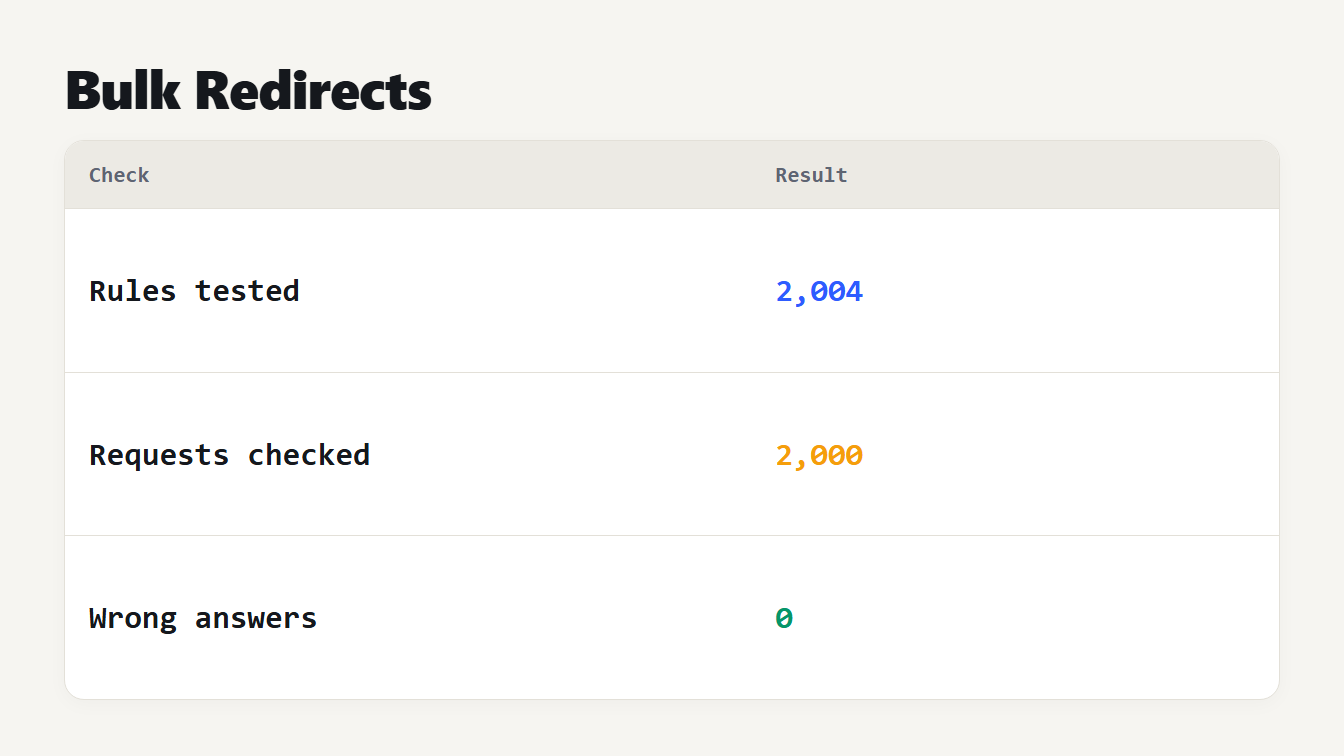
How to set up bulk 301 redirects for a site move: build the map, catch chains and loops, generate rules for Apache, NGINX or Next.js, and test every one.
Step-by-step guides to the math, text, code and search tasks behind our free tools: taxes and loans, writing and readability, data formats, dates and time, and SEO. Each guide has worked examples and links to a tool that runs in your browser, so nothing you type is uploaded.
How to set up bulk 301 redirects for a site move: build the map, catch chains and loops, generate rules for Apache, NGINX or Next.js, and test every one.
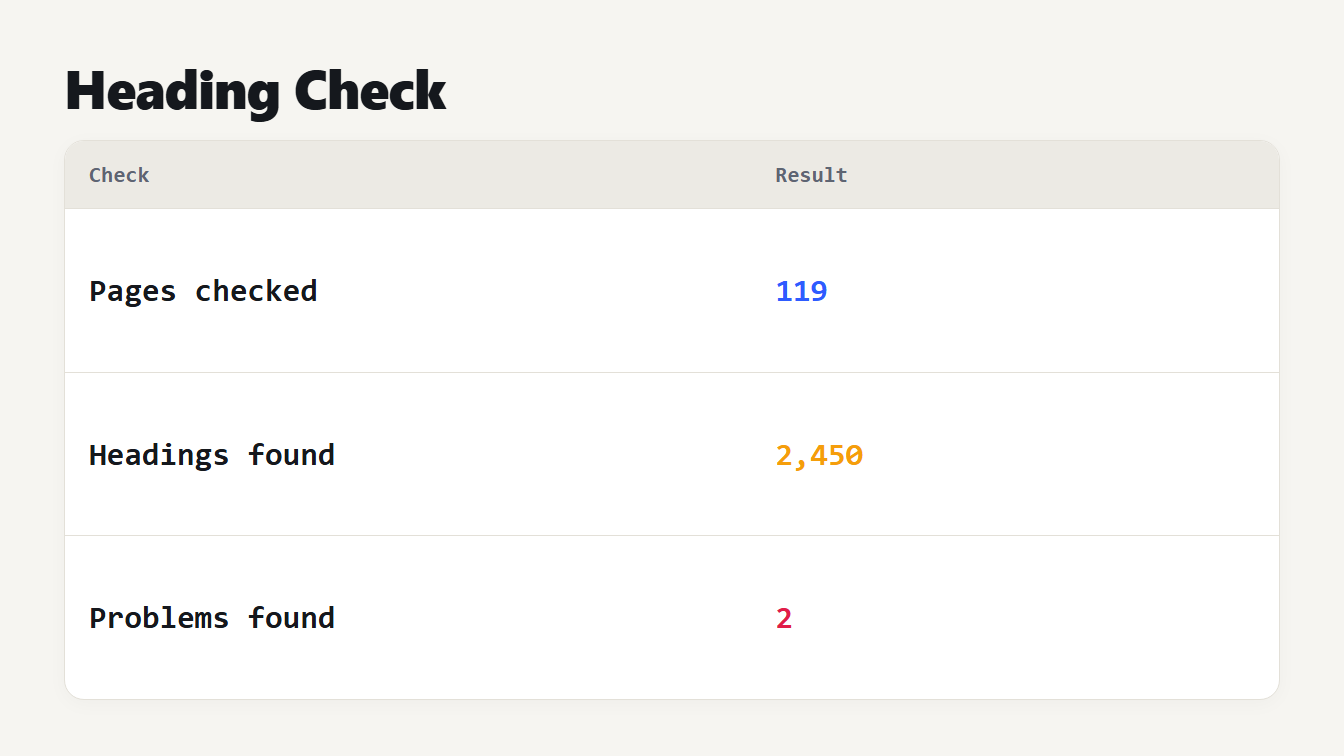
Three ways to check H1 and H2 tags on any page: View Source, a console snippet and a heading analyzer. We ran them on all 119 pages of our own site.
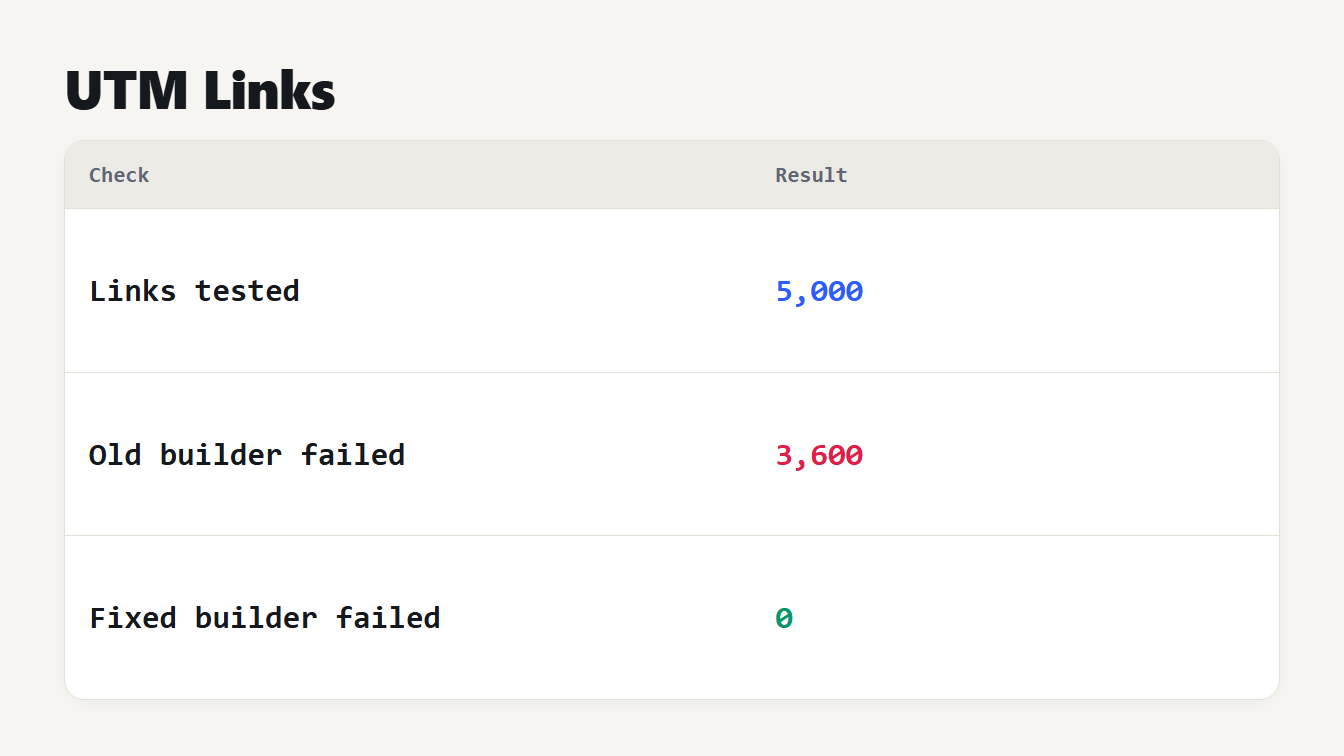
How to create UTM links step by step: the five parameters, why case matters, and the #anchor mistake that makes a link record nothing. Tested on 5,000 links.
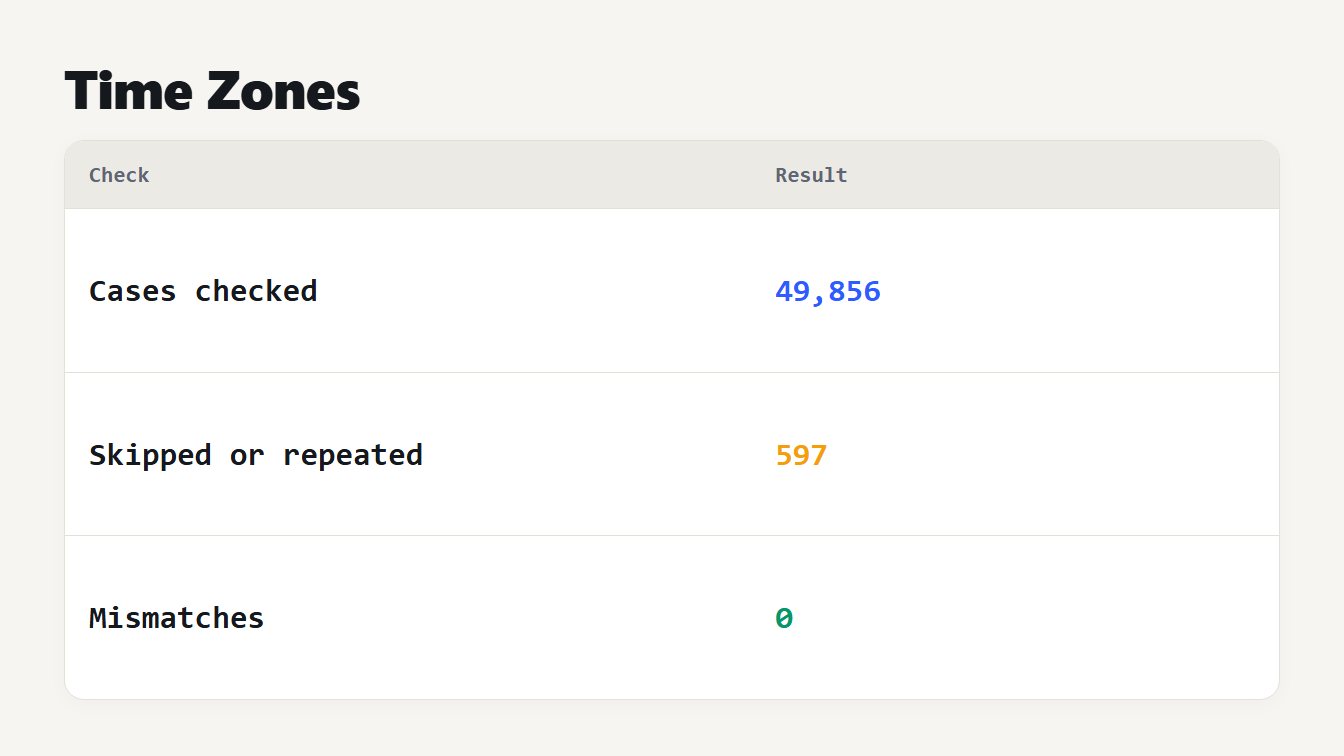
How to convert time zones the safe way: go through UTC, watch daylight saving, and know what to do with times that never happen or happen twice.
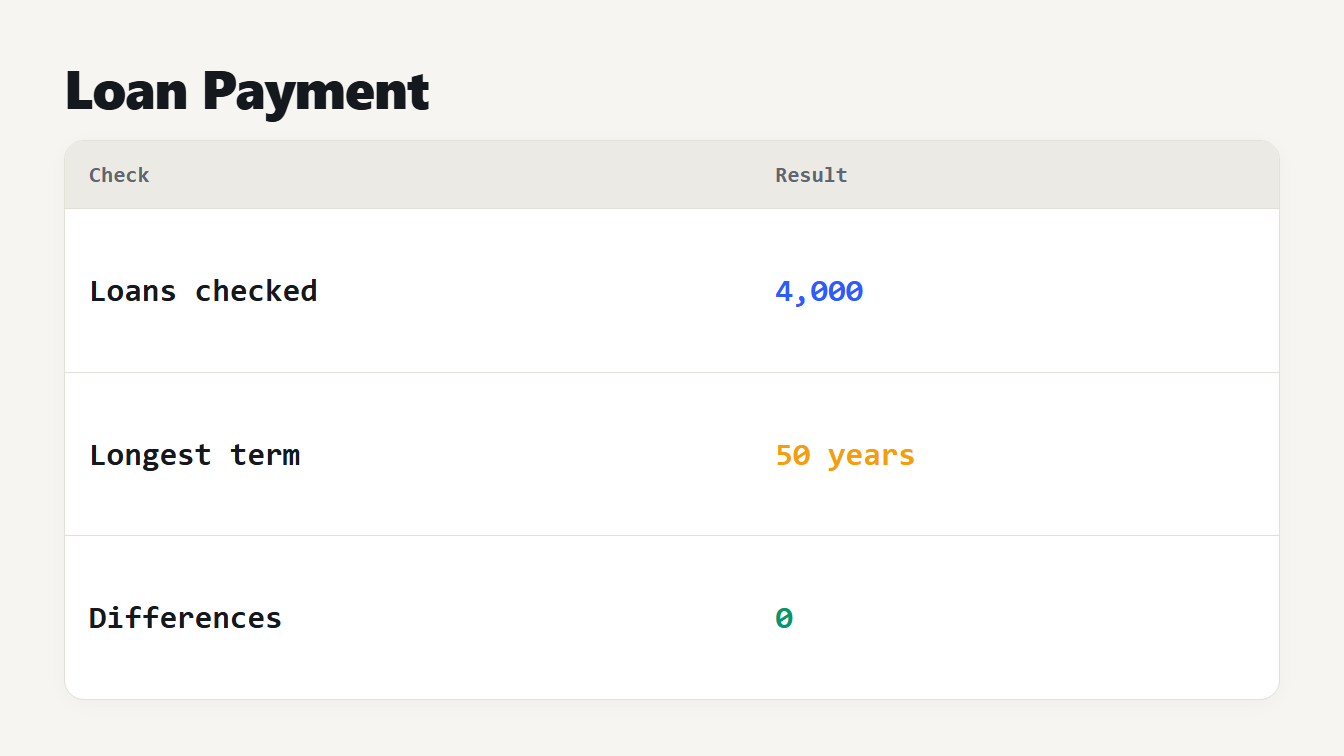
The loan payment formula with a worked example, how each payment splits into interest and principal, and what extra payments save. Checked on 4,000 loans.
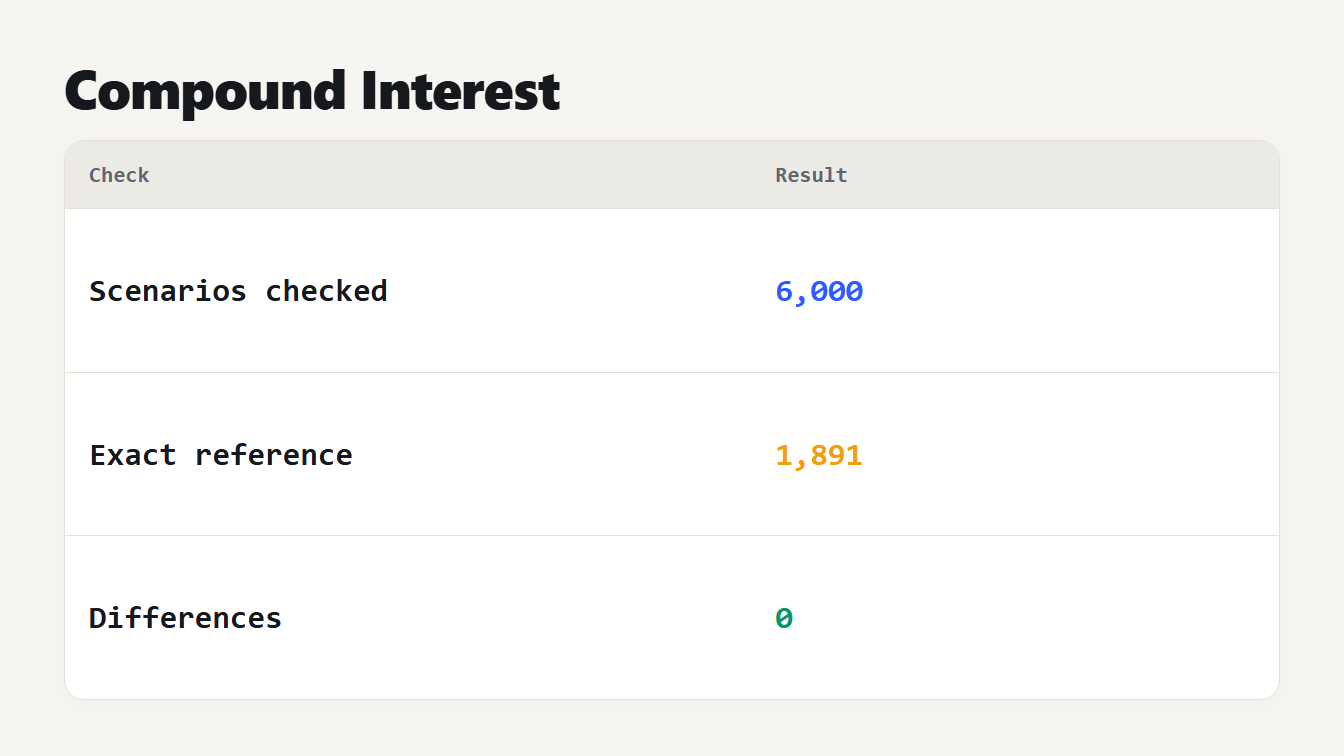
The compound interest formula explained with worked examples: how often interest is added, monthly deposits, the Rule of 72 and the cost of starting late.
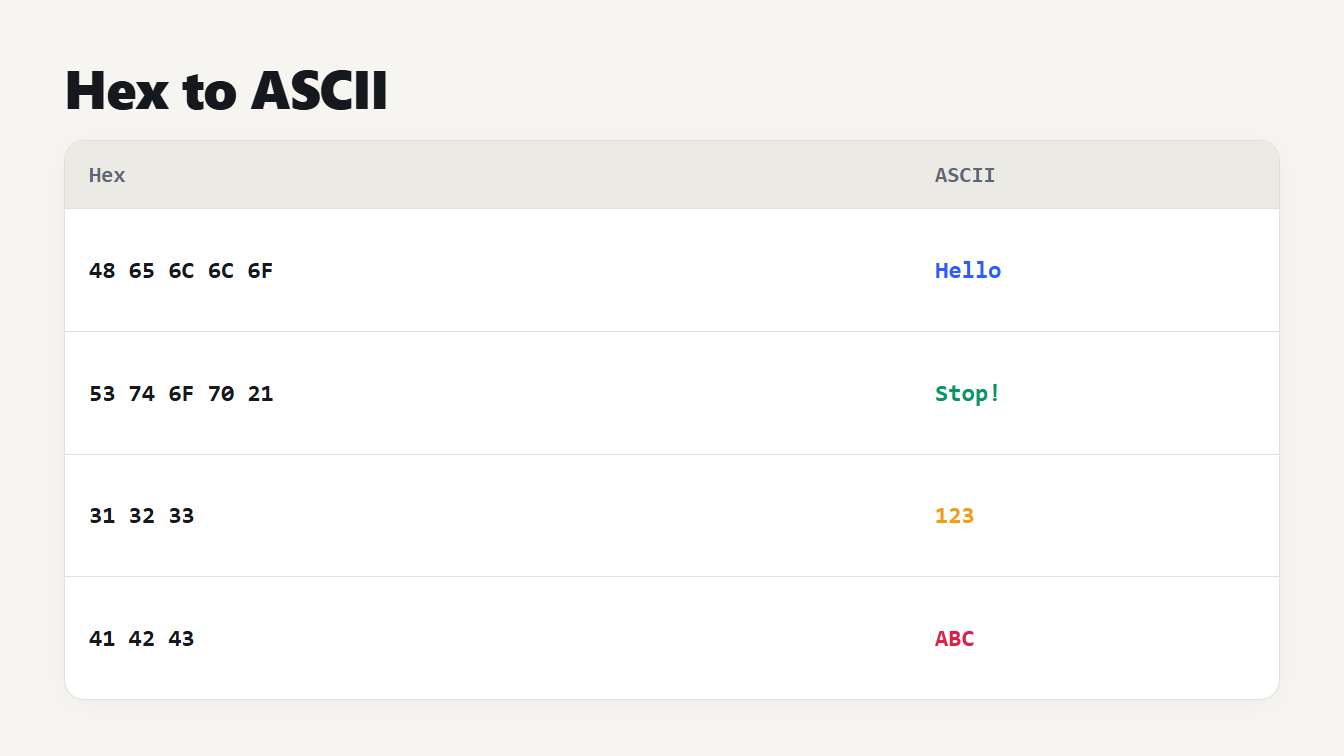
Hex to ASCII step by step: split the hex into bytes, read each as a number and look it up. Examples, line endings and what bytes above 7F mean.
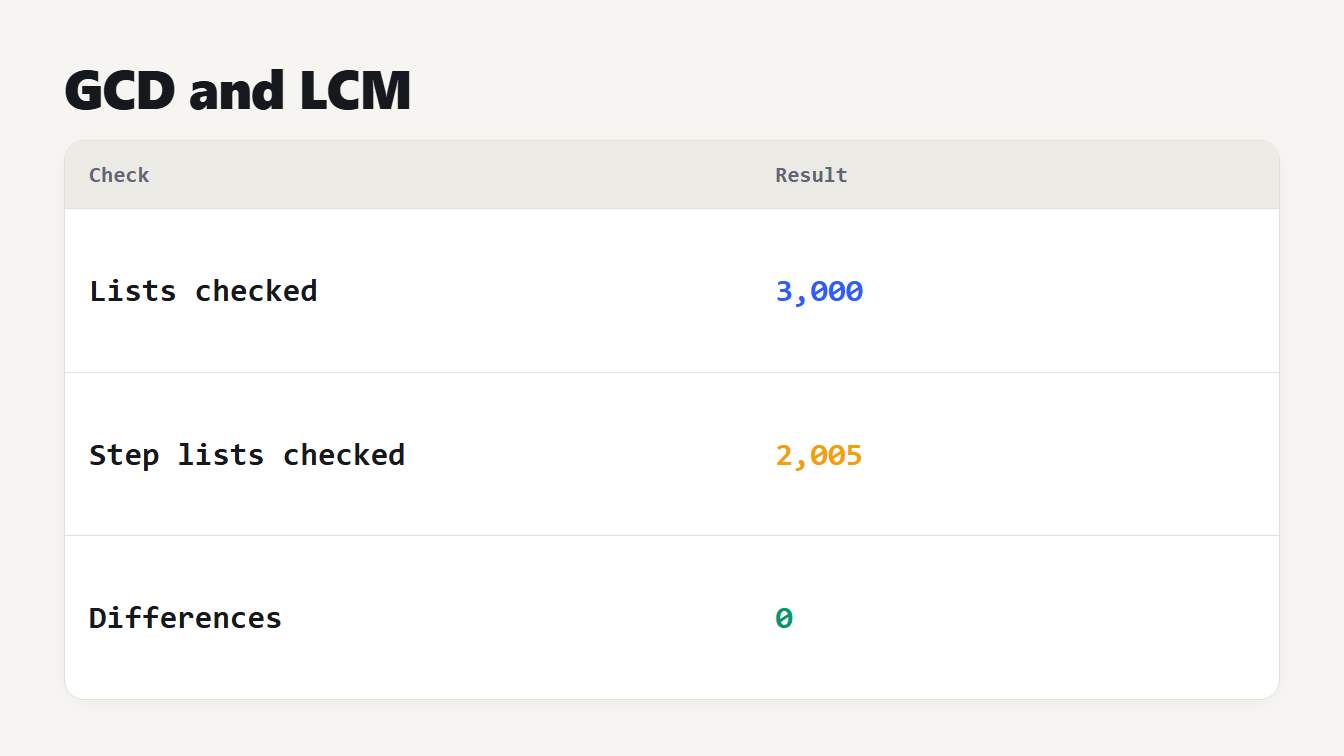
Learn how to find the GCD and LCM with prime factors and the Euclidean algorithm, for two numbers or a whole list, with worked examples and exact big numbers.
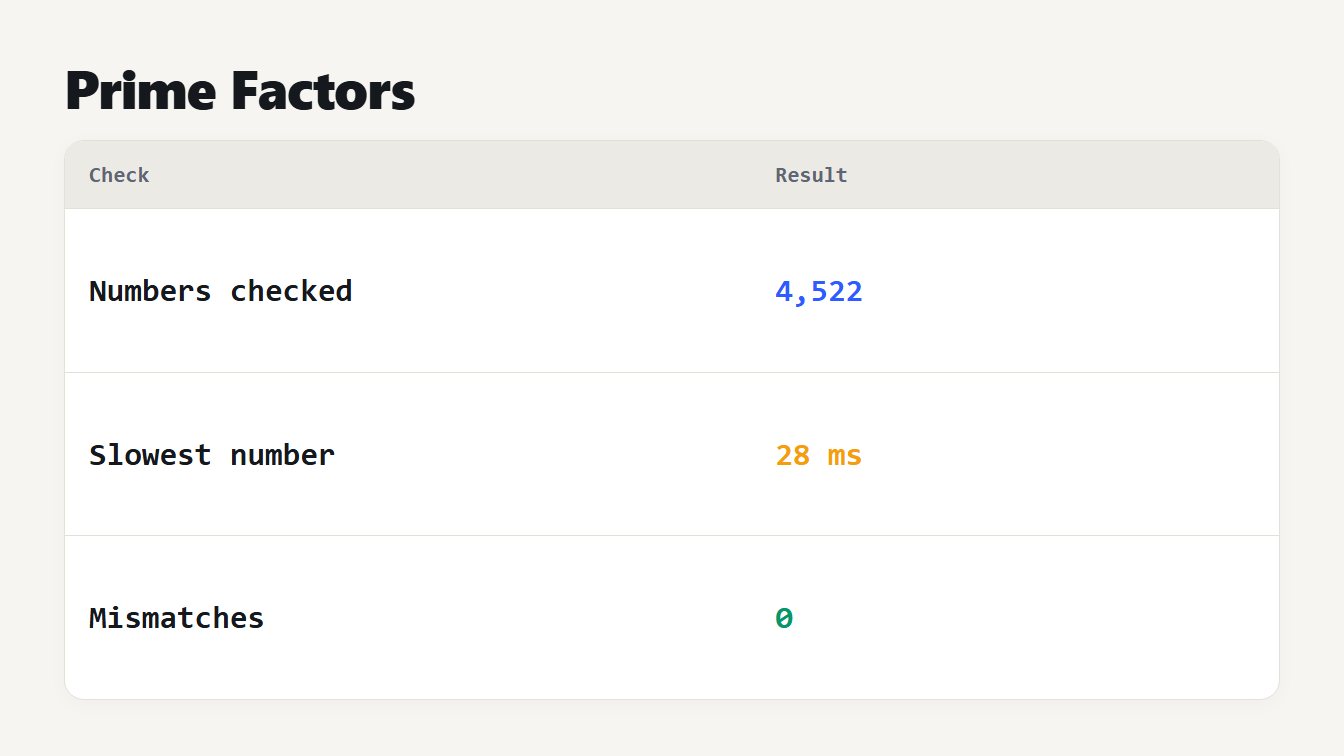
Prime factorization explained: find the prime factors of a number step by step, count its divisors, and see why 18 digit numbers factor in milliseconds.
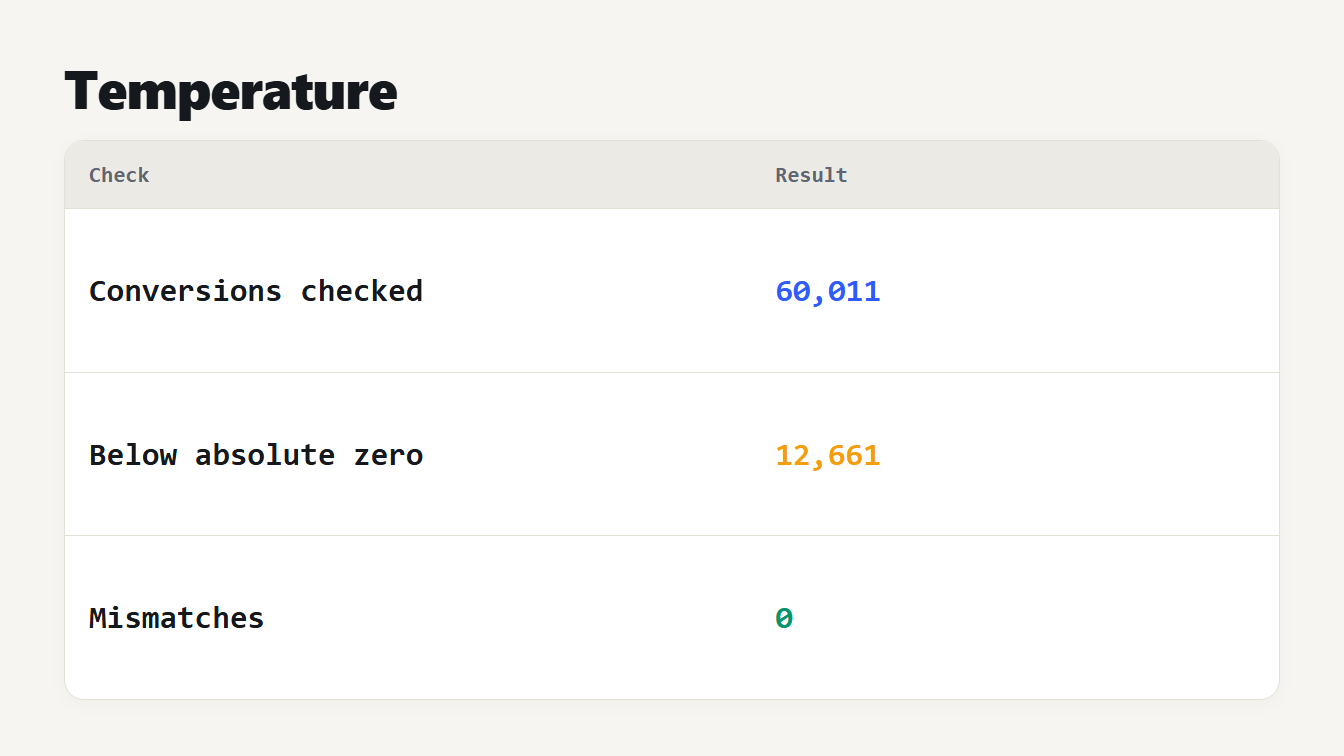
Convert Celsius to Fahrenheit with one formula, and back again. Learn why 98.6 F is exactly 37 C, where the scales meet, and how absolute zero limits both.
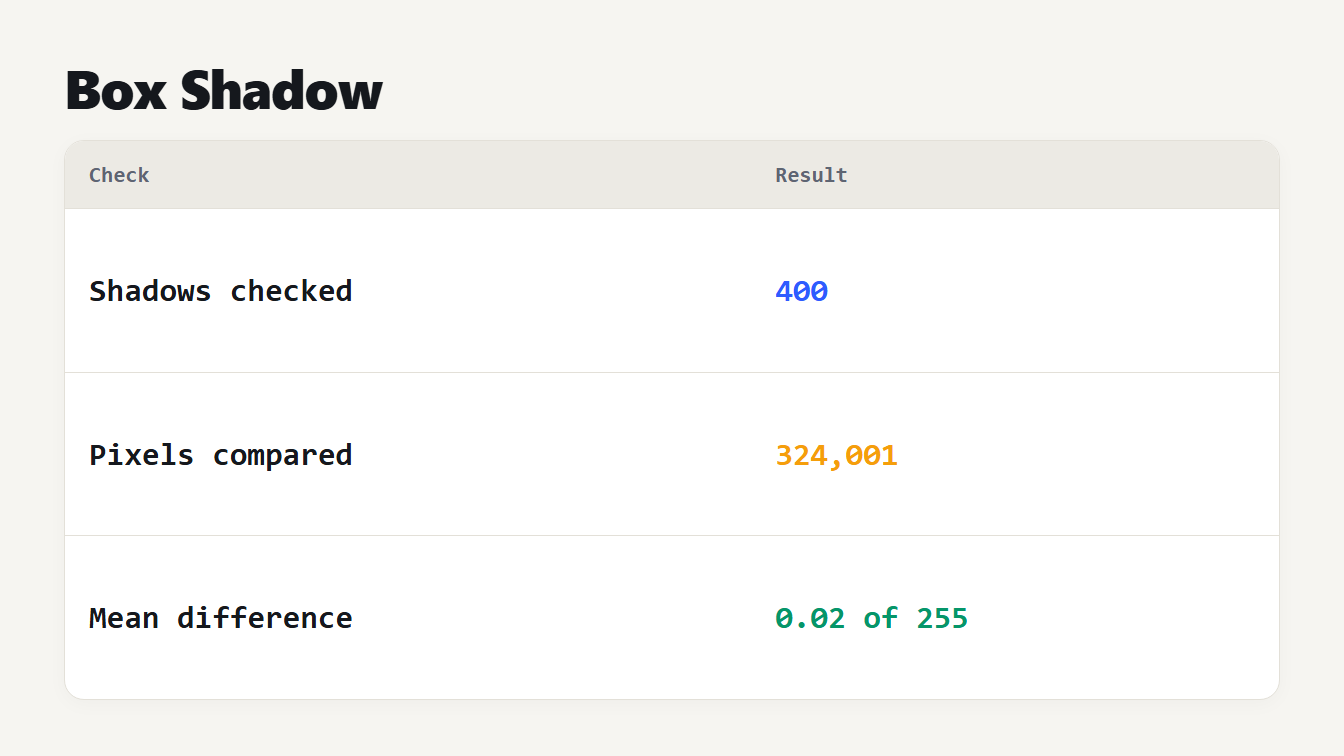
CSS box shadow explained: offsets, blur, spread, inset and layers, plus text-shadow and drop-shadow. Blur follows a Gaussian model; drop-shadow differs.
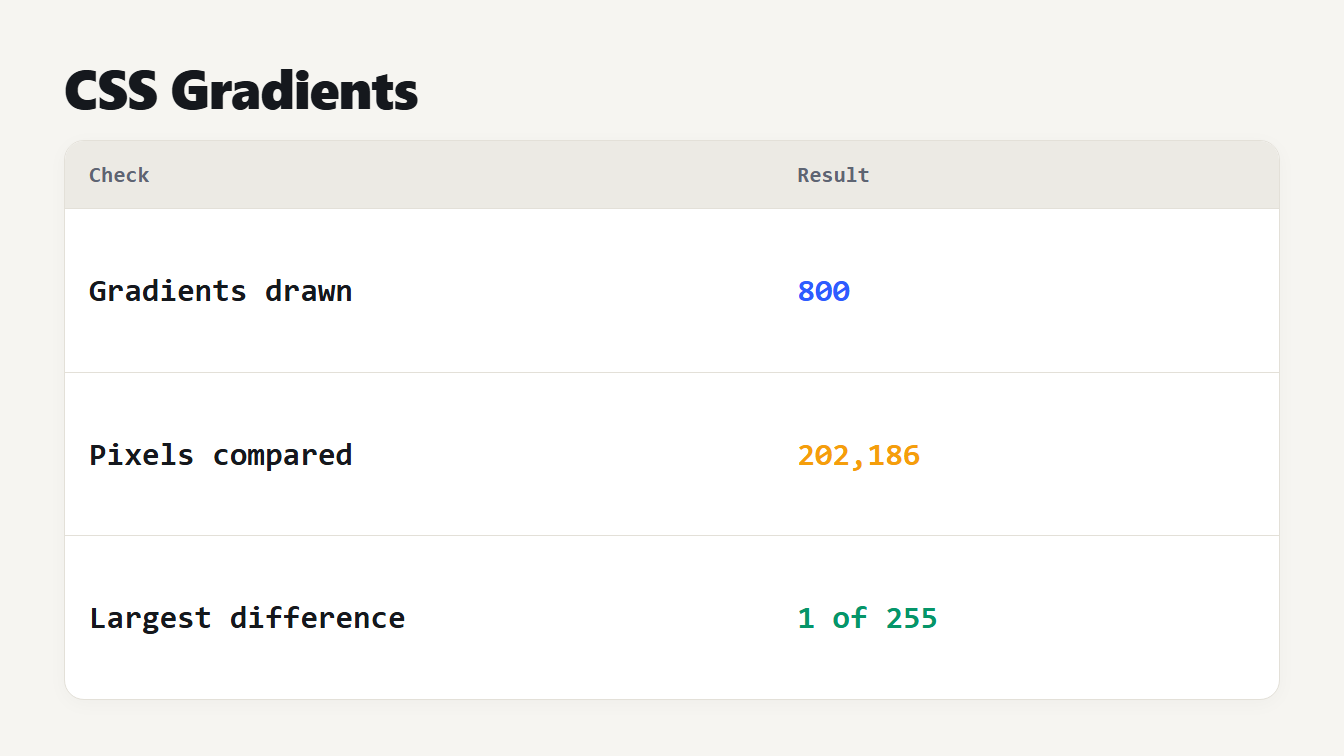
How CSS gradients work: angles, colour stops, hard edges, repeating patterns and transparency. Checked on 800 gradients and 200,000 pixels in Chromium.
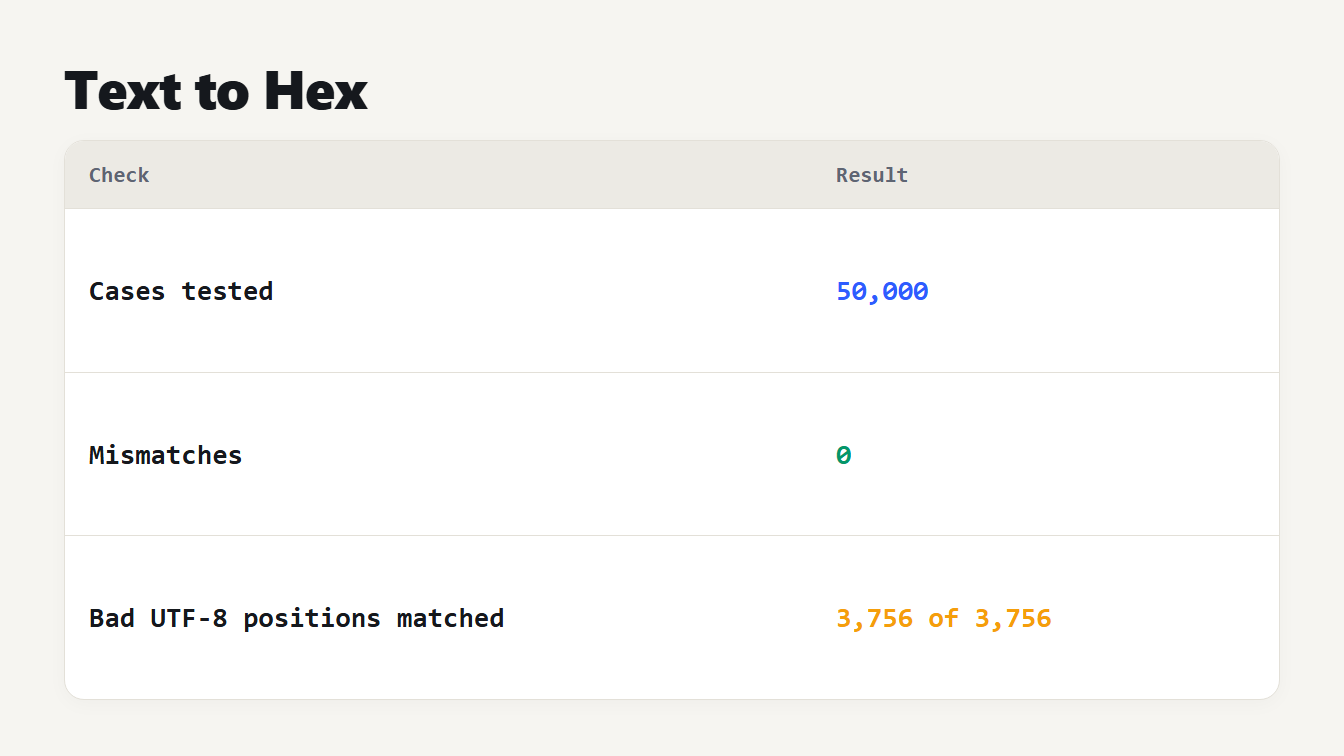
Learn how to convert text to hex: UTF-8, UTF-16 and Latin-1 bytes, why é takes two bytes, how to read hex back and what errors mean. Tested on 50,000 cases.
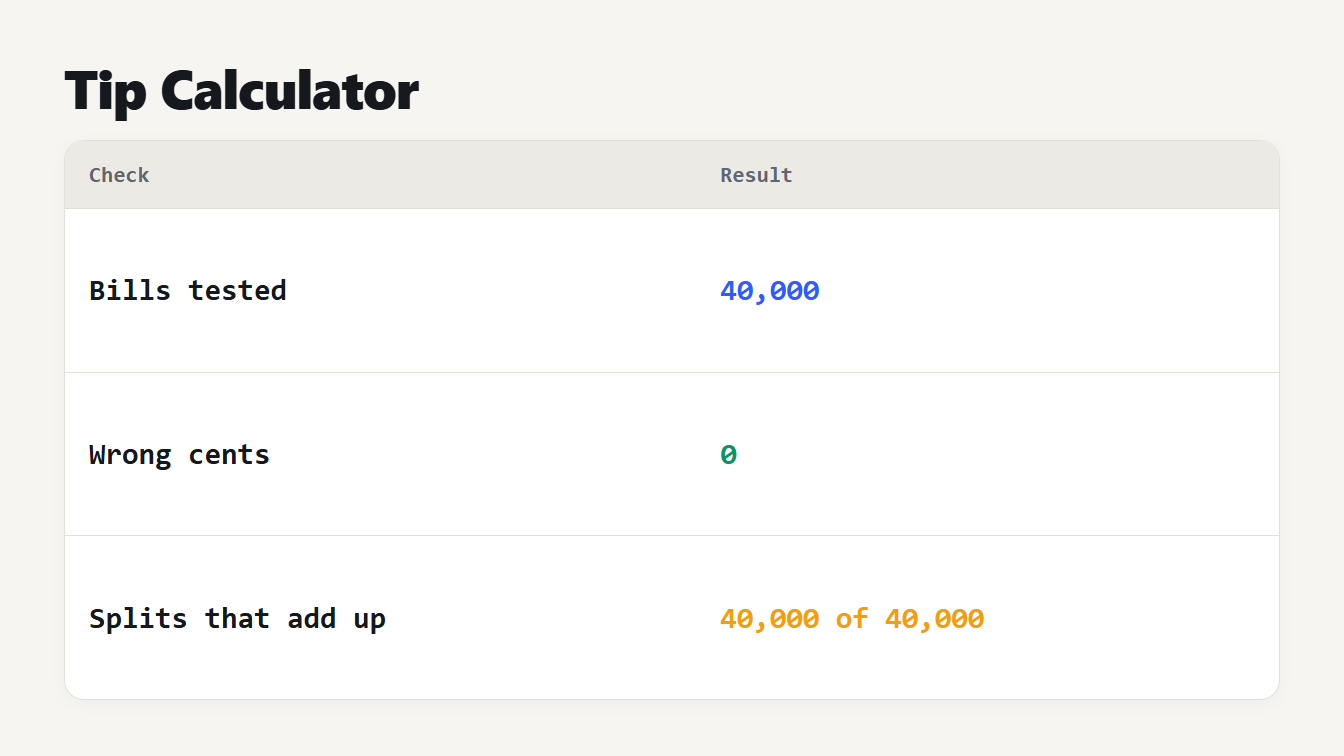
Learn how to calculate a tip, tip before or after tax, split a bill to the cent, and see what rounding up does to your tip percentage. Checked on 40,000 bills.
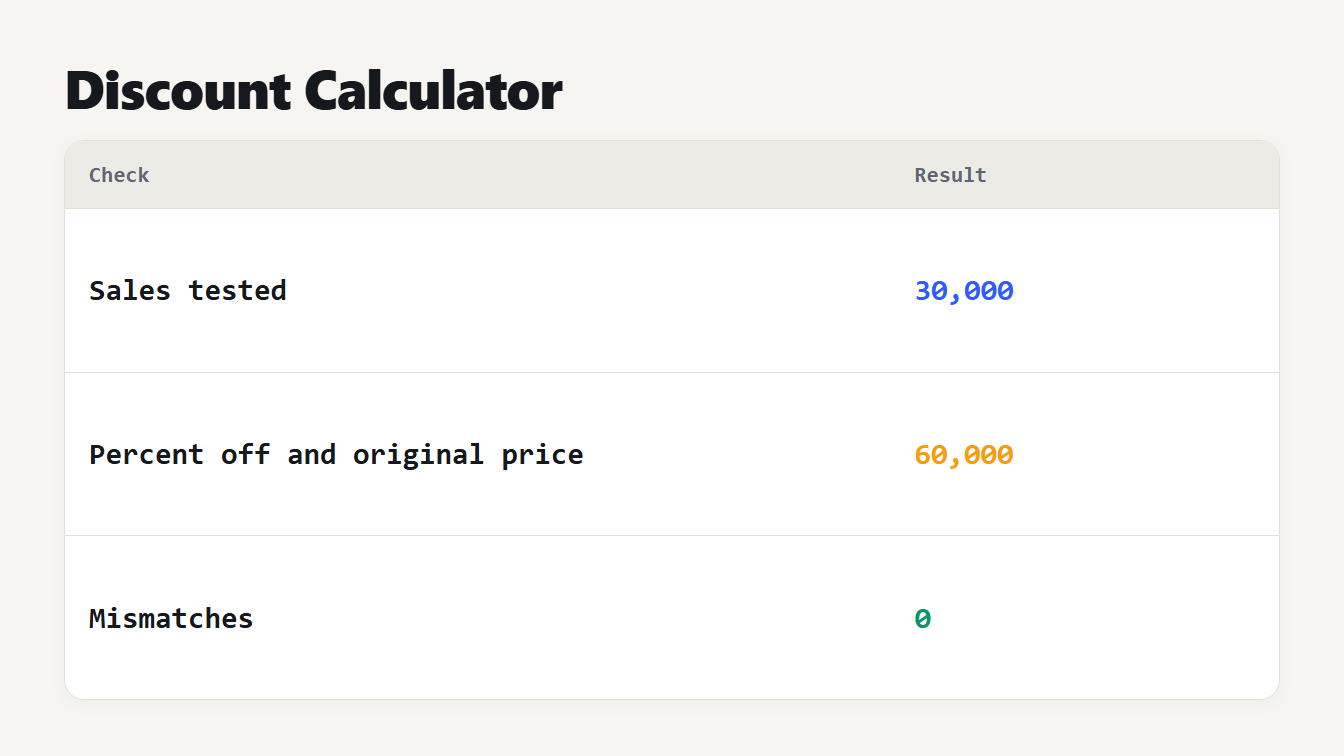
Learn how to calculate a discount: the sale price, the percent off between two prices, the original price, and why 20% off then 10% off is not 30%.
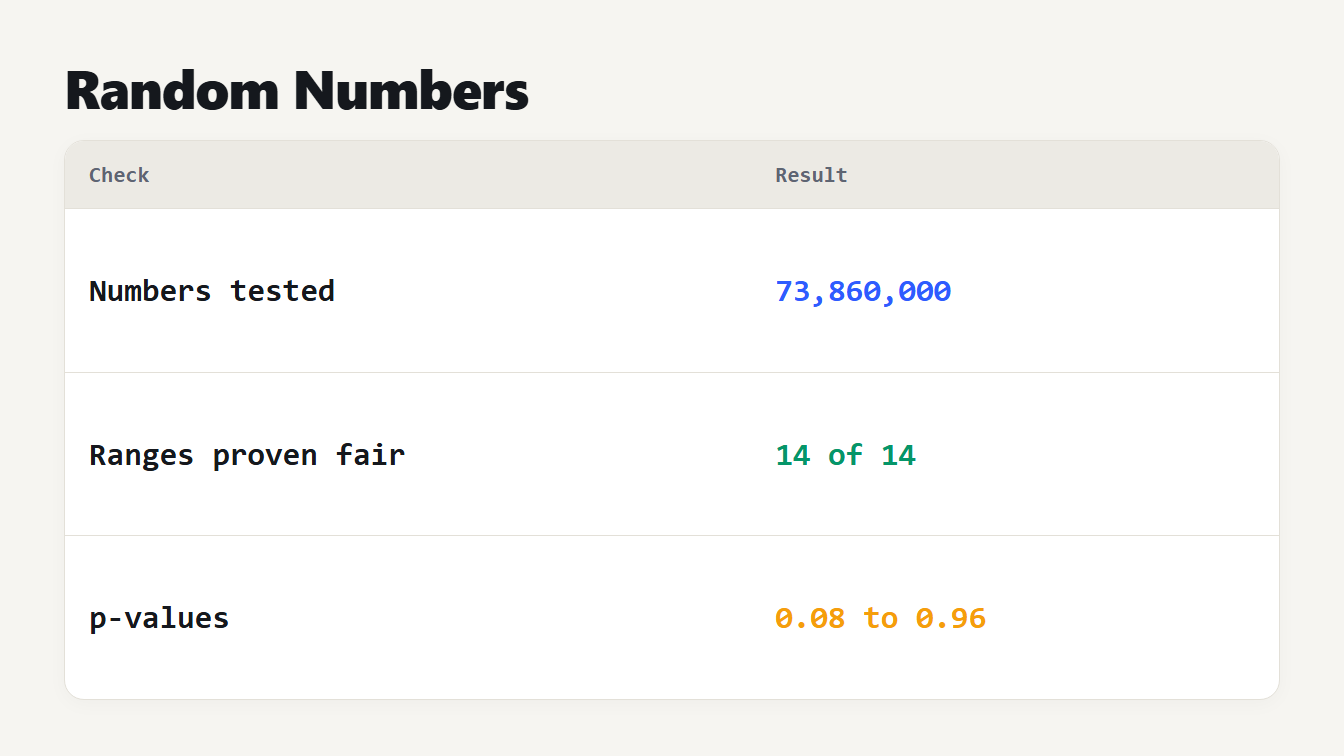
Learn to generate random numbers fairly: why Math.random falls short, what modulo bias is and how rejection sampling fixes it. Tested on 70 million numbers.
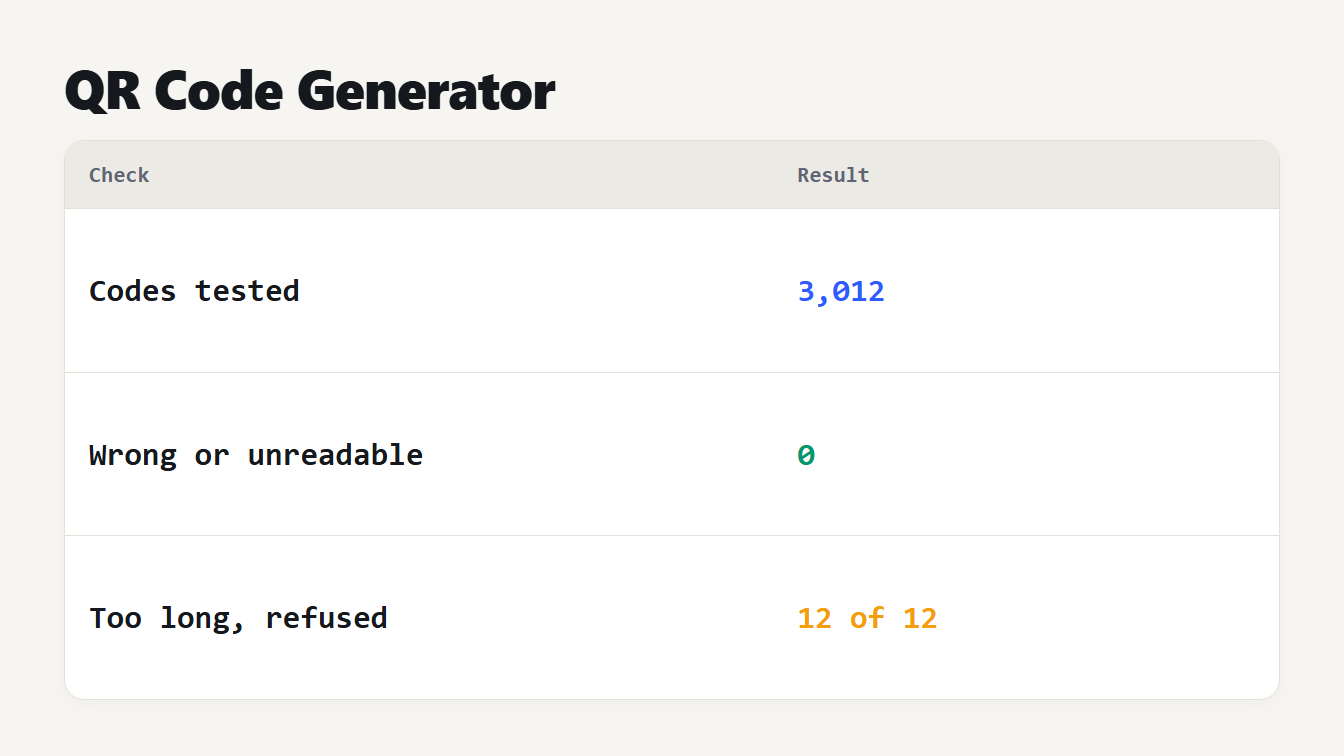
QR code error correction levels L, M, Q and H compared, with measured tests of how much of a code a logo or damage can cover.
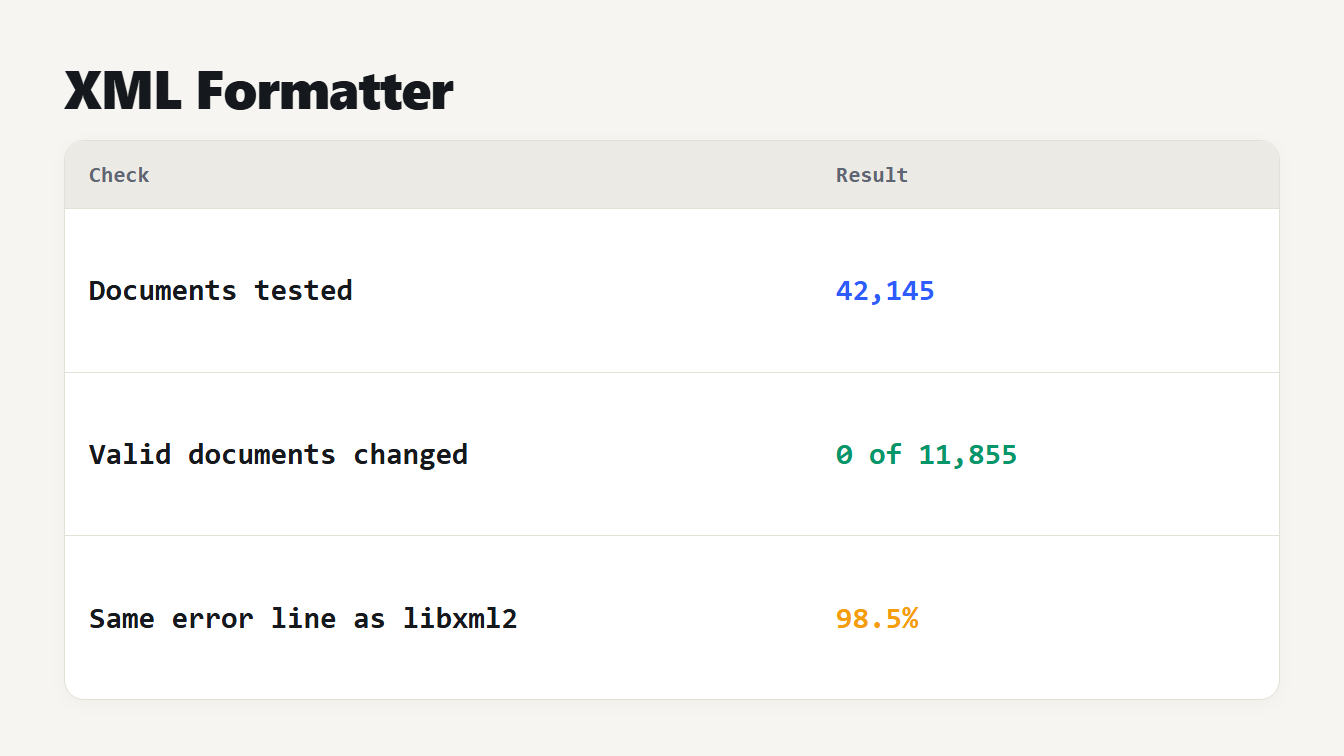
Learn how to format XML and fix well-formedness errors: unclosed tags, nbsp, bad attributes. Tested against libxml2 on 42,145 documents.
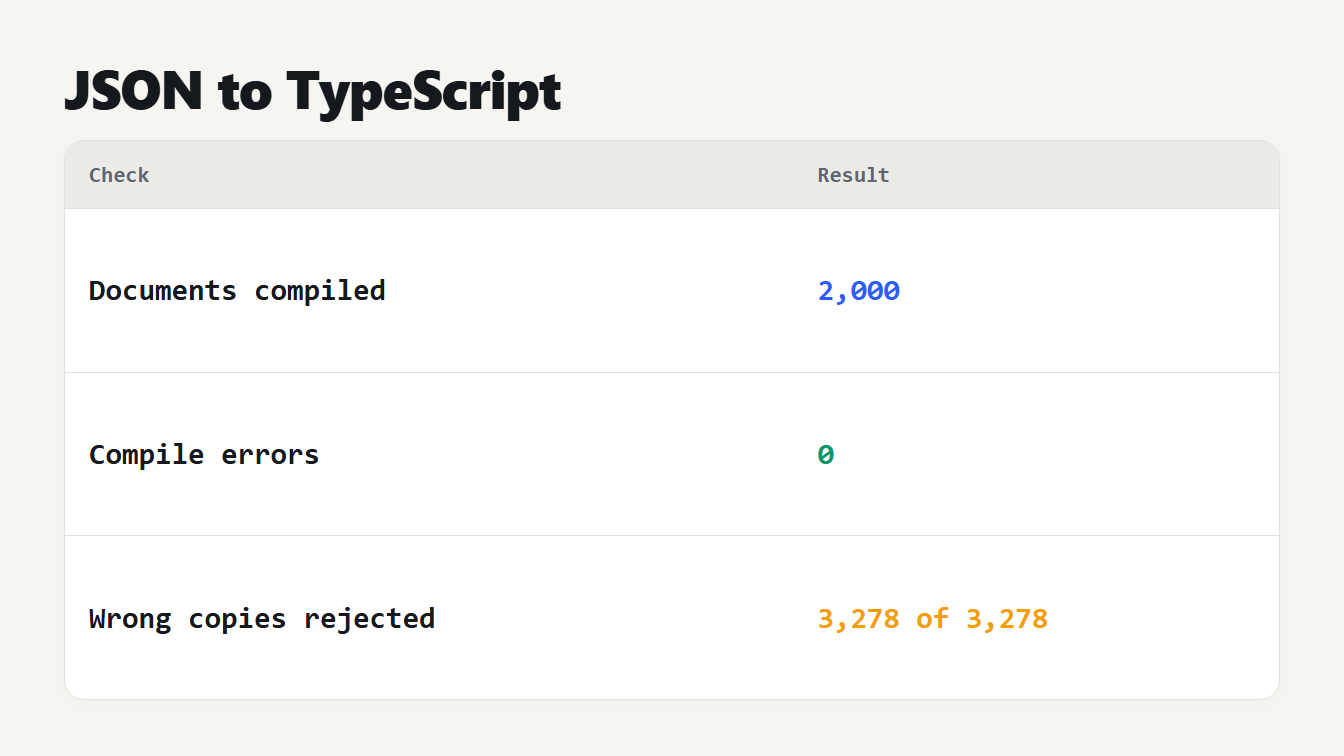
Learn how to convert JSON to TypeScript interfaces: nested objects, optional keys, unions and arrays. Checked with the compiler on 2,000 documents.
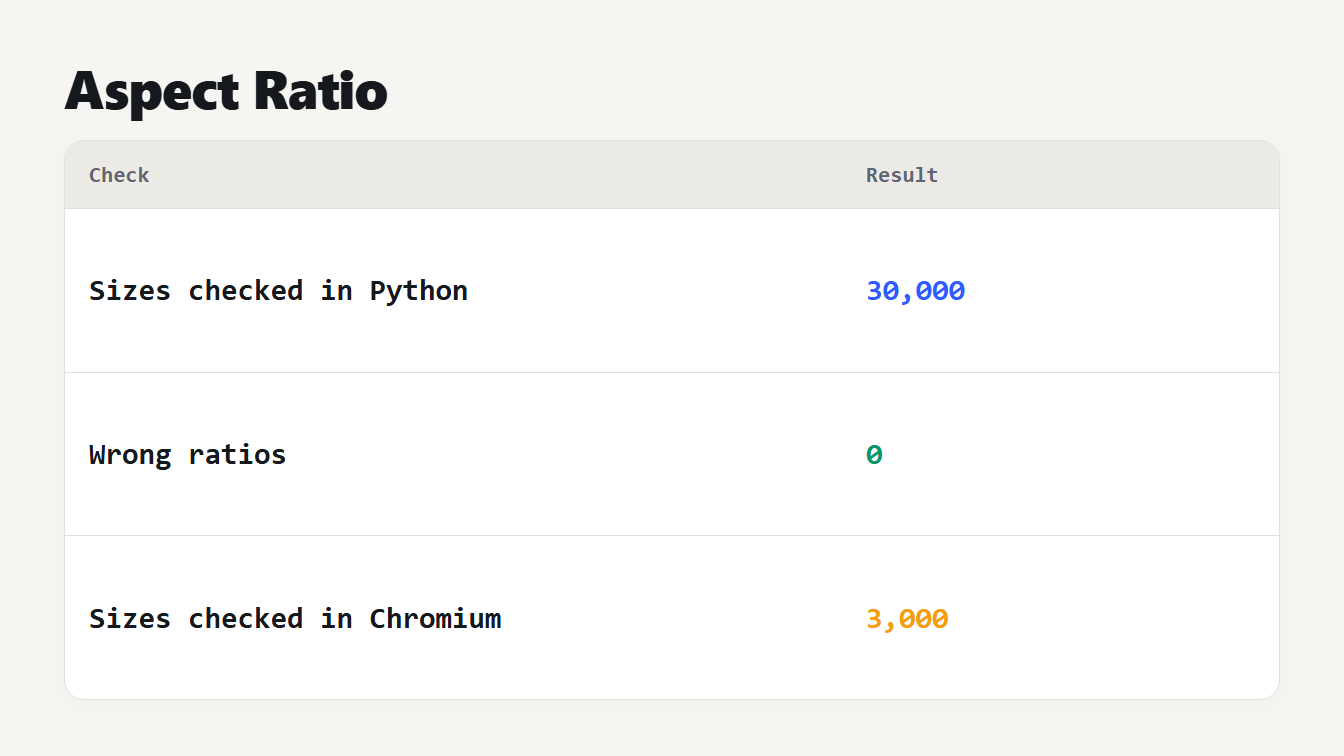
Learn how to calculate aspect ratio from a width and height, resize without distortion and use the CSS aspect-ratio rule. Checked in Python and Chromium.
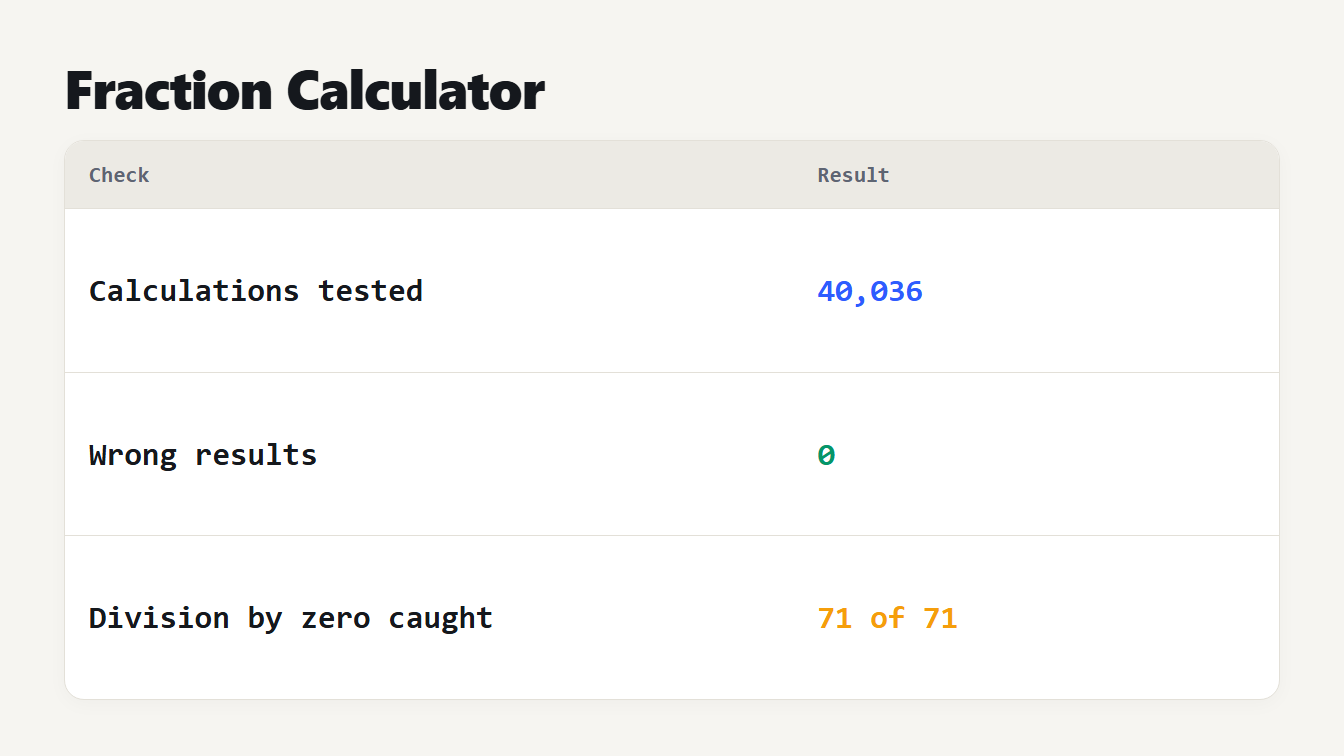
Add fractions with different denominators in four steps: common denominator, rewrite, add, simplify. Plus subtracting, dividing and repeating decimals.
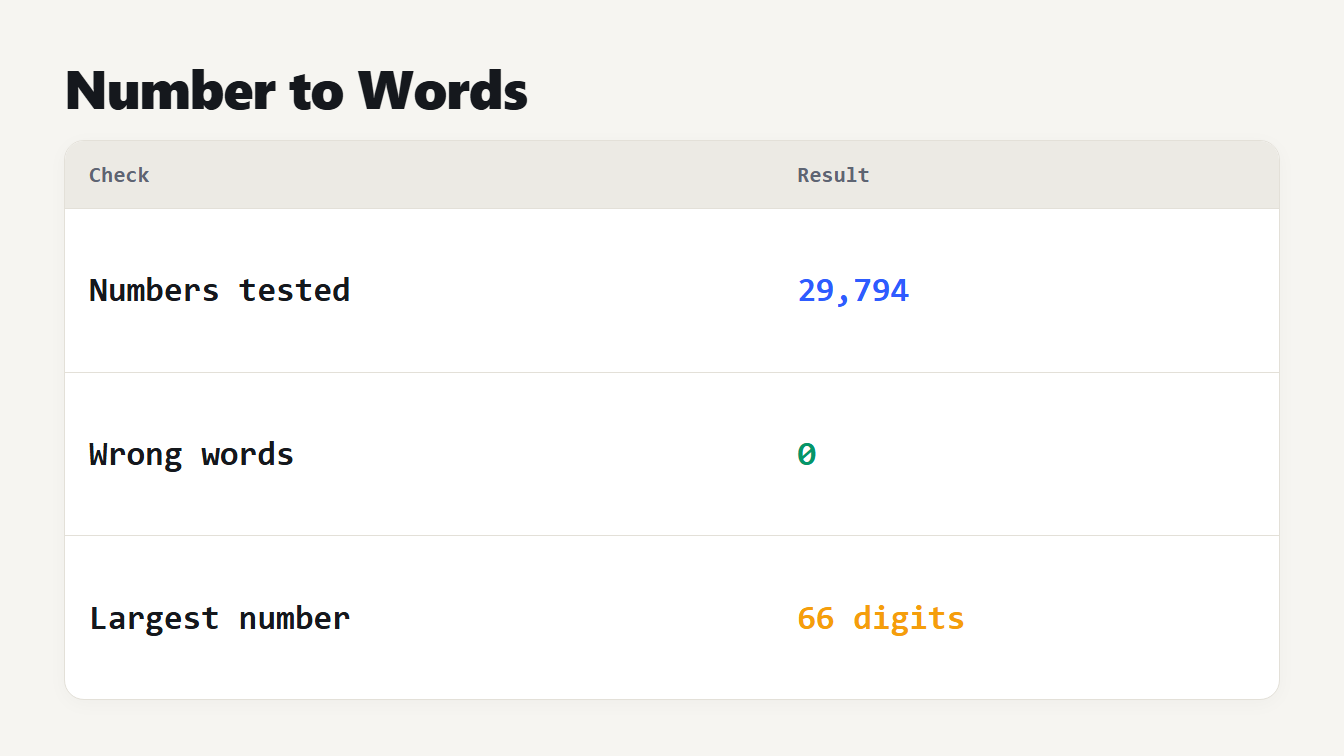
Learn how to write numbers in words: hyphens, the word and, check amounts, ordinals and lakh and crore. Rules tested on 29,794 numbers.
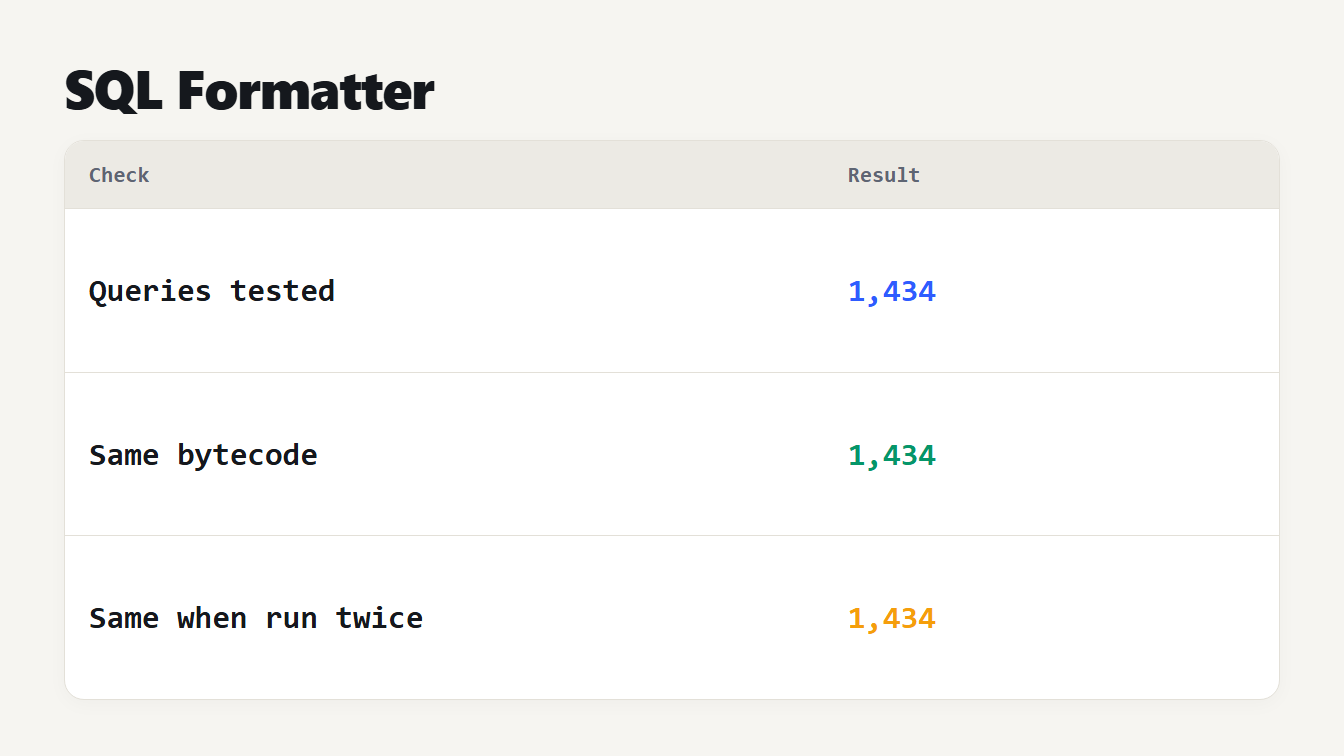
Learn how to format SQL: clause layout, keyword case and why the dialect matters. Tested on 1,434 queries against SQLite bytecode, with no change in meaning.
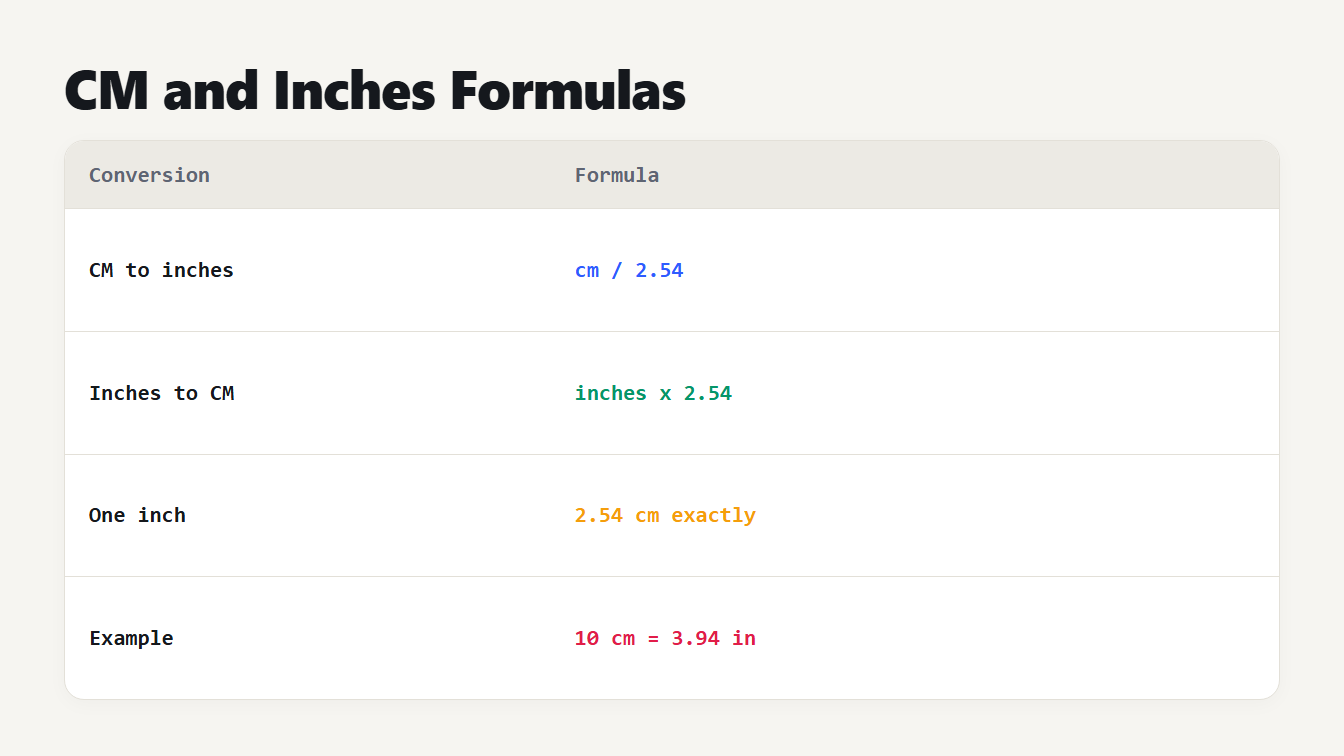
How to convert cm to inches by dividing by 2.54, how to write the result as a fraction for a tape measure, and how to turn centimeters into feet and inches.
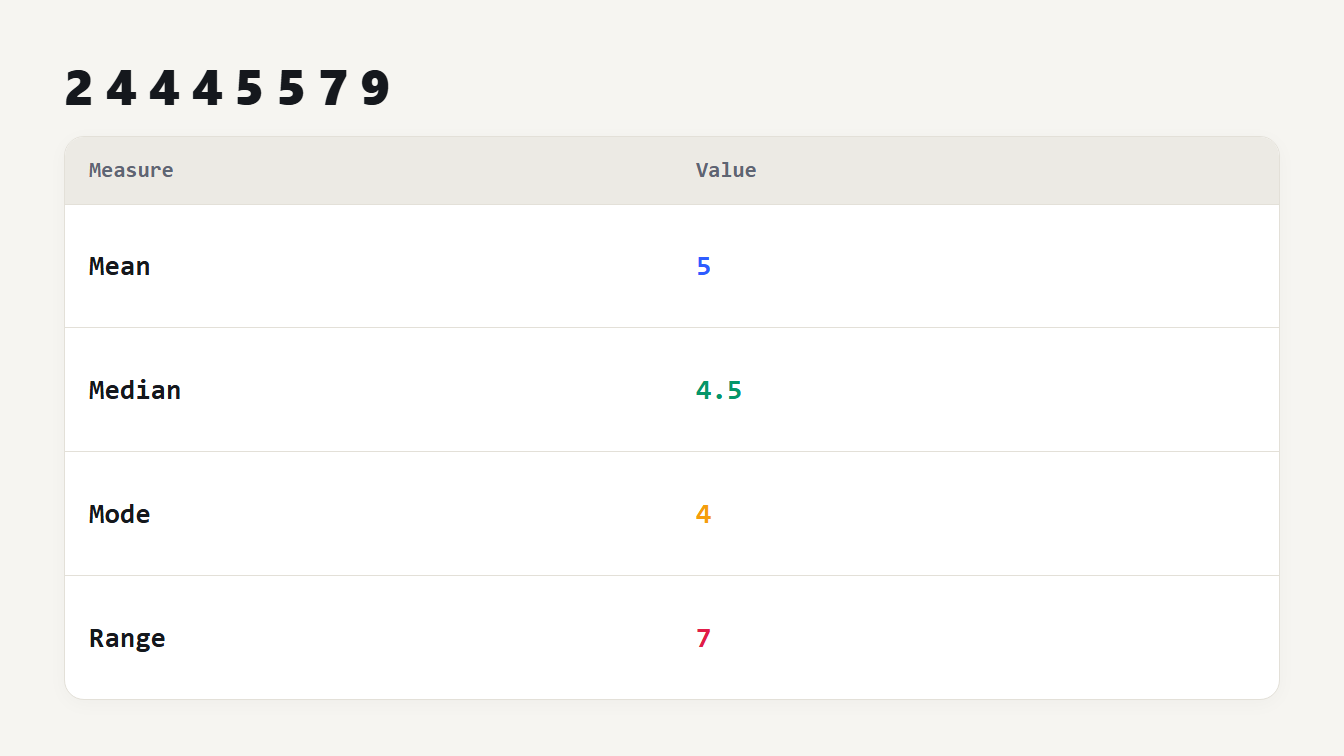
Learn how to find the mean median and mode of a list of numbers, when each is the right average, and how sample and population standard deviation differ.
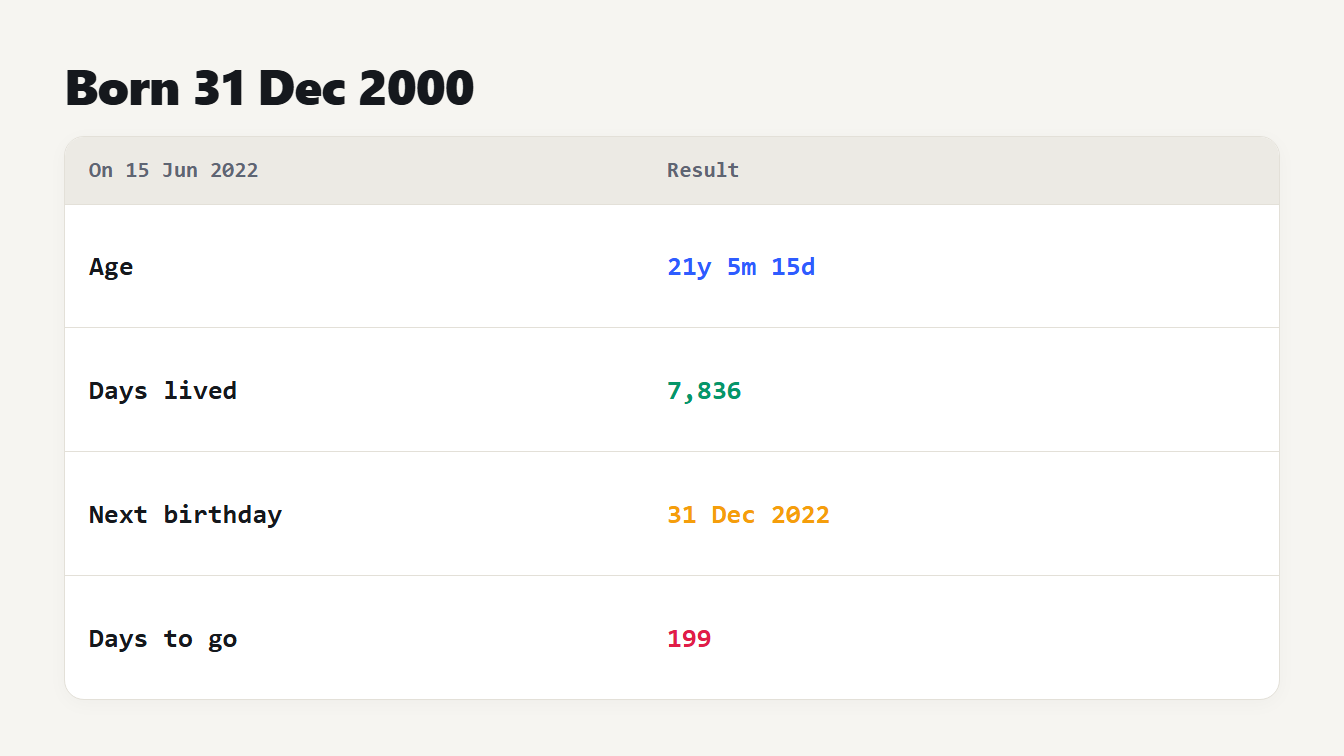
Learn how to calculate age from a date of birth in years, months and days by hand, why 365 shortcuts fail, and how a 29 February birthday is counted.
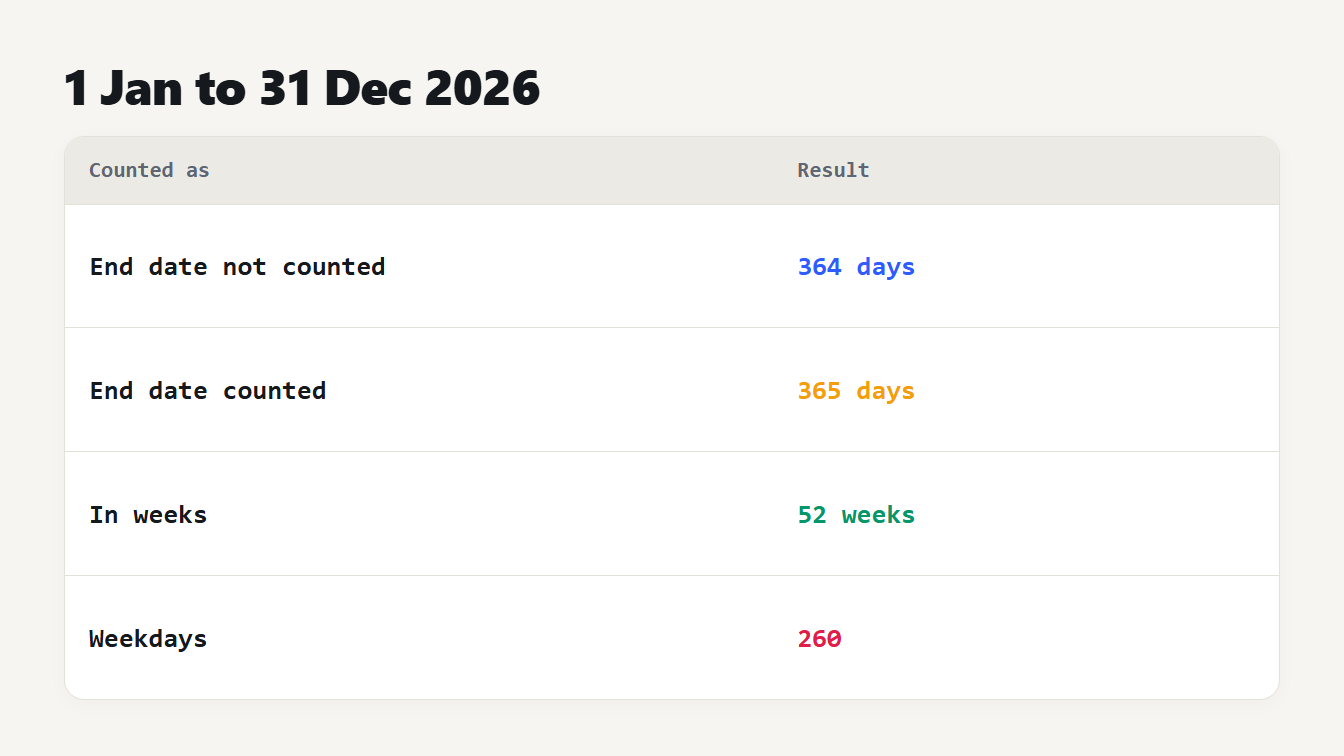
Learn how to calculate days between dates by hand, whether to count the end date, how leap years and month ends behave, and how weekdays are counted.
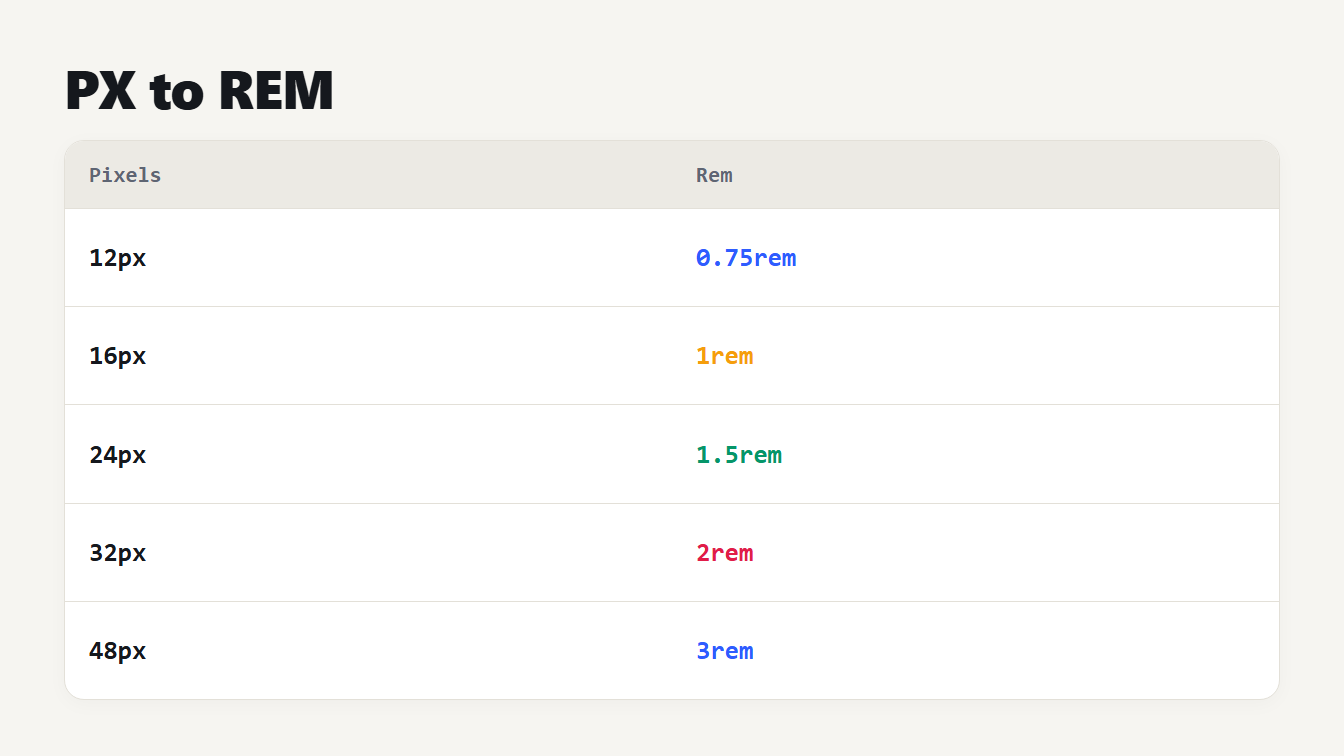
Learn the px to rem formula, see a conversion table from 8px to 96px, and how rem differs from em, pt and vw. Checked against Chromium on 6,000 cases.
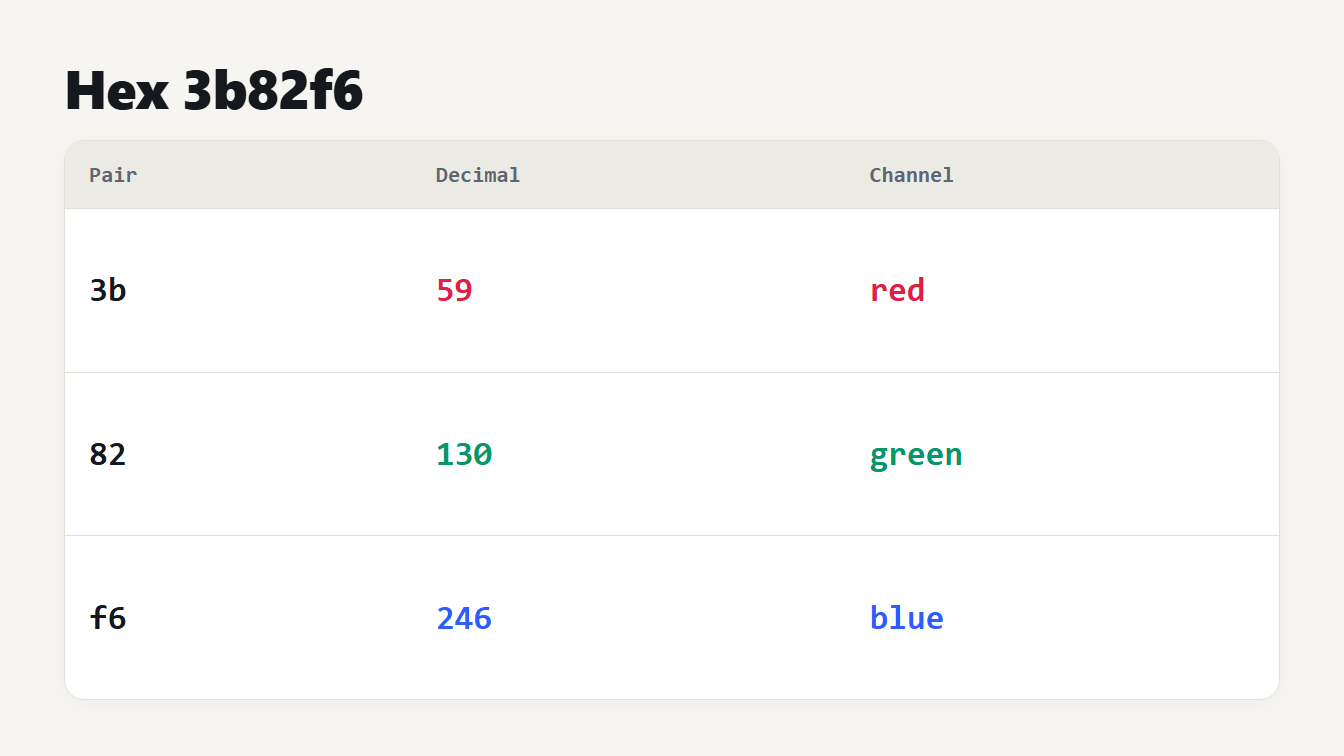
Learn how to convert HEX to RGB and HSL by hand, what 3 and 8 digit codes mean, why whole-number HSL loses color, and how to check contrast. Tested on Chromium.
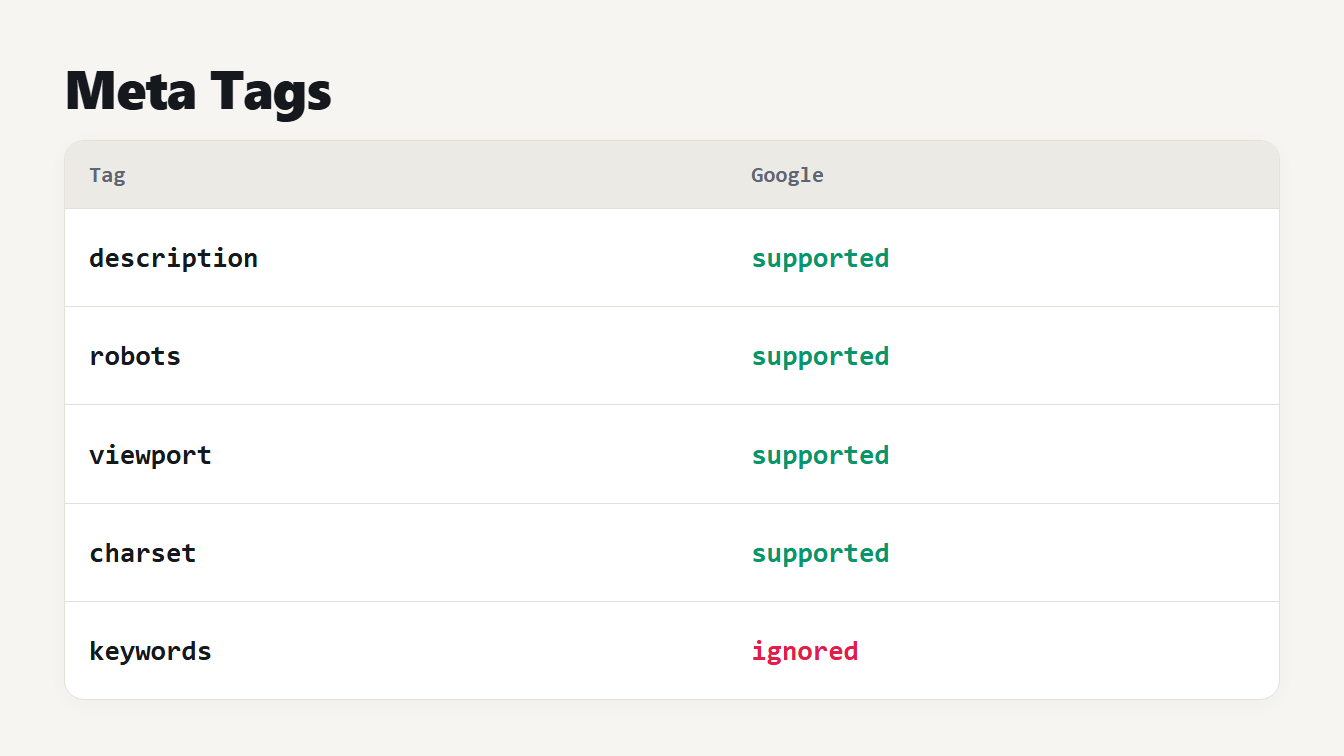
Learn which meta tags matter for SEO: title, description, robots, canonical, viewport and charset. Plus the one Google ignores, and a check on 3,000 inputs.
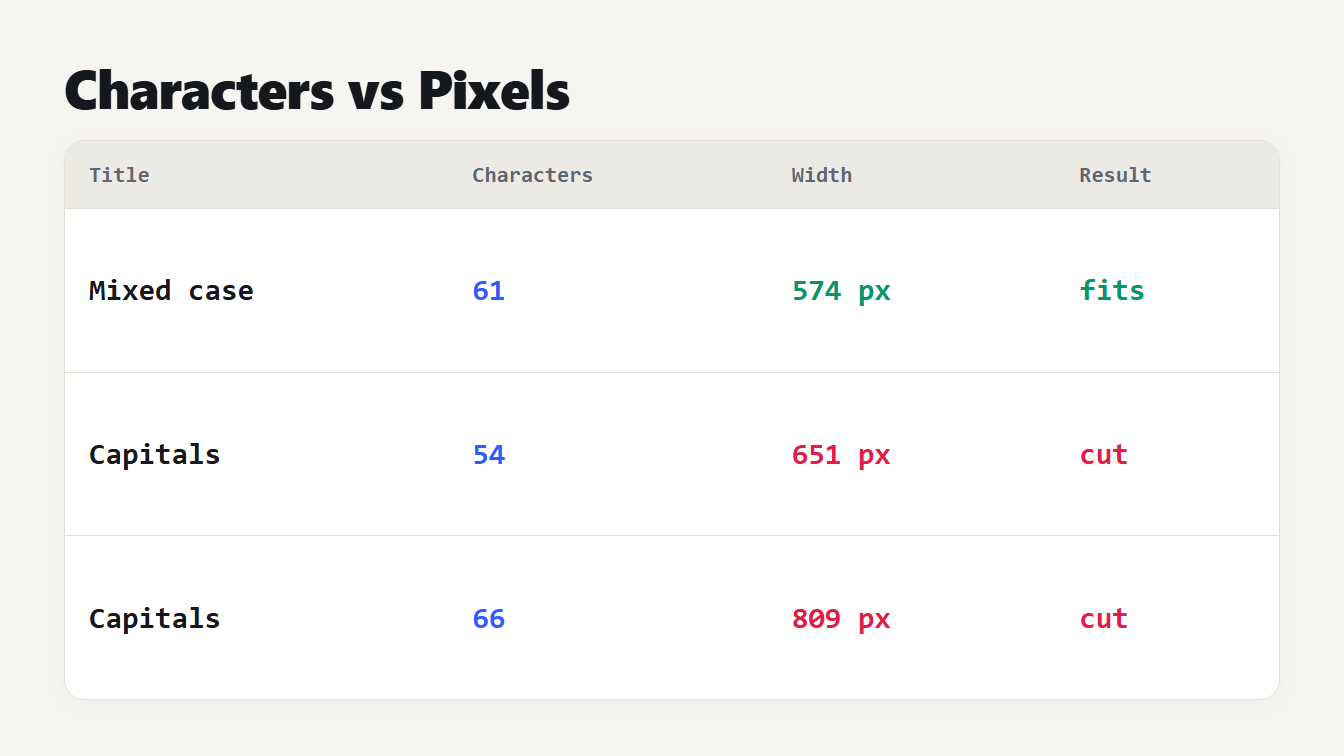
Use a SERP preview to see how your title and description may look in Google: pixel width, what gets cut, and when Google rewrites a title. Tested on 134 titles.
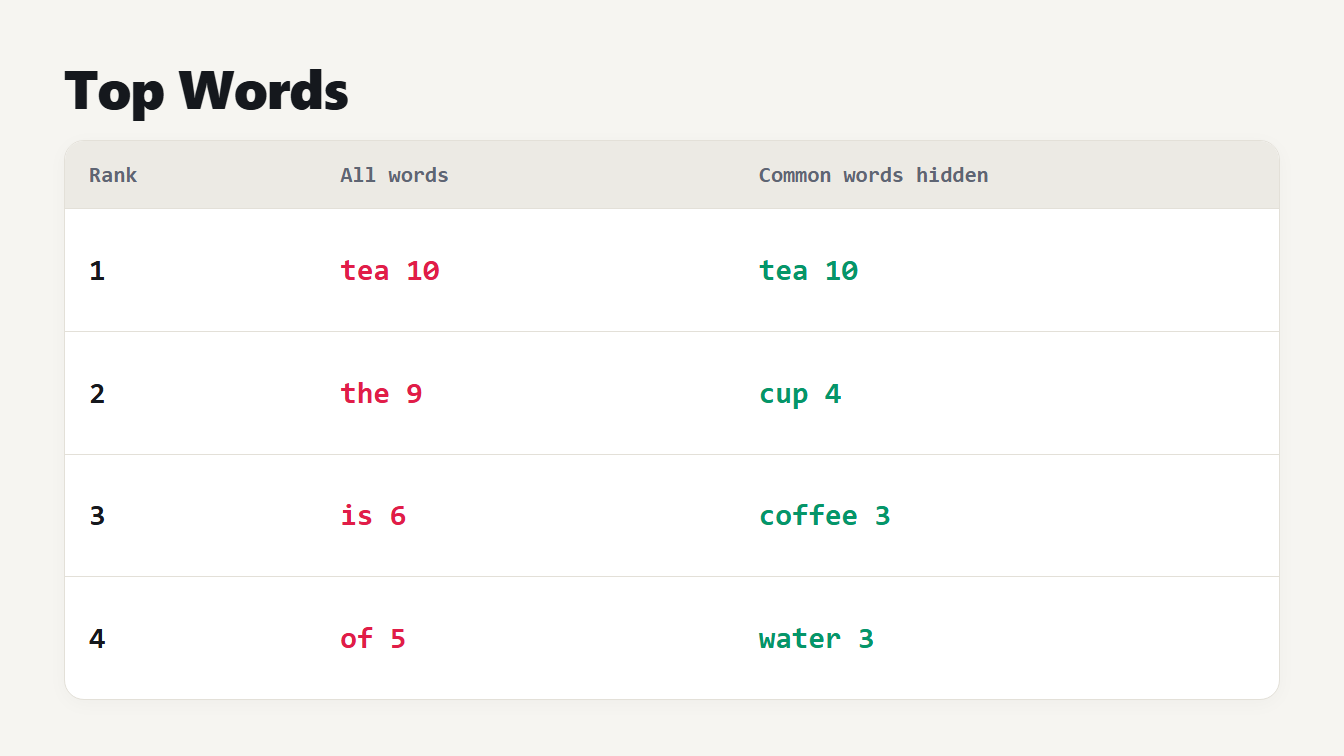
Learn how to count word frequency in any text: what counts as a word, how to hide common words, how percentages work, and how it holds up in Chinese or Thai.
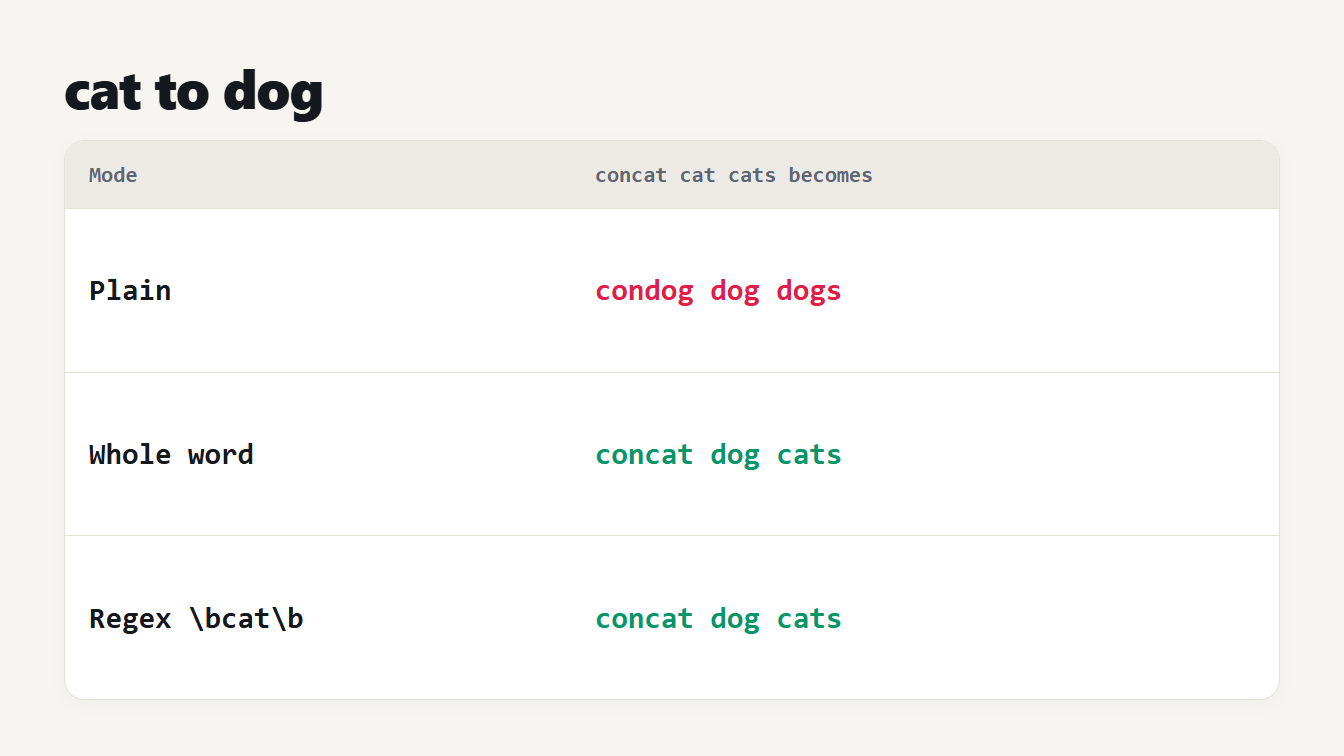
Learn how to find and replace text in bulk: plain, whole word and regex modes, capture groups, line breaks and tabs. Checked against Python on 9,000 cases.
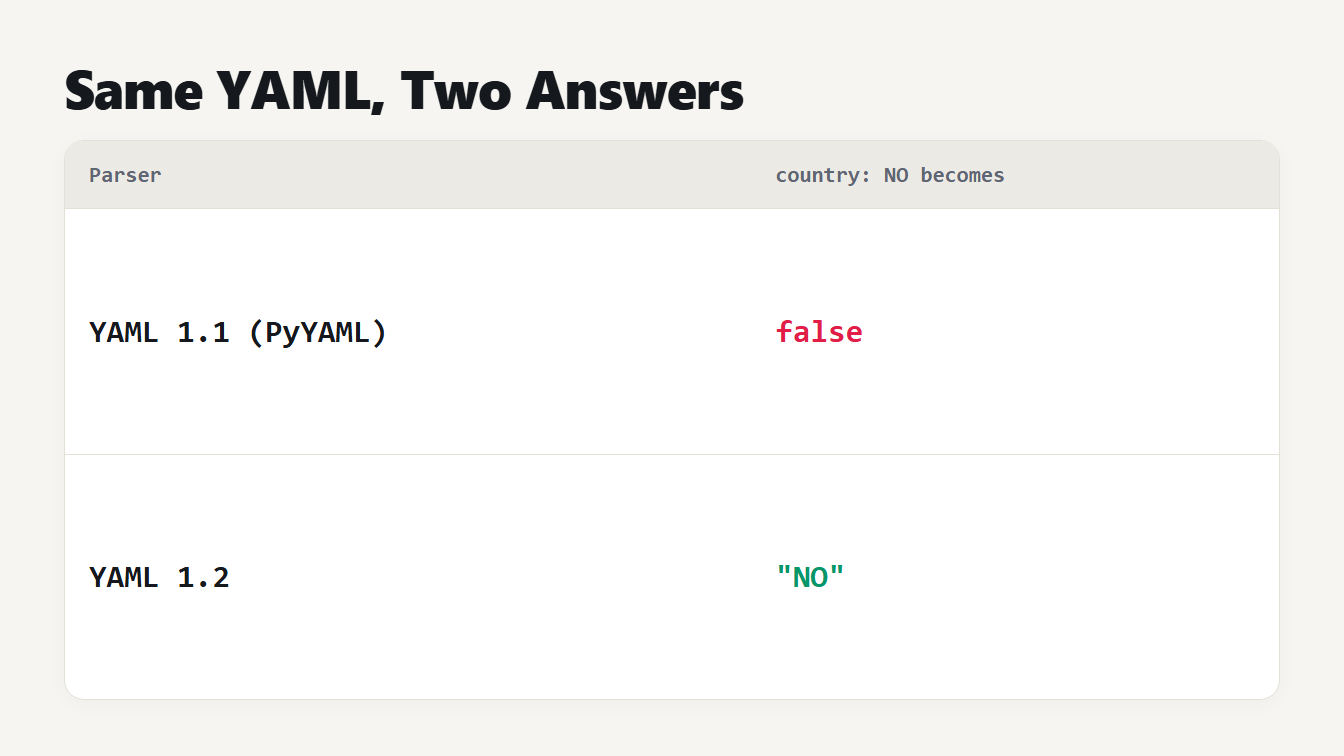
Learn how to convert YAML to JSON in a browser, Python, JavaScript or yq, and what changes on the way: yes and no, anchors, comments and big numbers.
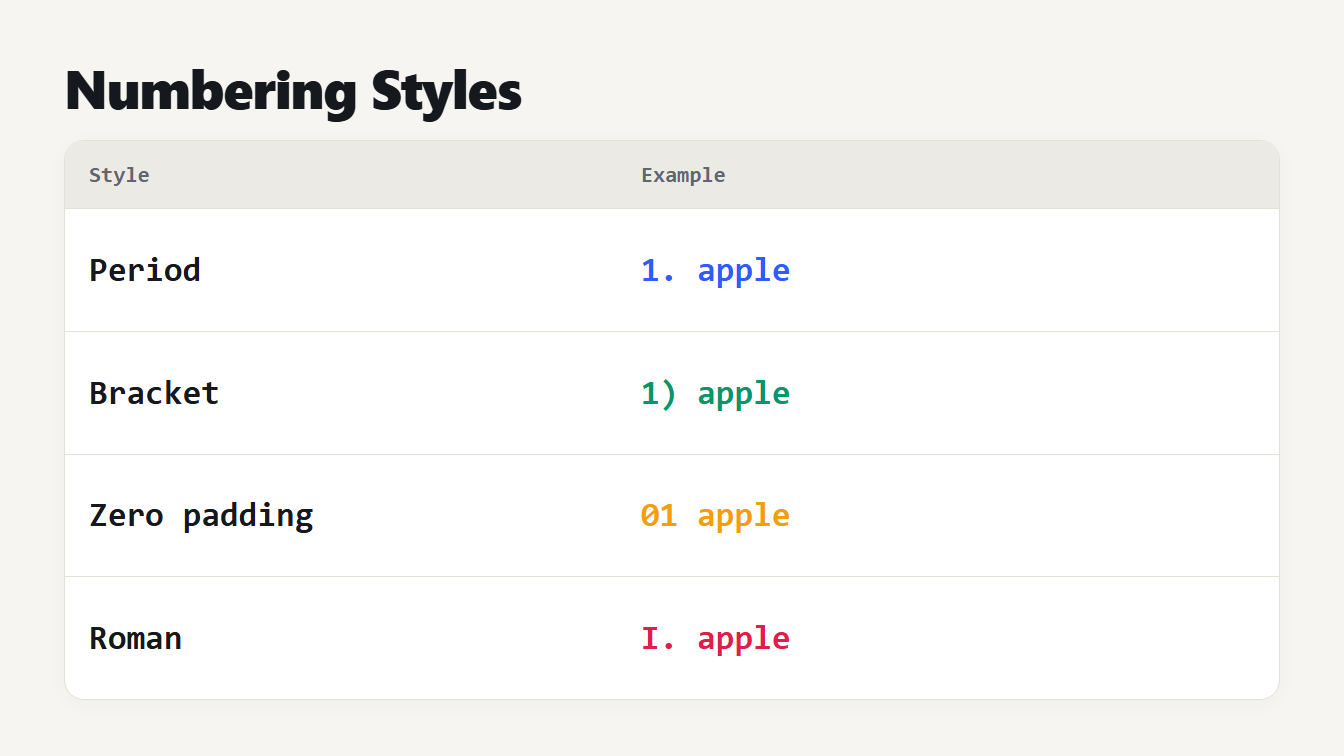
Learn how to add line numbers to text: where to start, what to do with blank lines, how to line numbers up, and when to use letters. Checked against GNU cat.
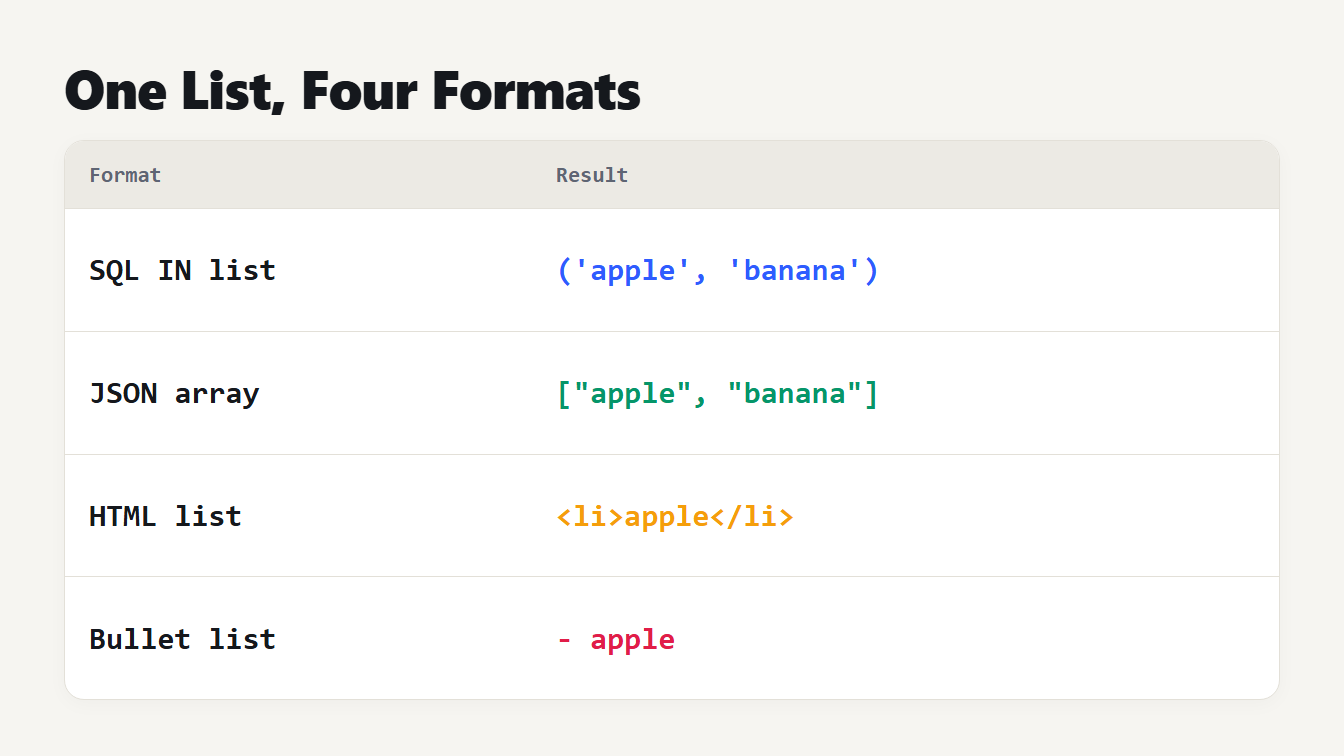
Learn how to add quotes and commas to a list for a SQL IN clause or a JSON array, without a trailing comma, with quotes escaped. Tested on 3,000 lists.
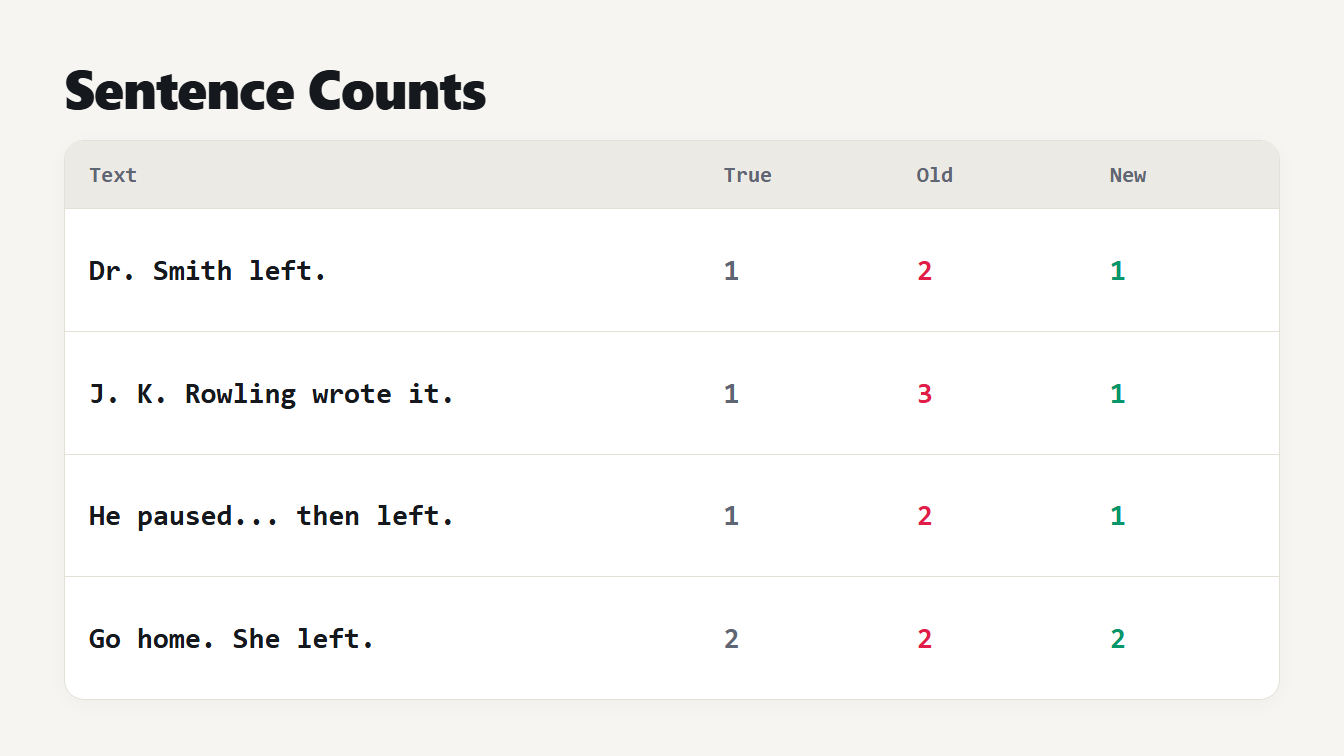
Learn how to count sentences when full stops appear in Dr., e.g. and J. K. Rowling. Rules, a free counter and tests on 3,000 texts and 14 hard cases.
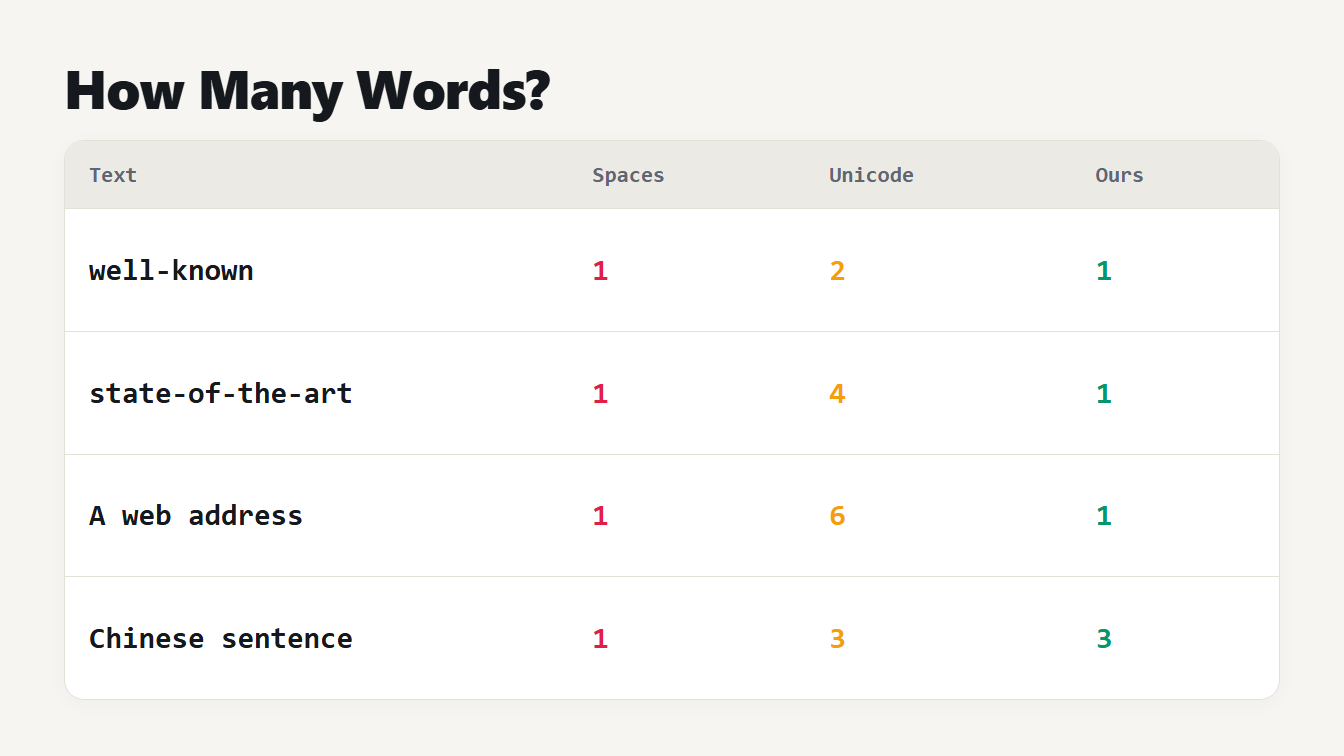
Learn how to count words correctly: how hyphens, dashes, numbers and symbols are treated, and how Chinese and Japanese text is counted. Tested on 60 articles.
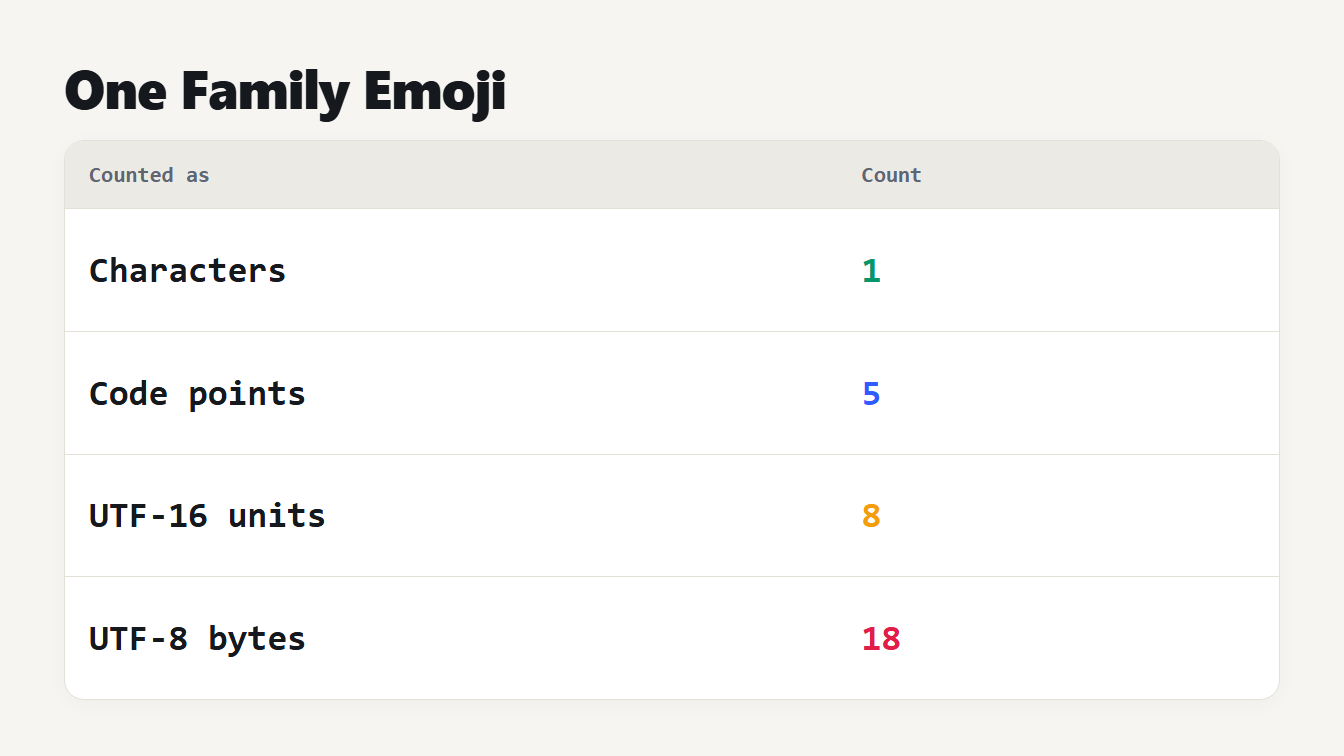
Learn how to count characters in text with and without spaces, why an emoji can count as 2 or 8, and which count to use. Tested on 5,000 strings.
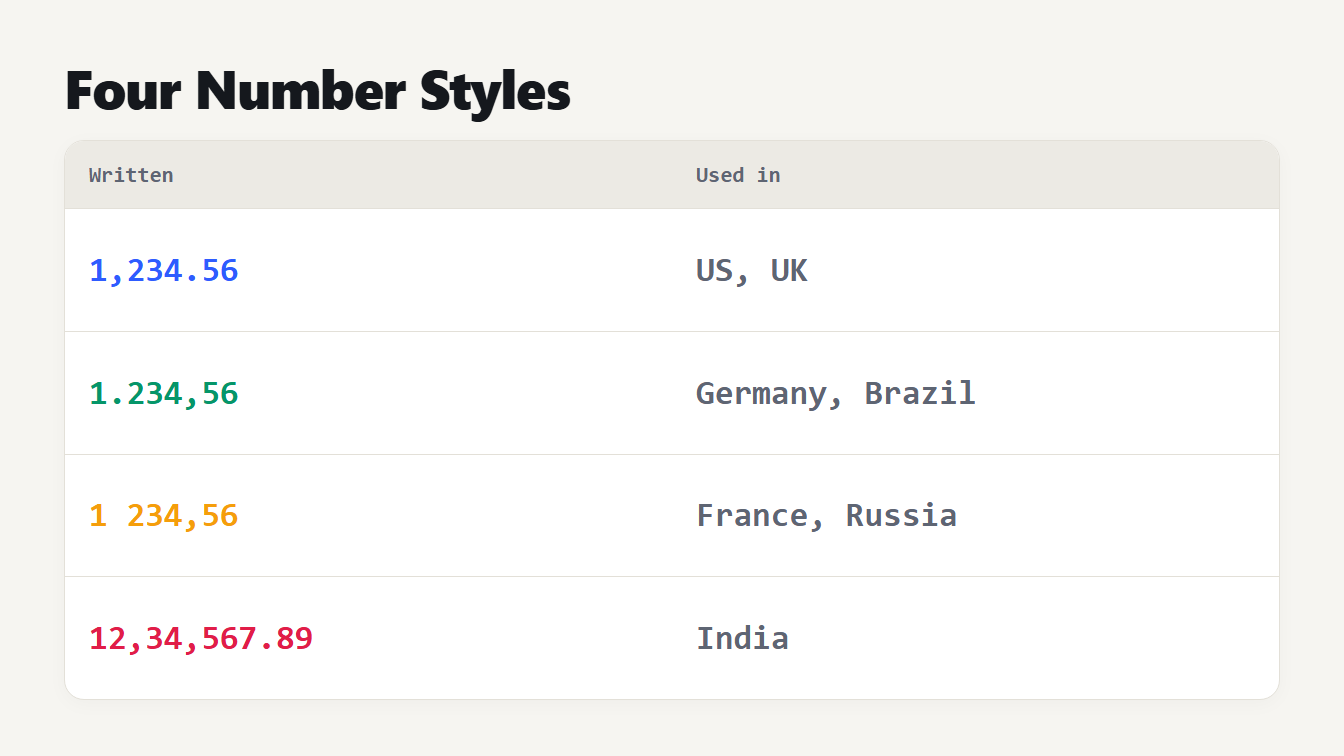
Learn how to extract numbers from text without splitting 1,234.56, losing 10km or adding up dates. Reads US, European, Indian and Swiss number formats.
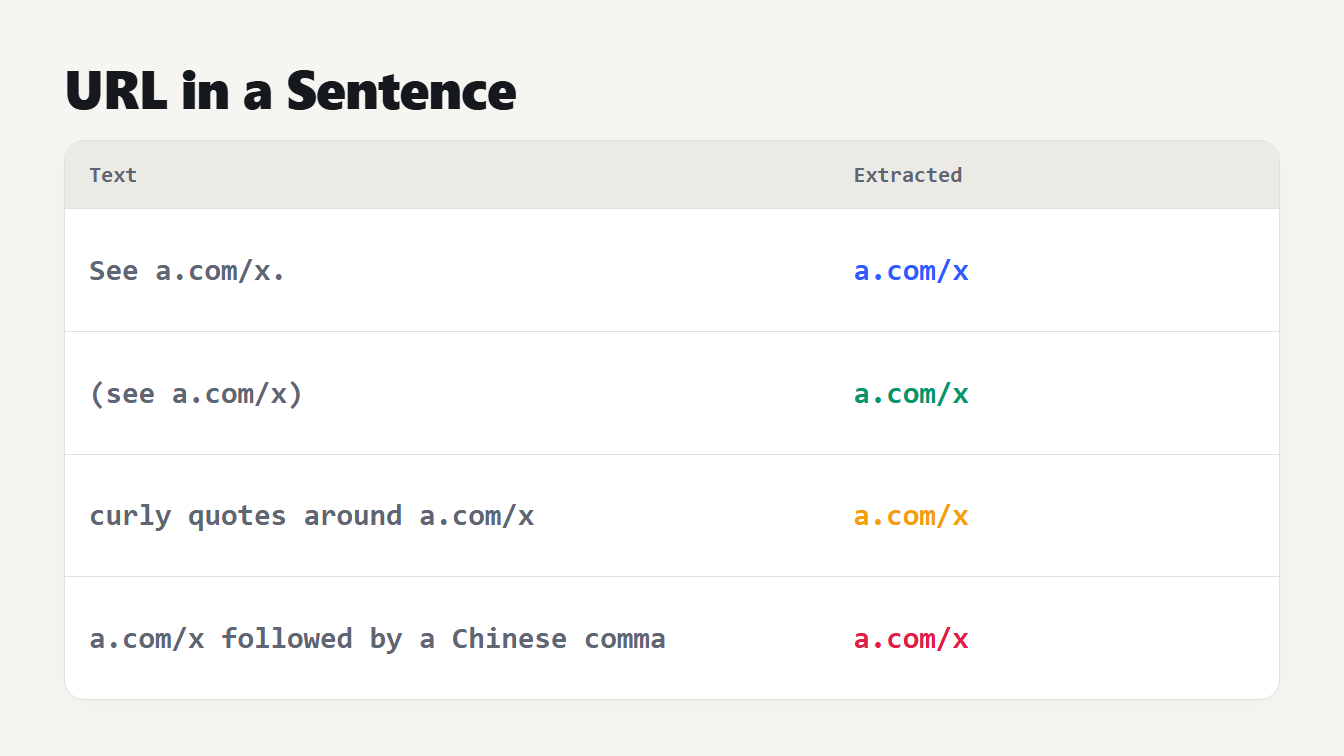
Learn how to extract URLs from text and keep full stops, brackets and quotes out of the result. Tested on 588 cases, with a free extractor and a short regex.
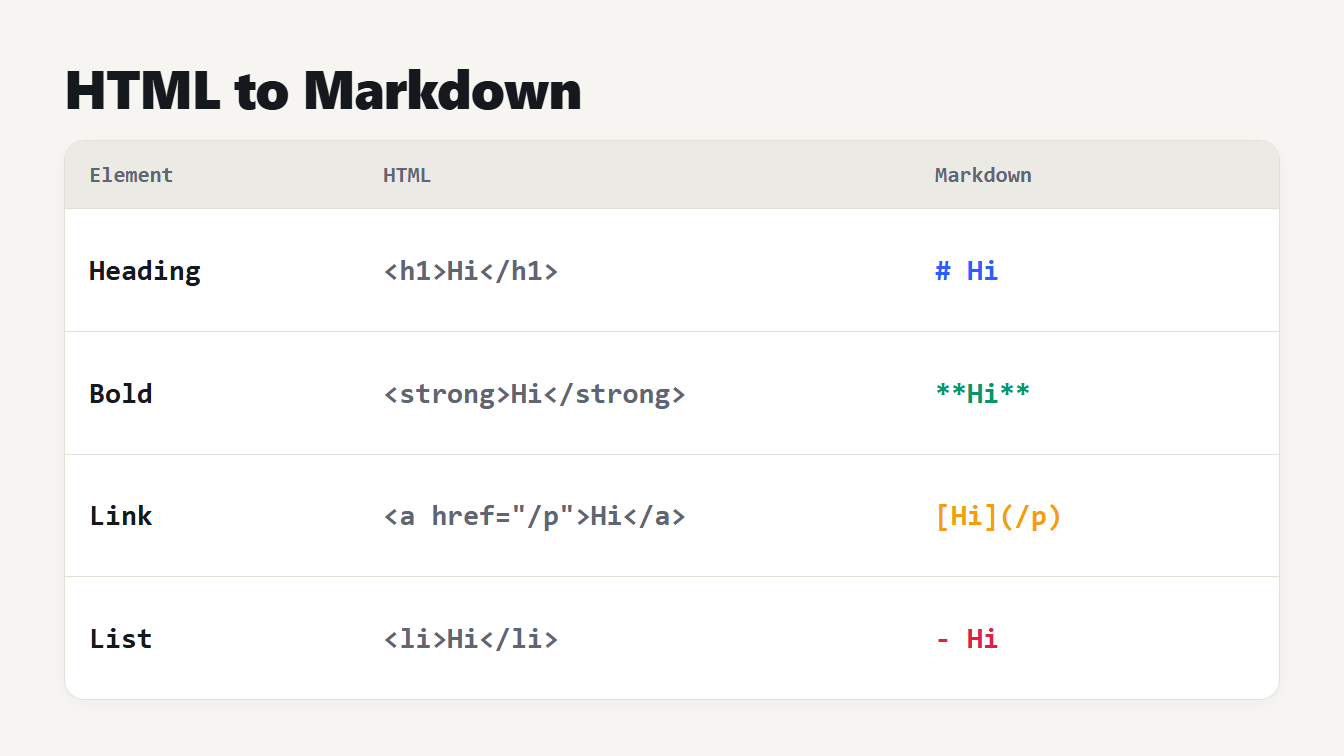
Learn how to convert HTML to Markdown: what each tag becomes, why regex converters break lists and tables, and what Markdown can't keep. Tested on 2,000 pages.
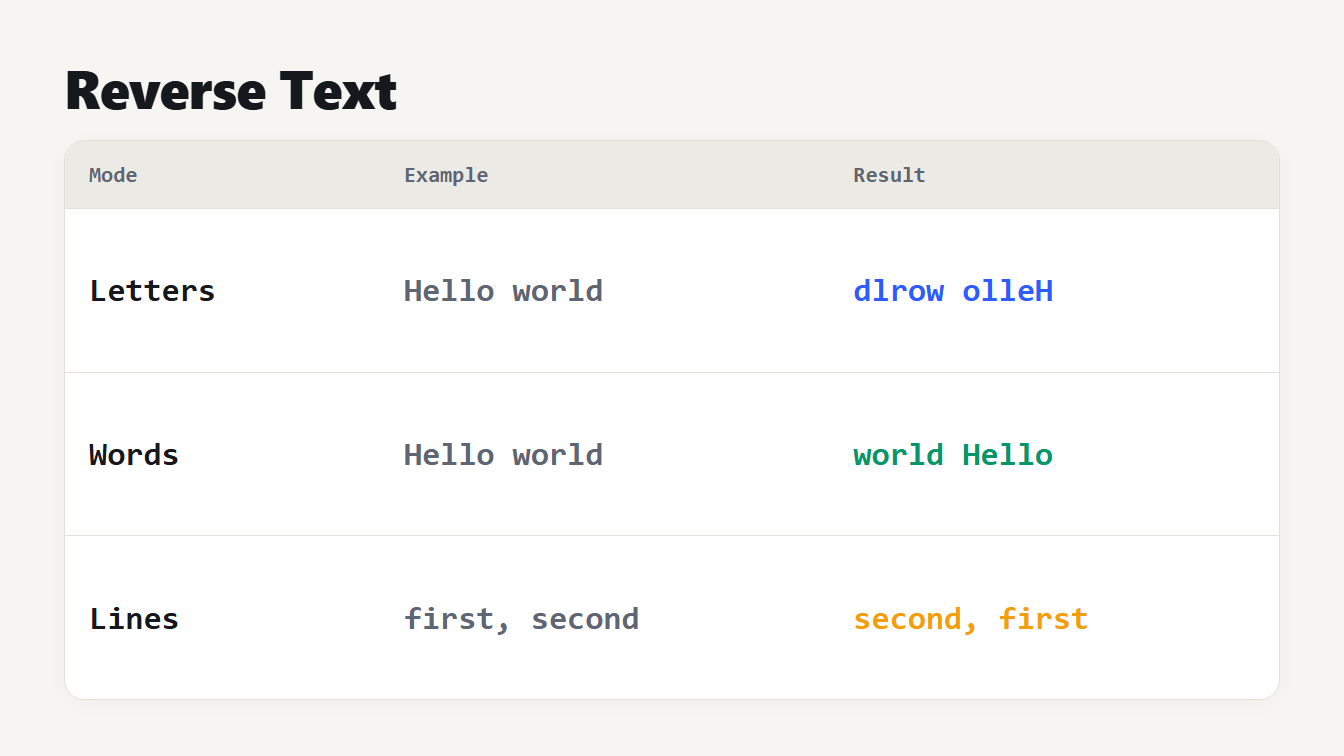
How to reverse text by letters, words or lines, and why reversing by character breaks flags, skin-tone emoji and accents. Tested on 245 flags and 4,000 texts.
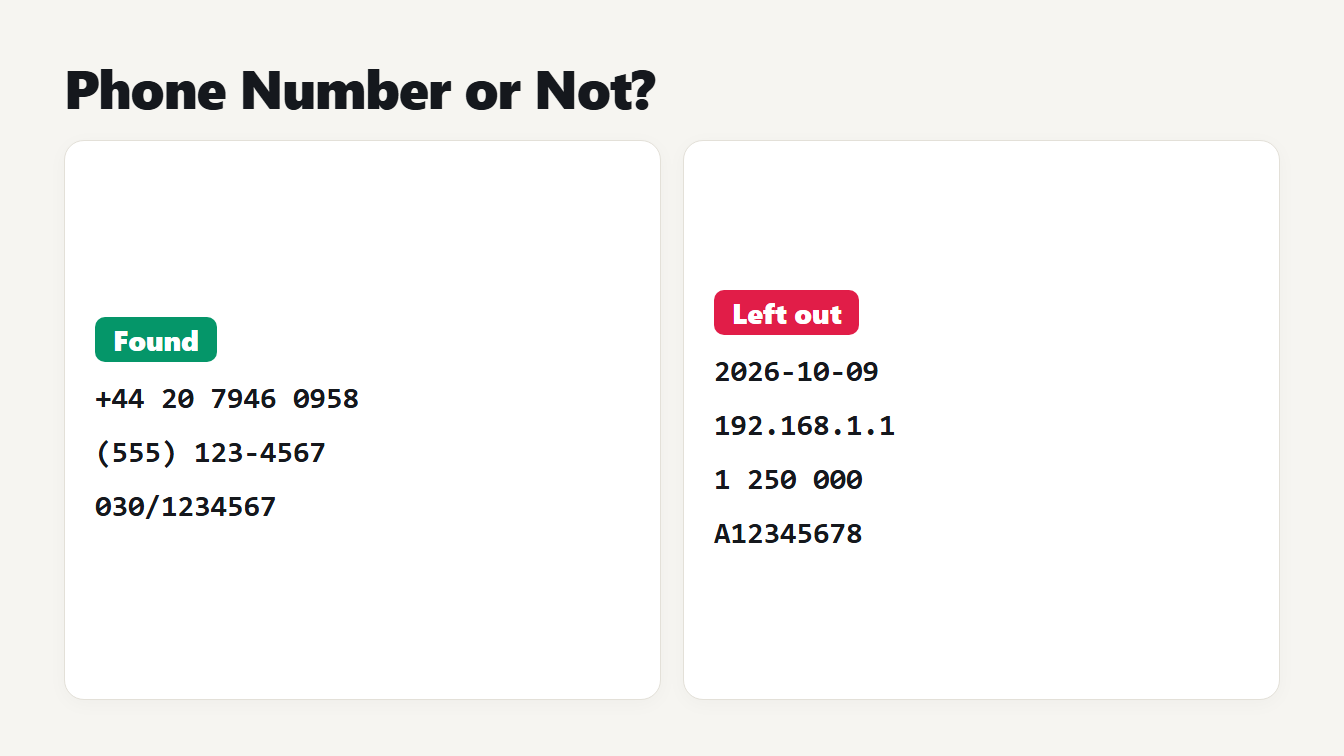
How to extract phone numbers from text: the formats to match, why dates, IP addresses and IDs fool a simple regex, and results tested on 245 countries.
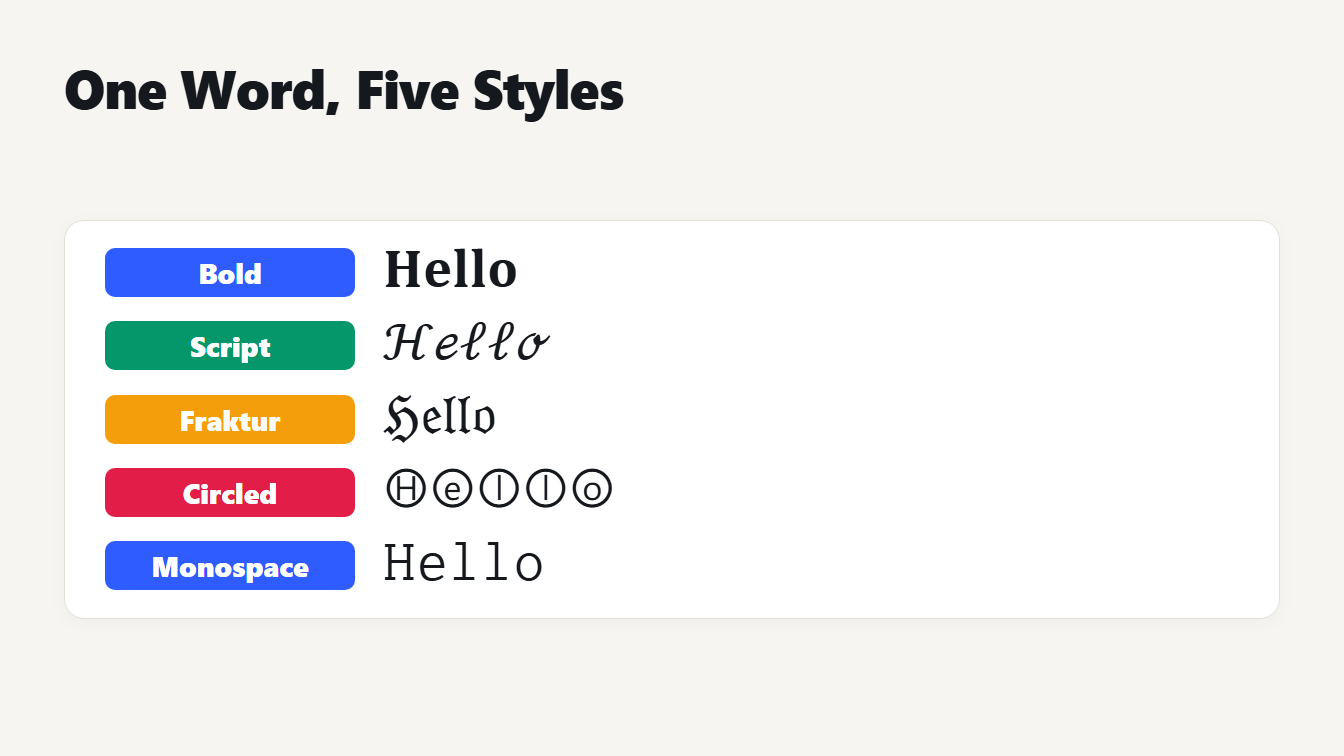
How a fancy text generator works: look-alike Unicode letters, not fonts. See what changes in search, on X, in text messages and for screen readers.
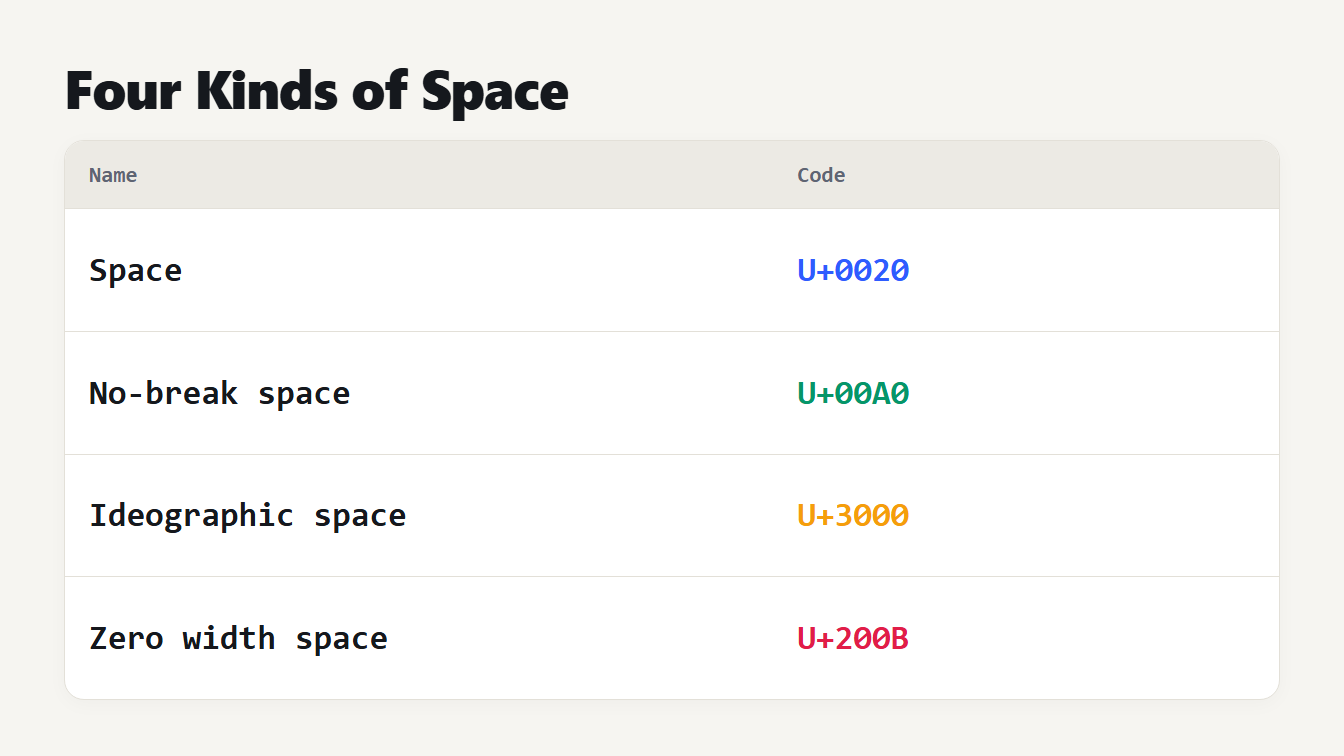
How to remove extra spaces from text: double spaces, tabs, non-breaking and zero width characters, and why JavaScript and Python disagree about which count.
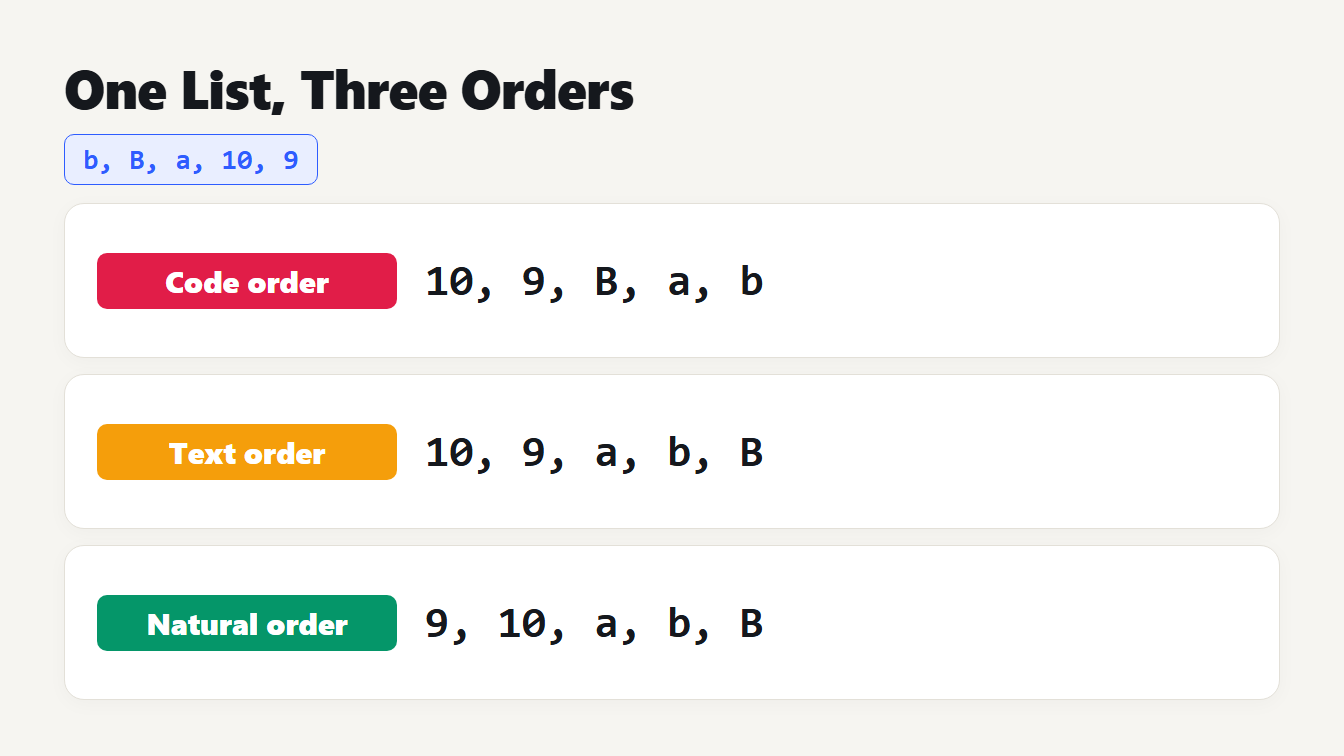
How to sort lines alphabetically online or in code, and why 10 lands before 9, how case and language change the order, checked against Python.
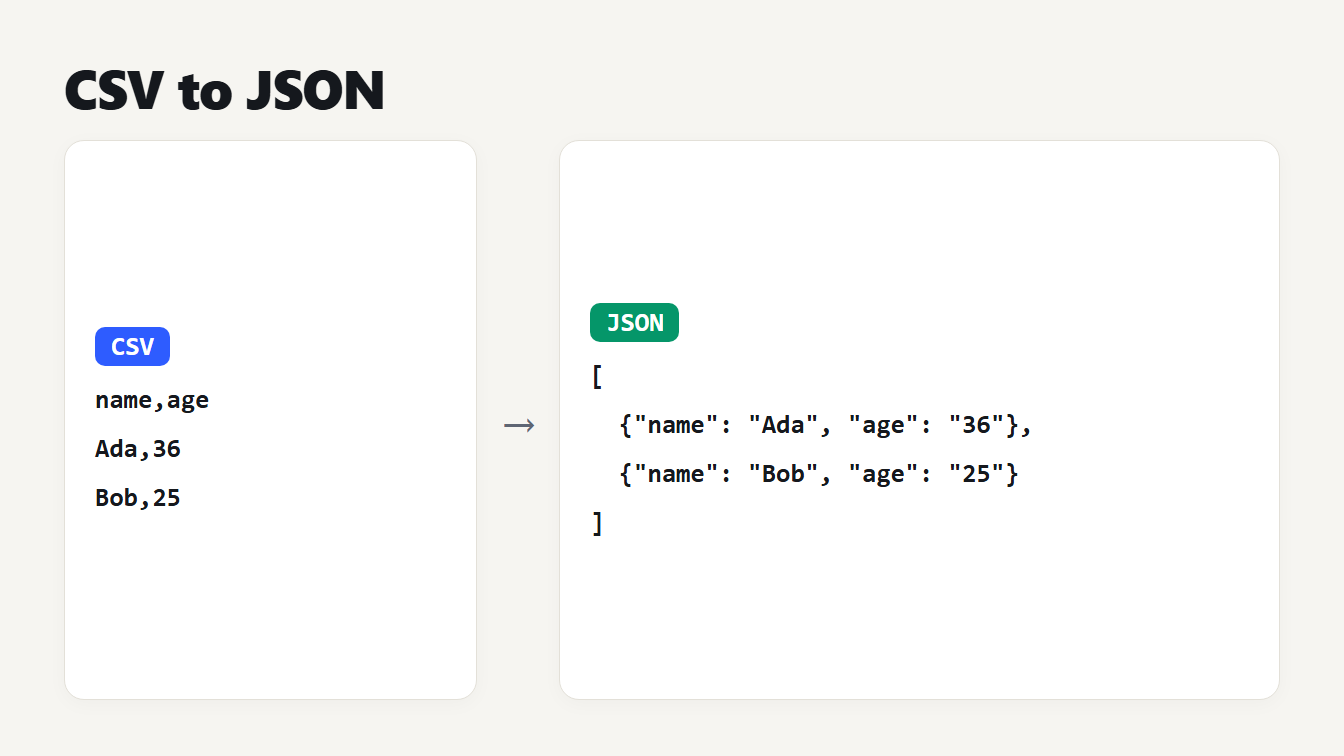
How to convert CSV to JSON: read quoted fields correctly, keep zip codes and IDs intact and handle uneven rows, tested in JavaScript, Python and pandas.
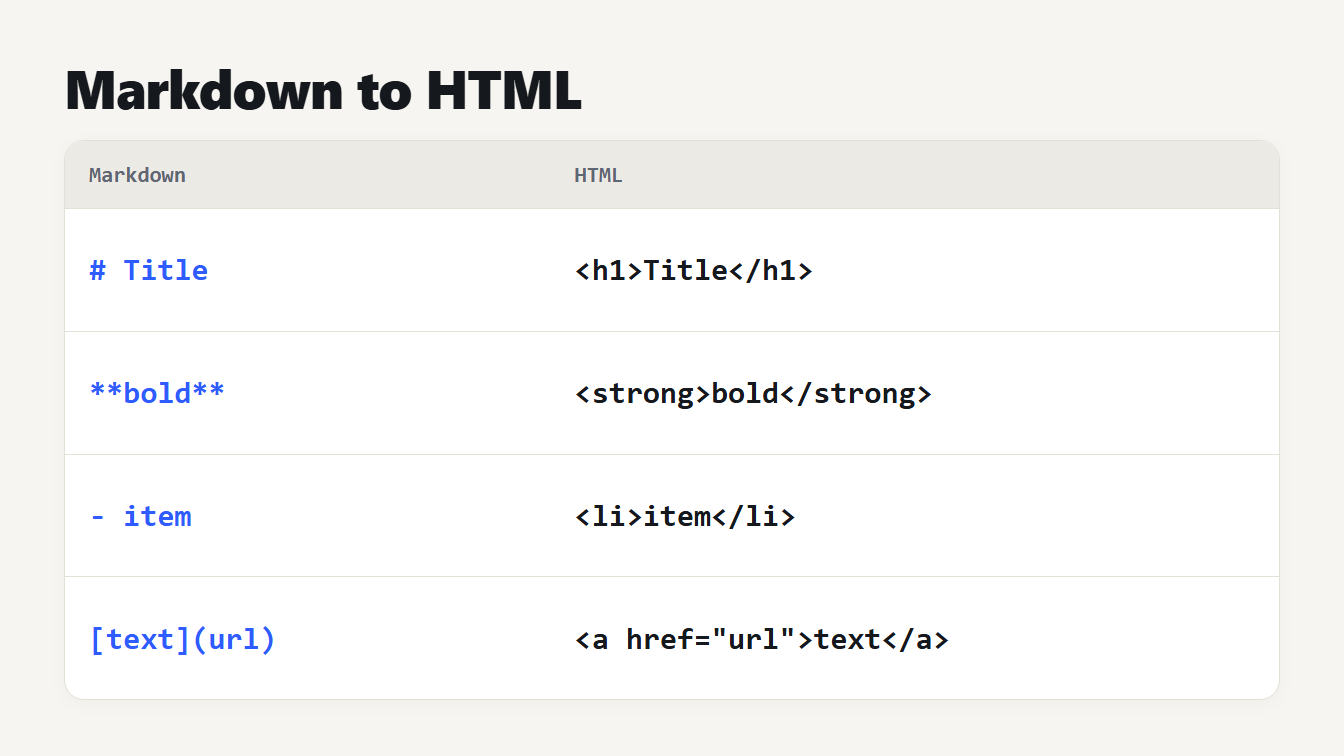
Markdown to HTML explained: the CommonMark rules, what GitHub adds, and the mistakes simple converters make, tested on all 652 official examples.
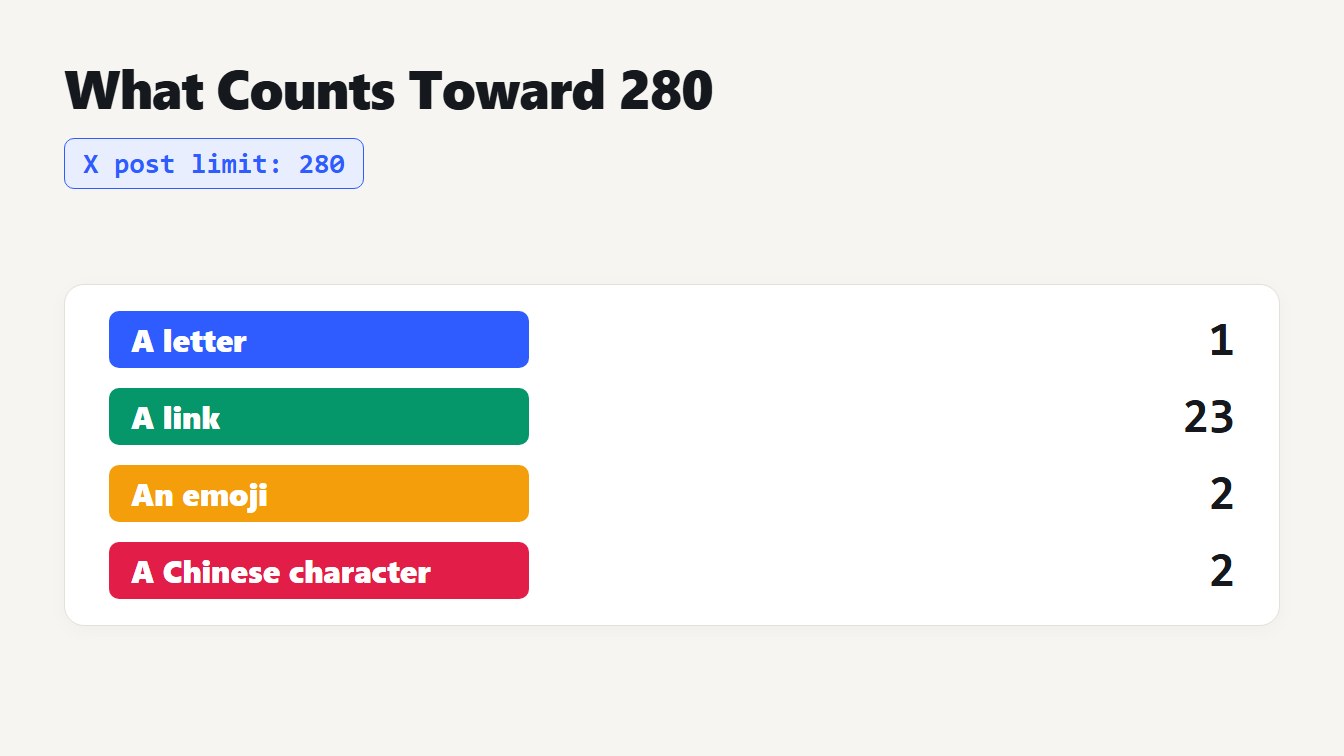
The Twitter character limit is 280, but X counts every link as 23 and every emoji as 2. See the weights, worked examples and how other platforms count.
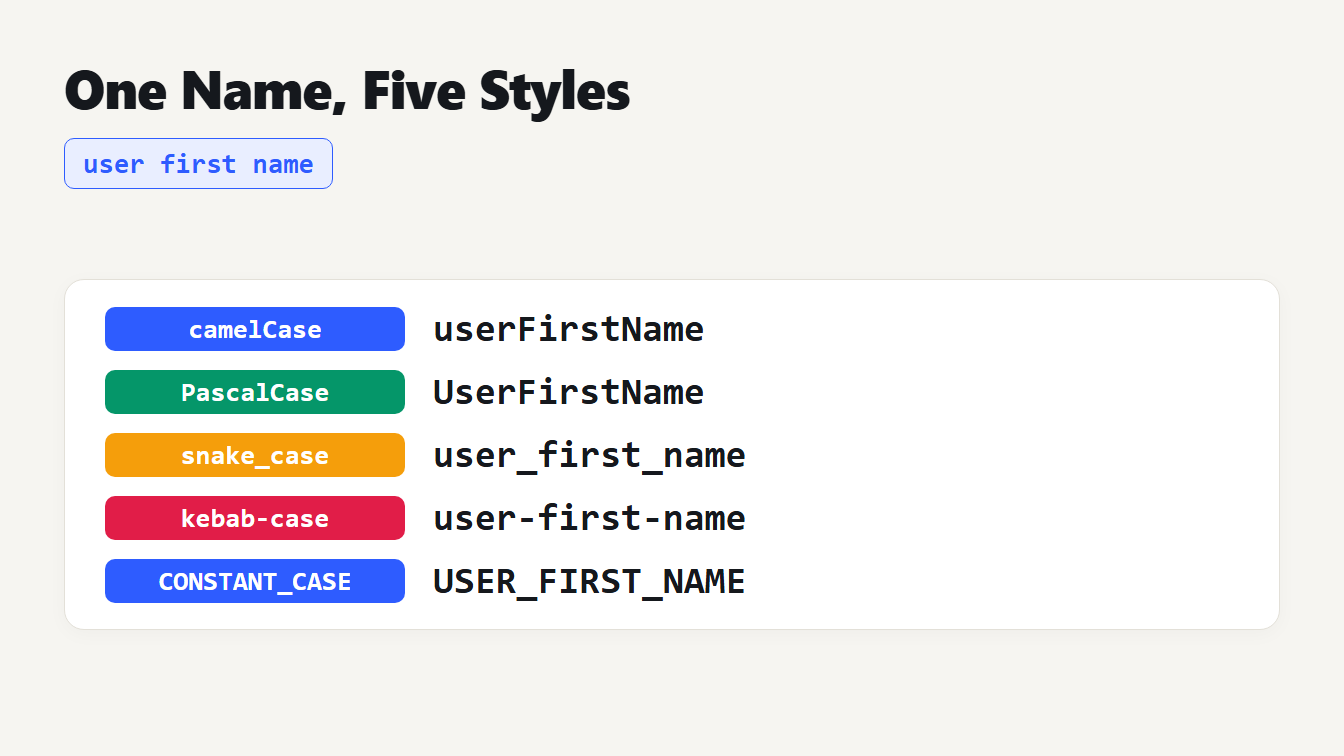
camelCase vs snake case vs kebab-case: which style each language and URL expects, the rules from PEP 8 and Google, and how to convert names correctly.
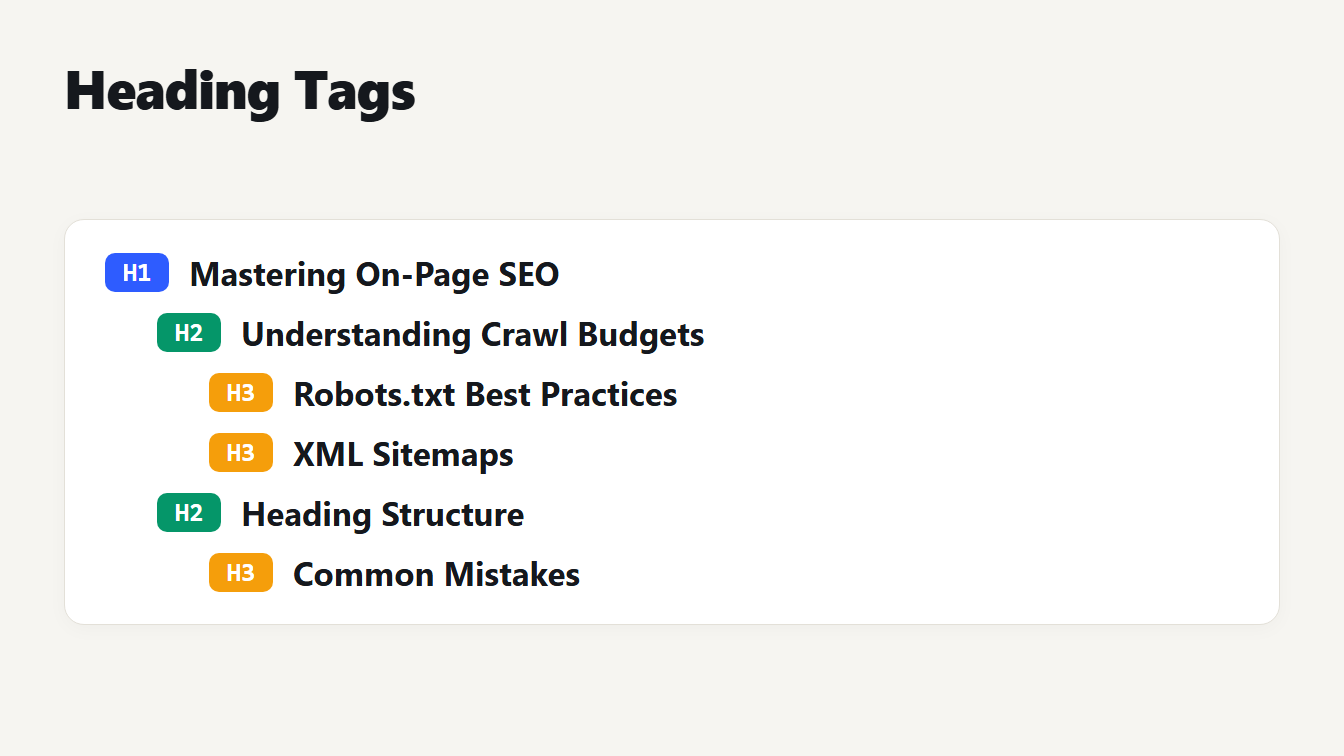
How to use H1 to H6 heading tags: what Google and the W3C actually say about one H1 and skipped levels, plus how to check a page's headings.
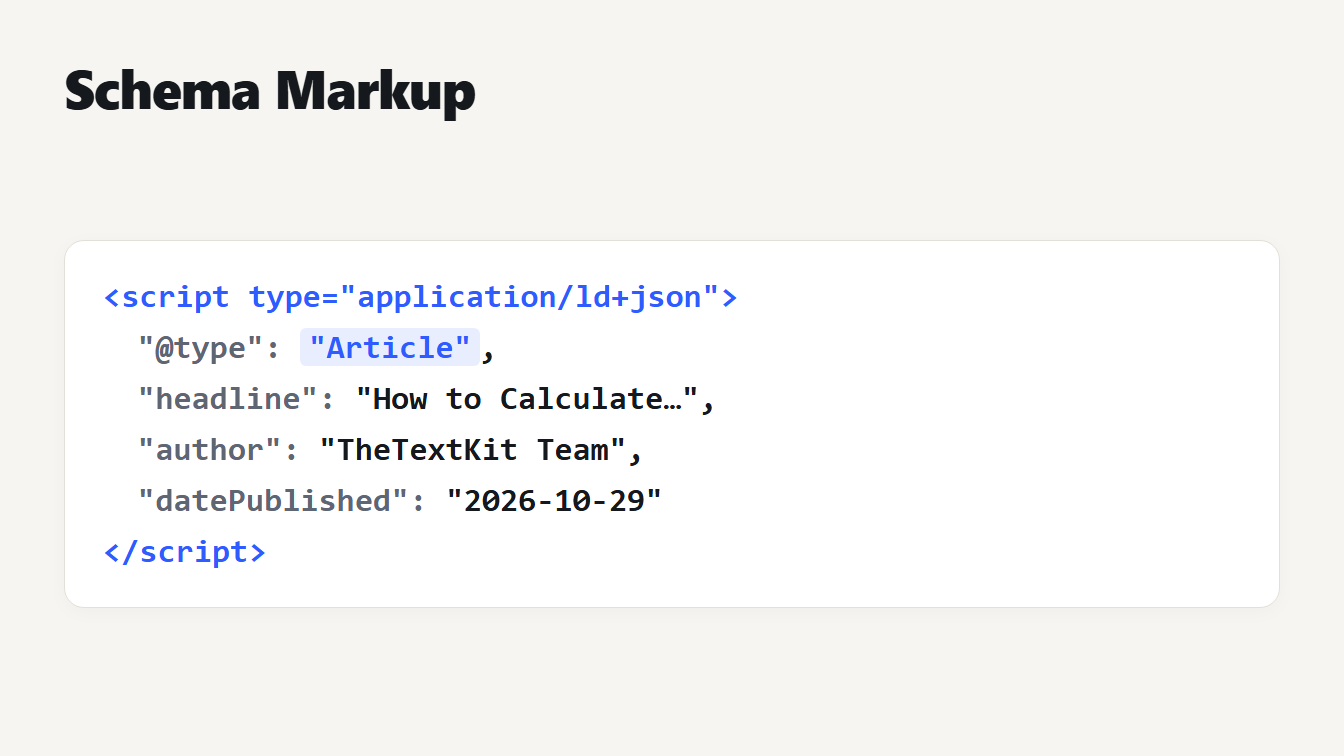
JSON-LD schema markup examples for Article and Product, which types Google still shows, and the script tag mistake that breaks your code.
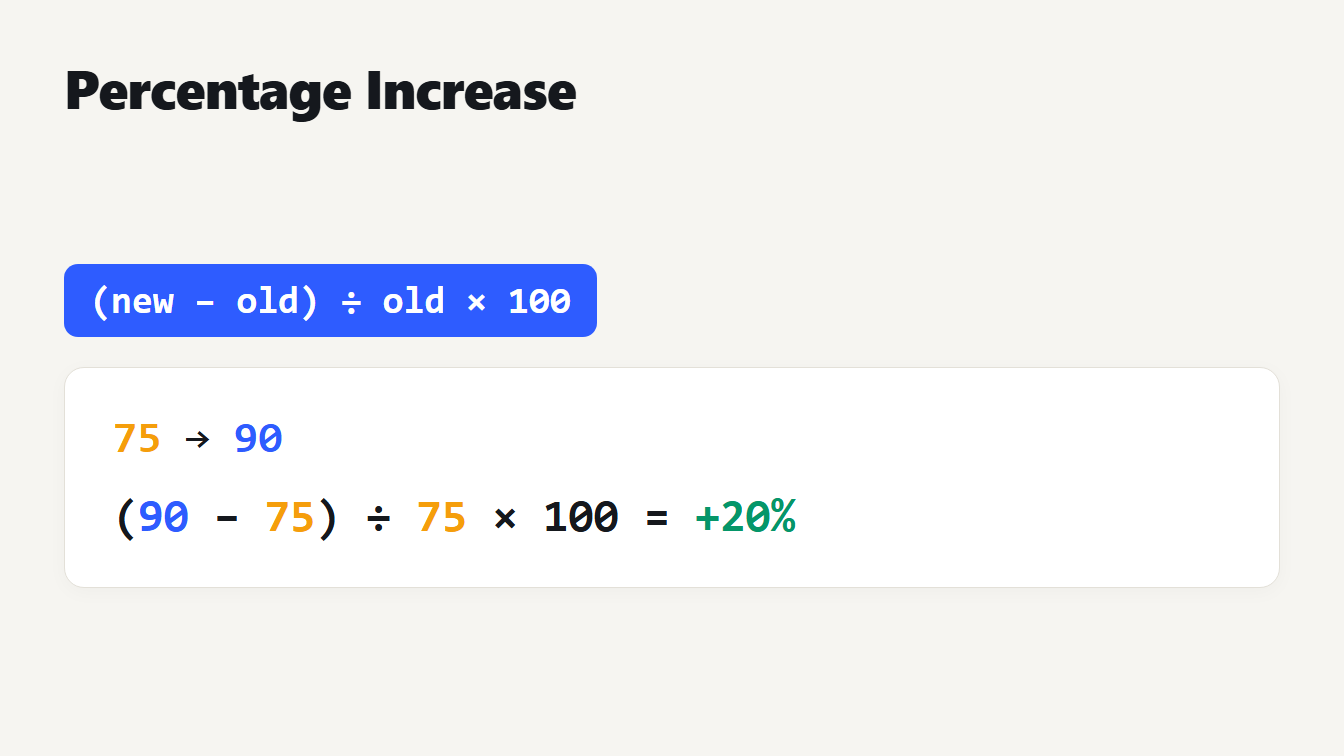
Calculate a percentage increase or decrease with one formula. Examples for prices, scores and tax, and why +50% then -50% does not get you back.
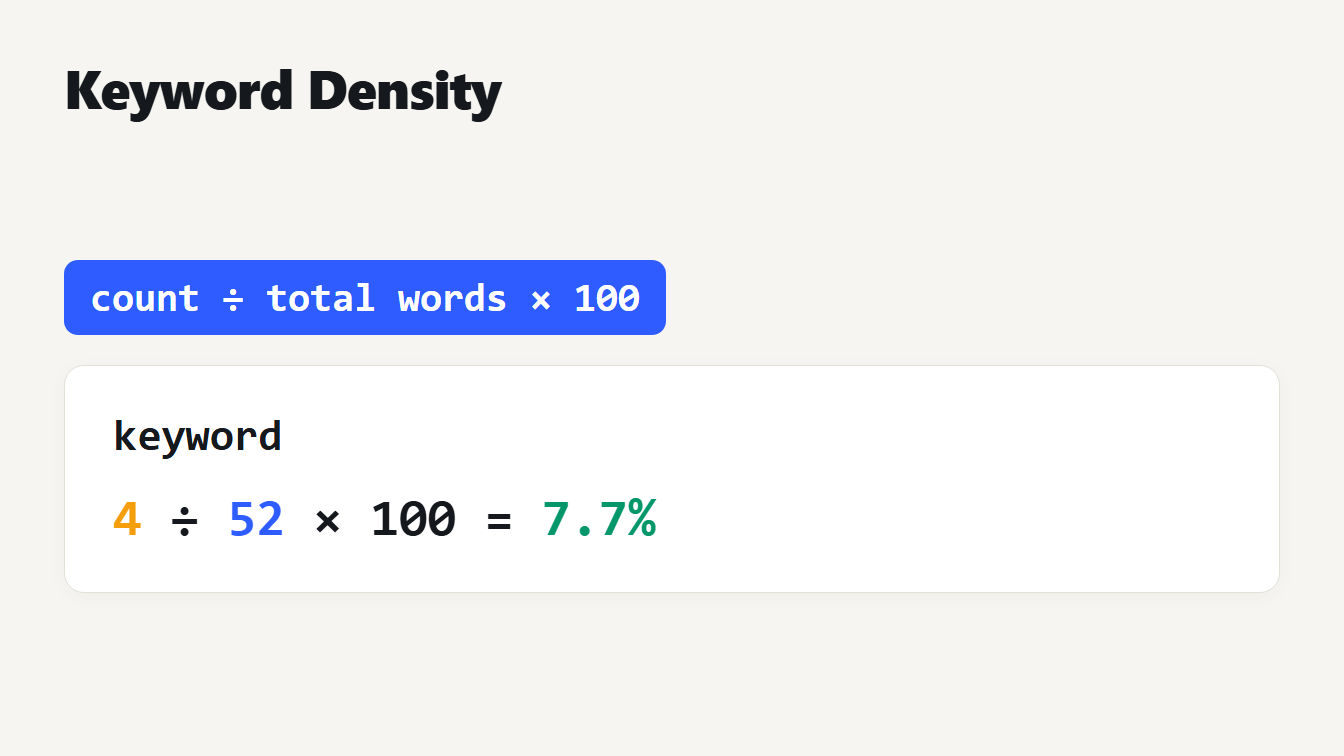
Keyword density is a keyword's count divided by total words. See the formula, four ways tools calculate it and what Google says about keyword stuffing.
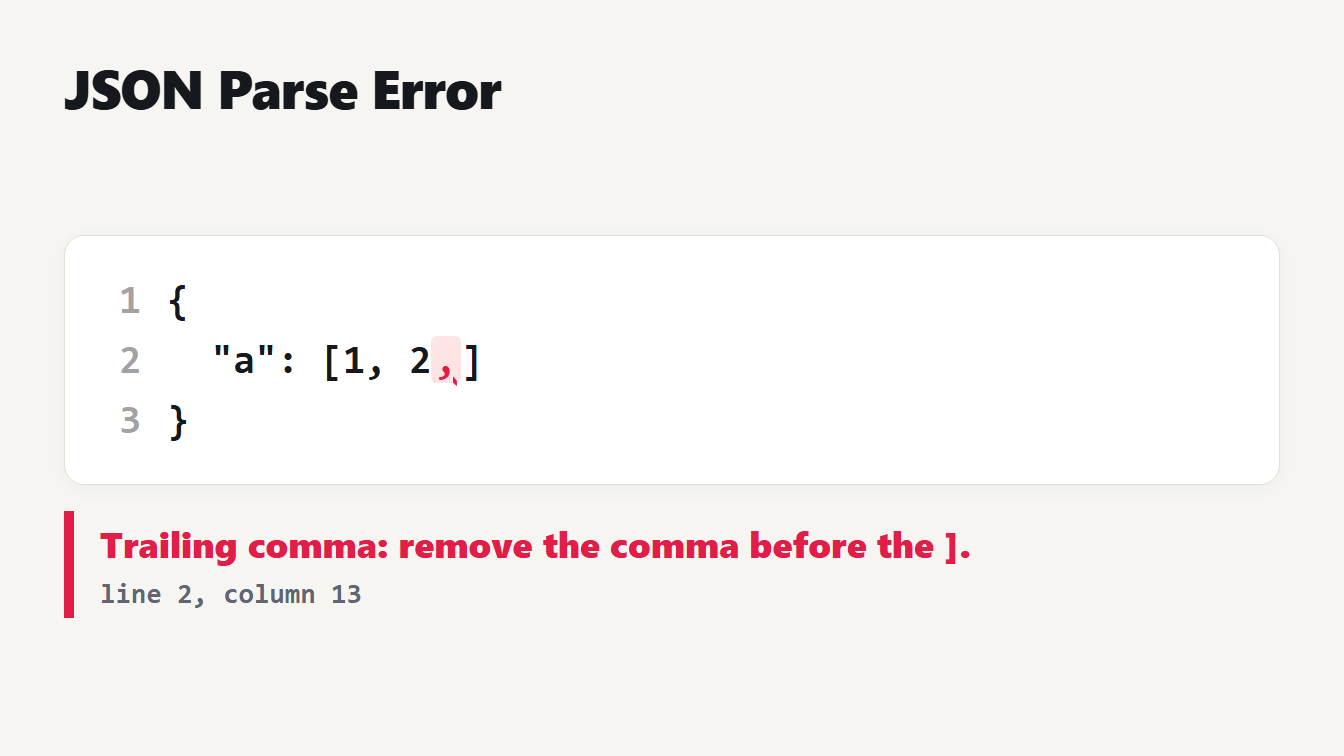
Fix a JSON parse error: 15 causes with the real error messages from Node 24 and Python 3.14, plus what valid JSON can still get wrong.
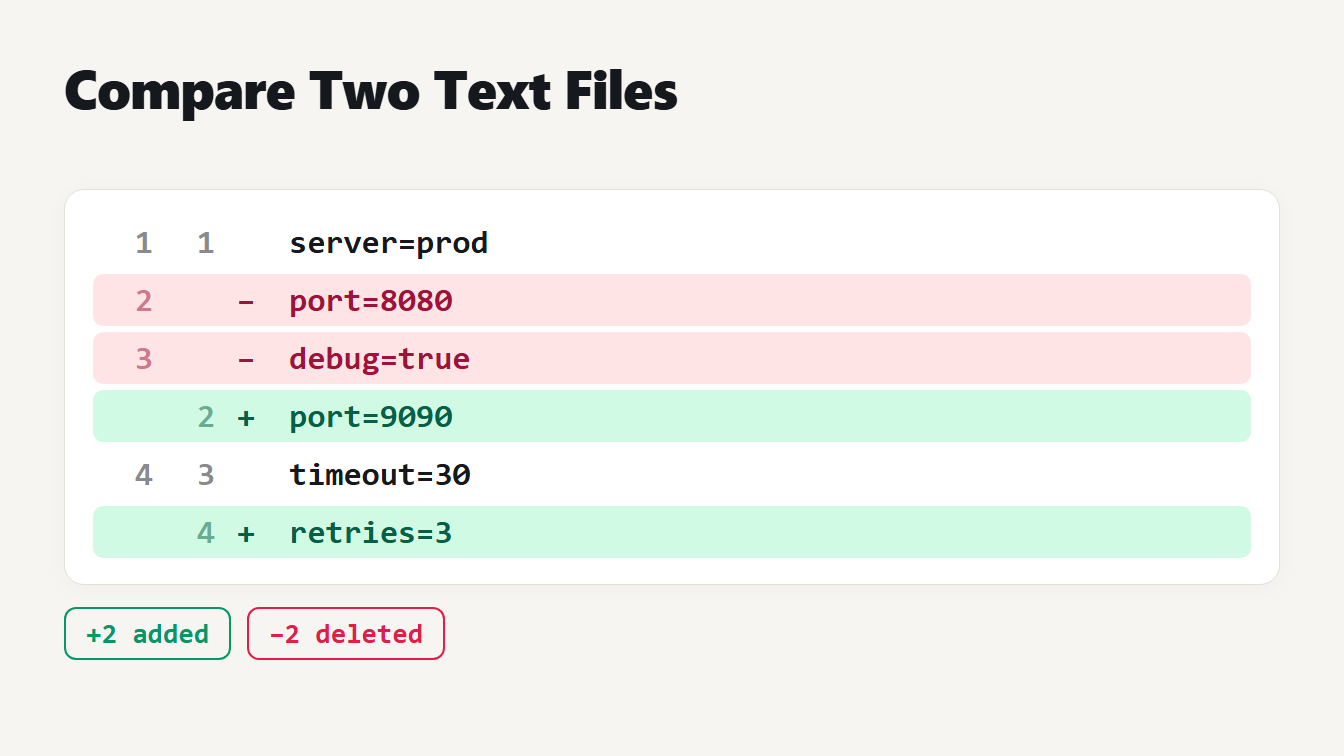
Compare two text files line by line online, with git or in PowerShell. Why every line can show as changed, and how a diff finds the shortest edit.
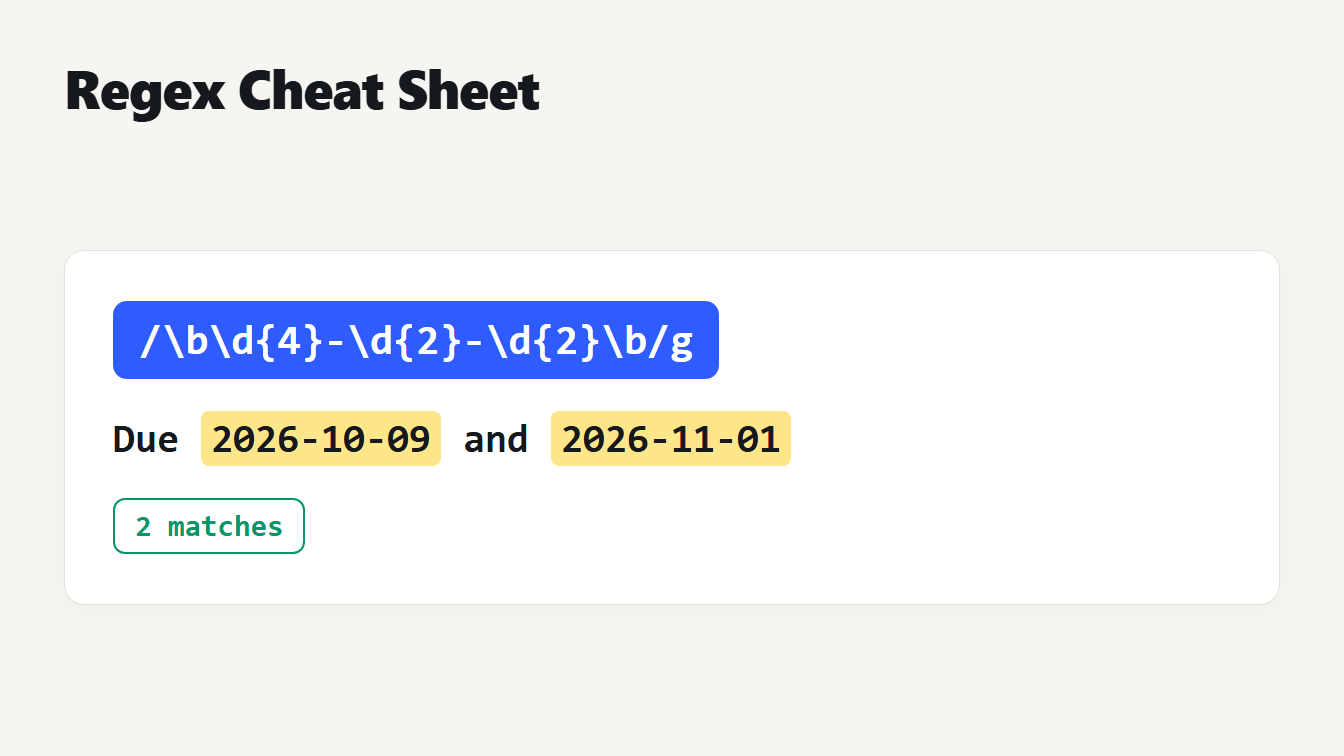
A regex cheat sheet where every example was run in JavaScript and Python, with 10 differences between them and how to avoid patterns that freeze.
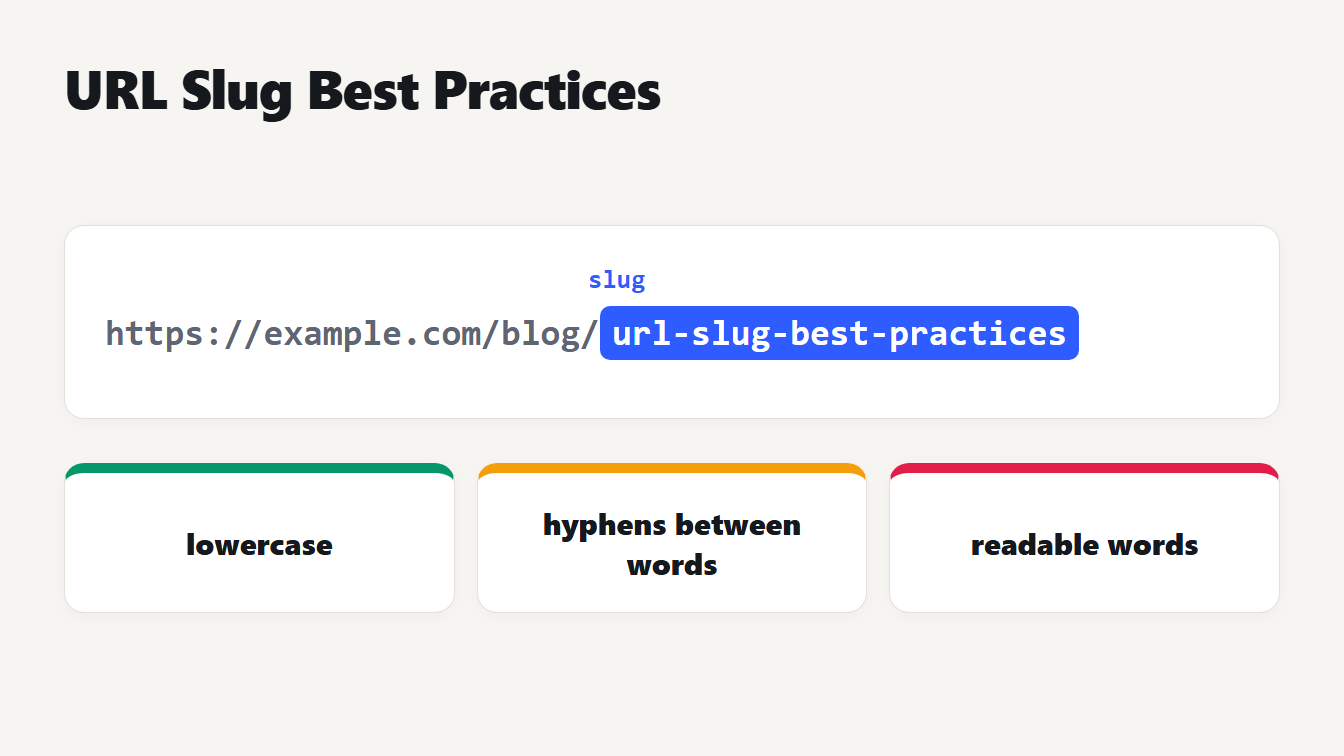
URL slug best practices: hyphens, lowercase, accents, non-Latin titles, length and changing a live slug, with Google's guidance and our test results.
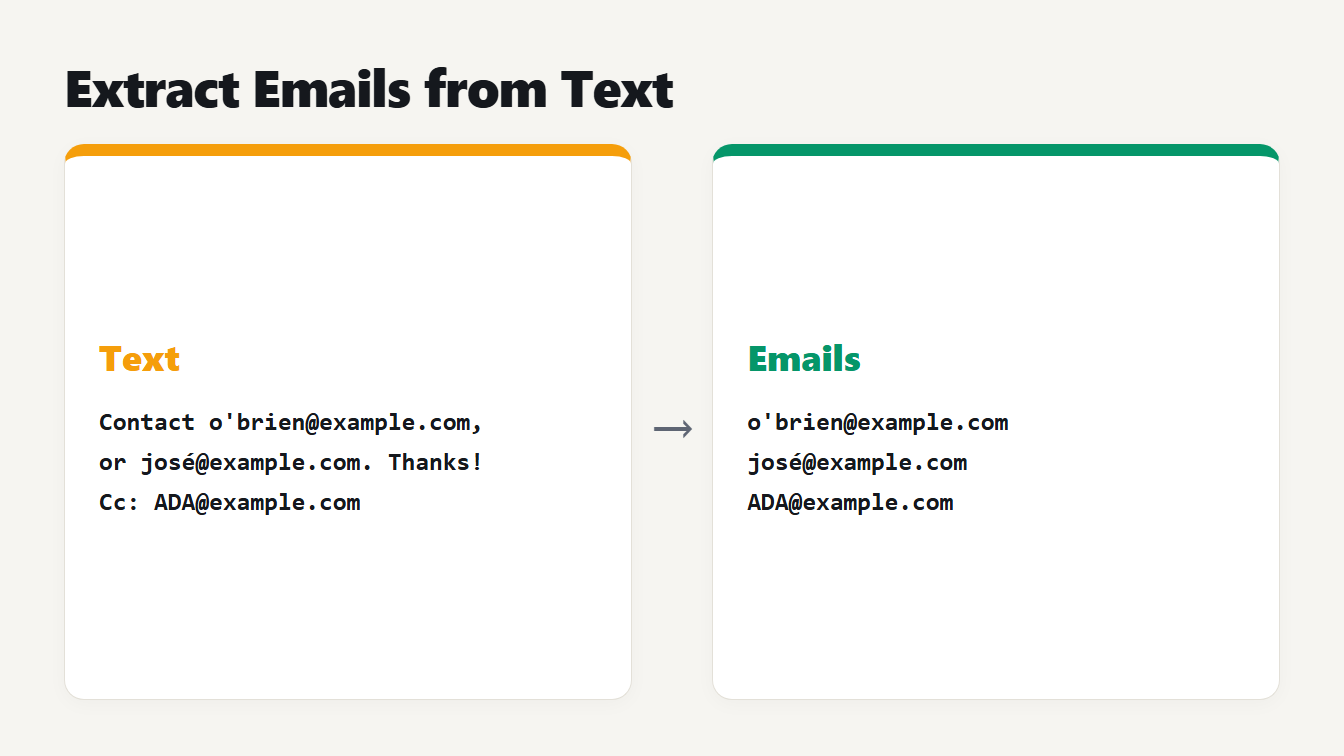
How to extract email addresses from text with a free tool, JavaScript or Python, tested on 20 tricky inputs, plus why a common regex can freeze a page.
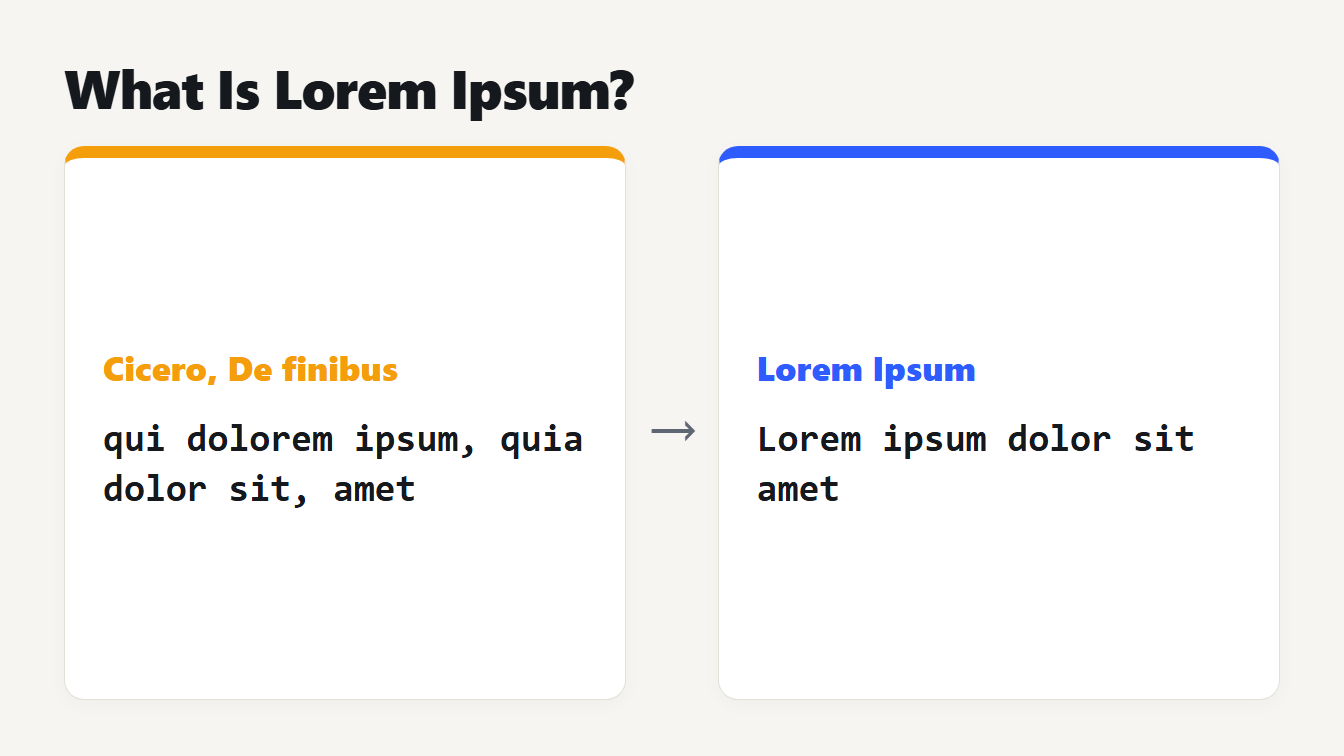
What is Lorem Ipsum? Altered Latin from Cicero's De finibus, compared word by word, plus why designers use it, how much text to expect and a free generator.
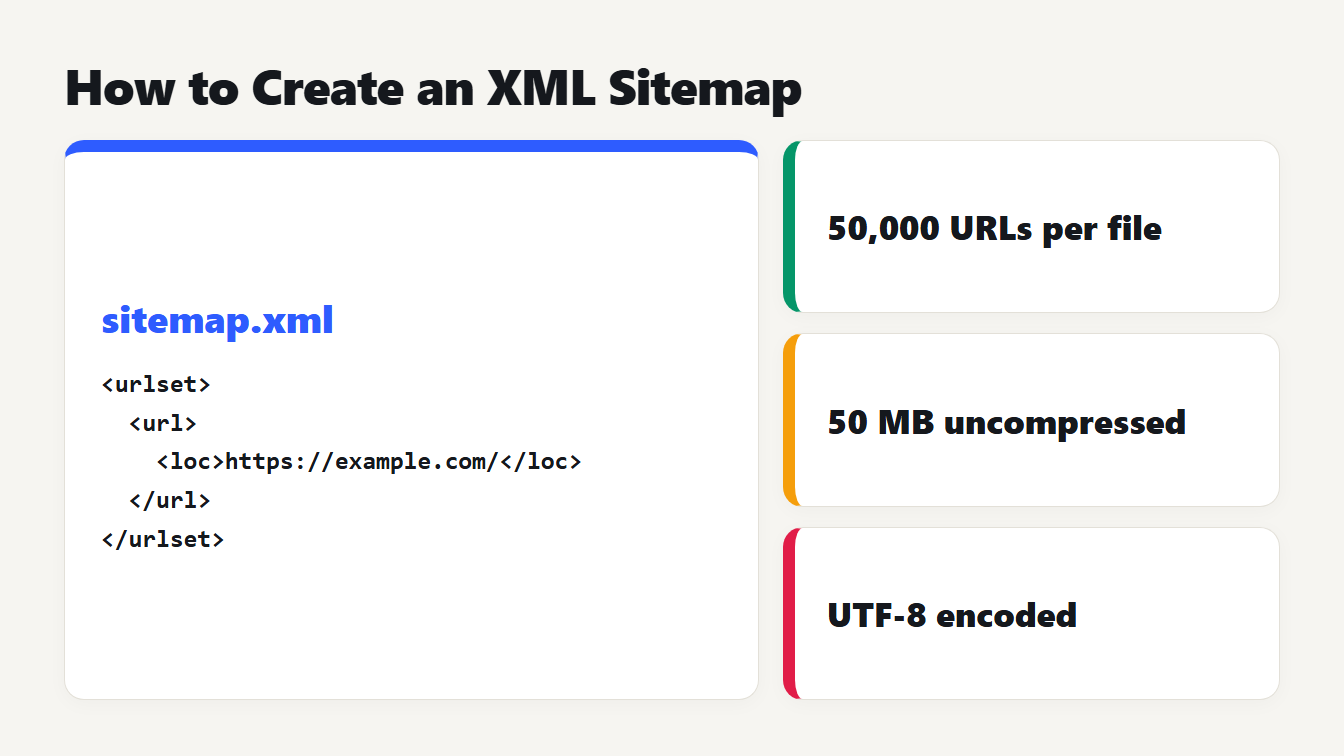
How to create an XML sitemap step by step: the format, the 50,000 URL limit, which tags Google ignores, and how to submit it, with a free generator.
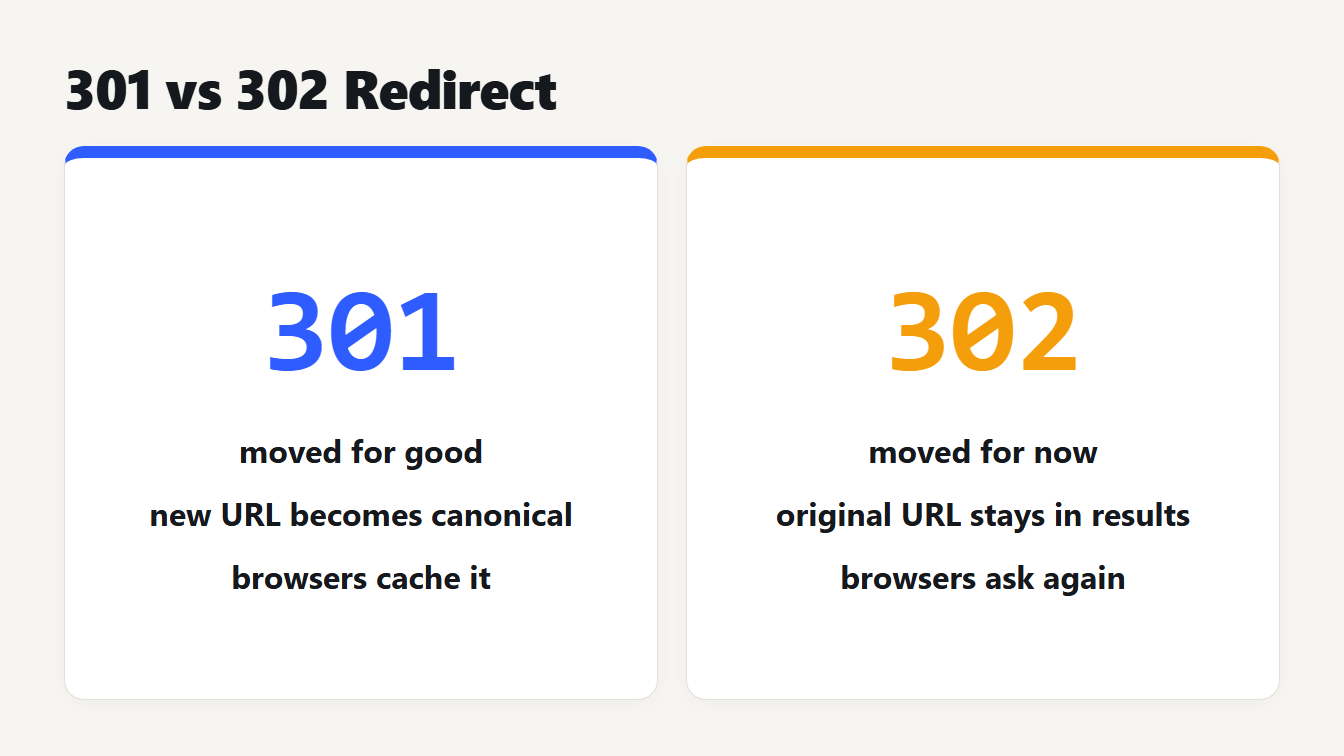
301 vs 302 redirect explained: how Google treats each, what happens to POST requests, browser caching we measured, and ready-to-paste rules for four platforms.
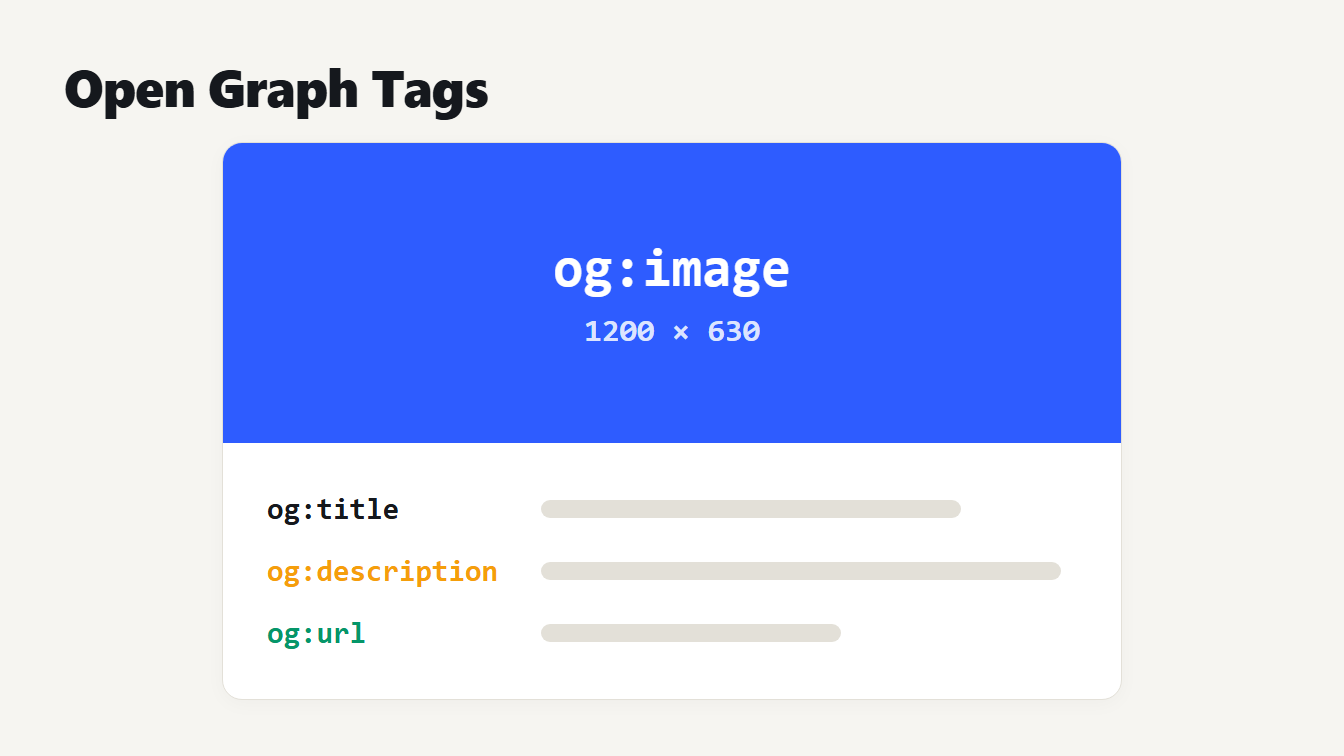
Open Graph tags explained: the four required tags, og:image sizes for Facebook and LinkedIn, a copy-paste template, and fixes for previews that won't update.
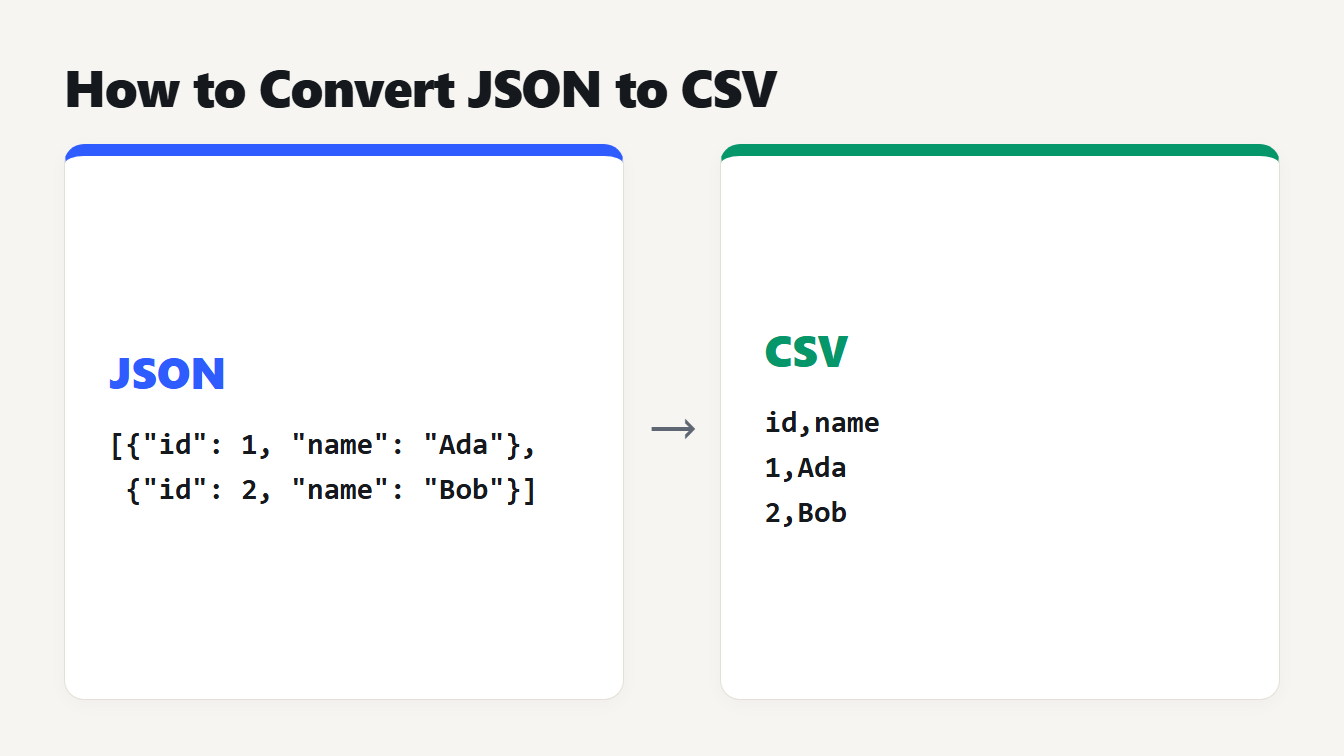
How to convert JSON to CSV with a free converter, JavaScript or Python, how nested objects, big IDs and Excel behave, tested on one real example.
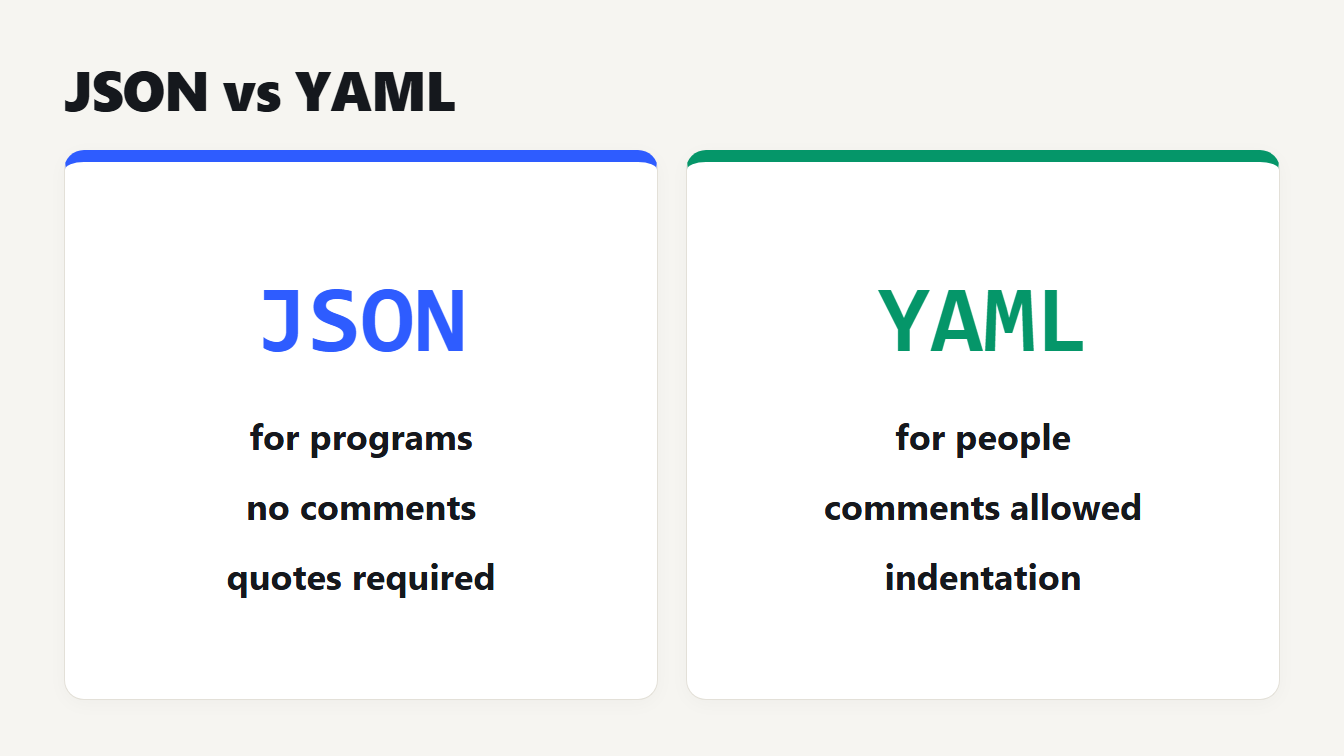
JSON vs YAML explained with the same config in both formats, a size and speed test, the yes and no trap, and free converters to switch between them.
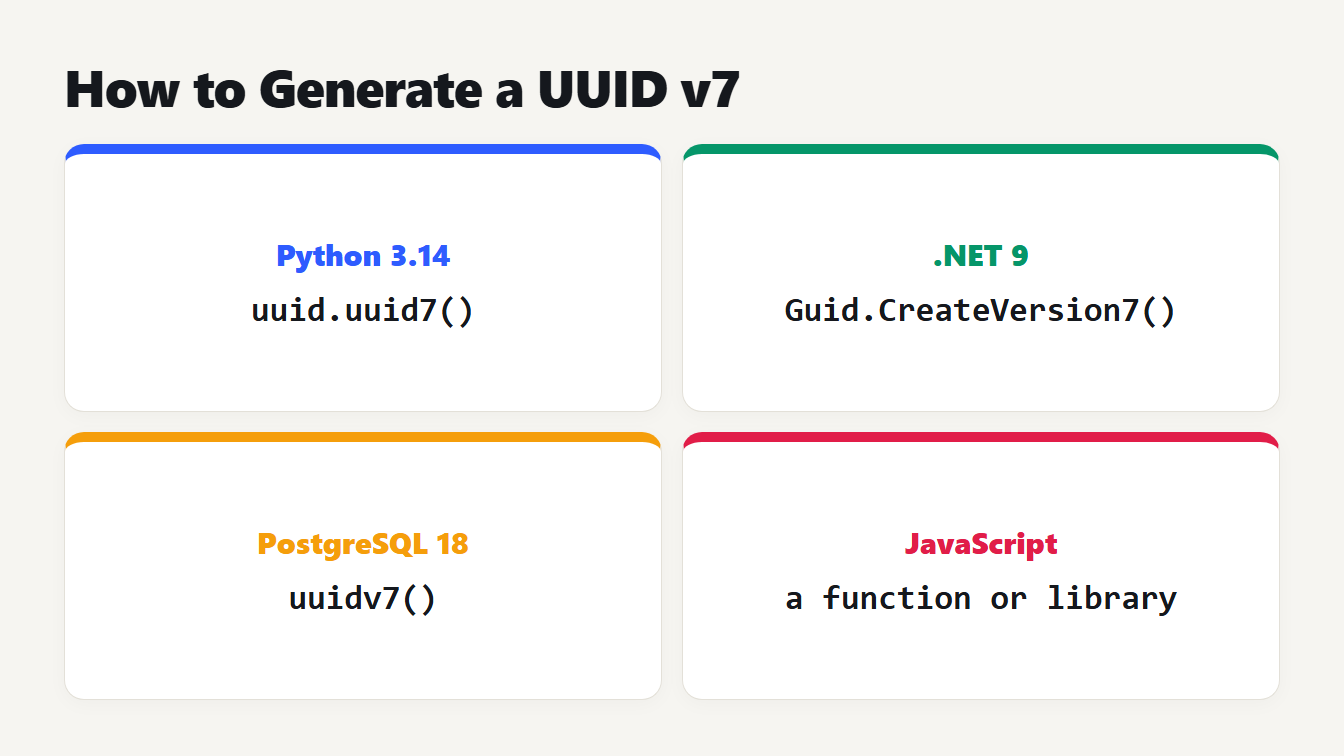
How to generate a UUID v7 in JavaScript, Python, .NET and PostgreSQL, why same-millisecond IDs need a counter, and a free generator that keeps them in order.
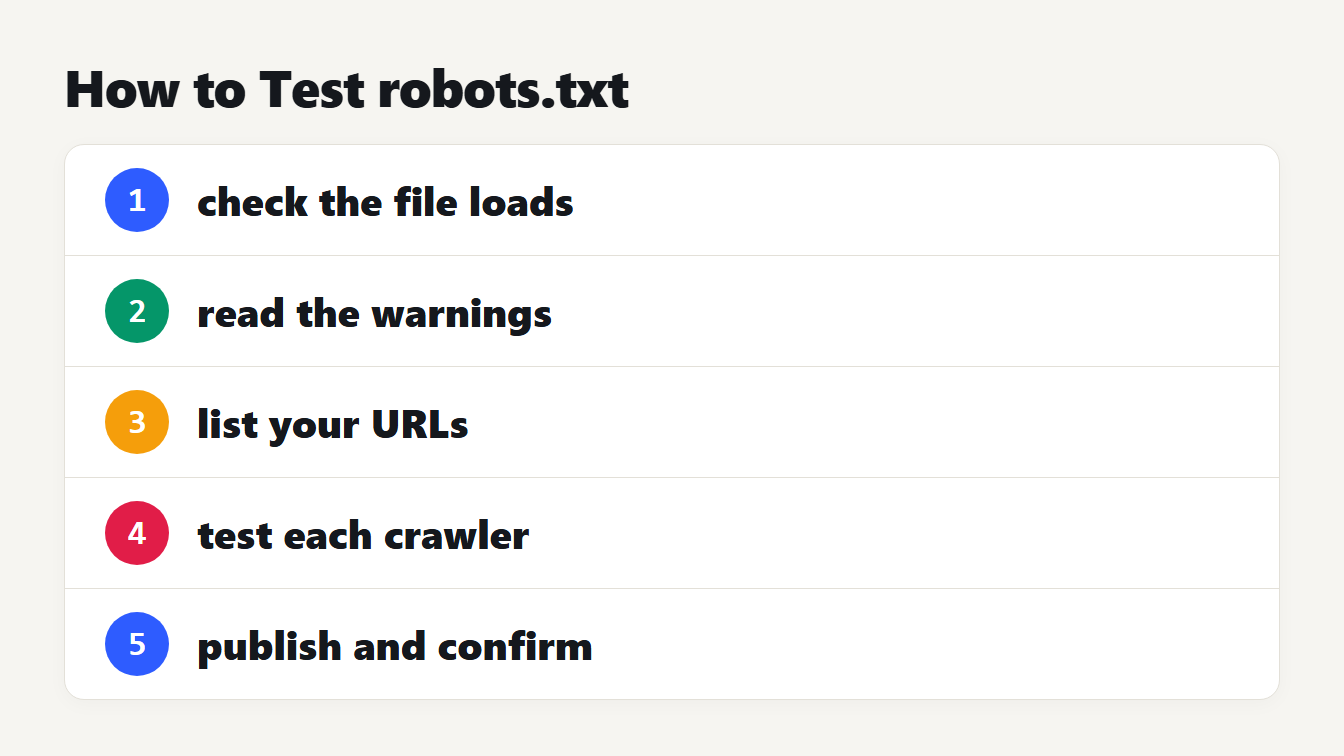
How to test robots.txt step by step: check the file loads, run URLs through a tester, read the winning rule, avoid false results and confirm in Search Console.
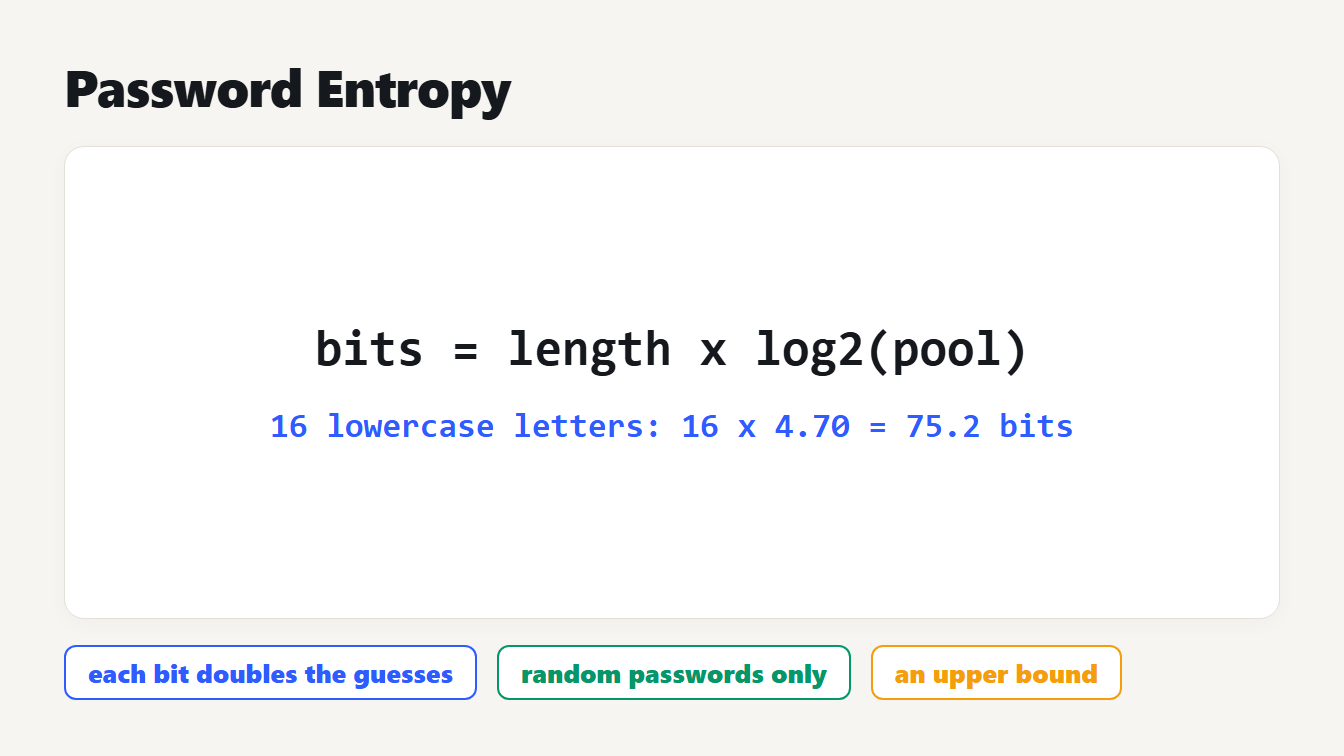
Password entropy explained: the formula, worked examples for random passwords and passphrases, what the bits mean in guesses, and where the maths breaks.
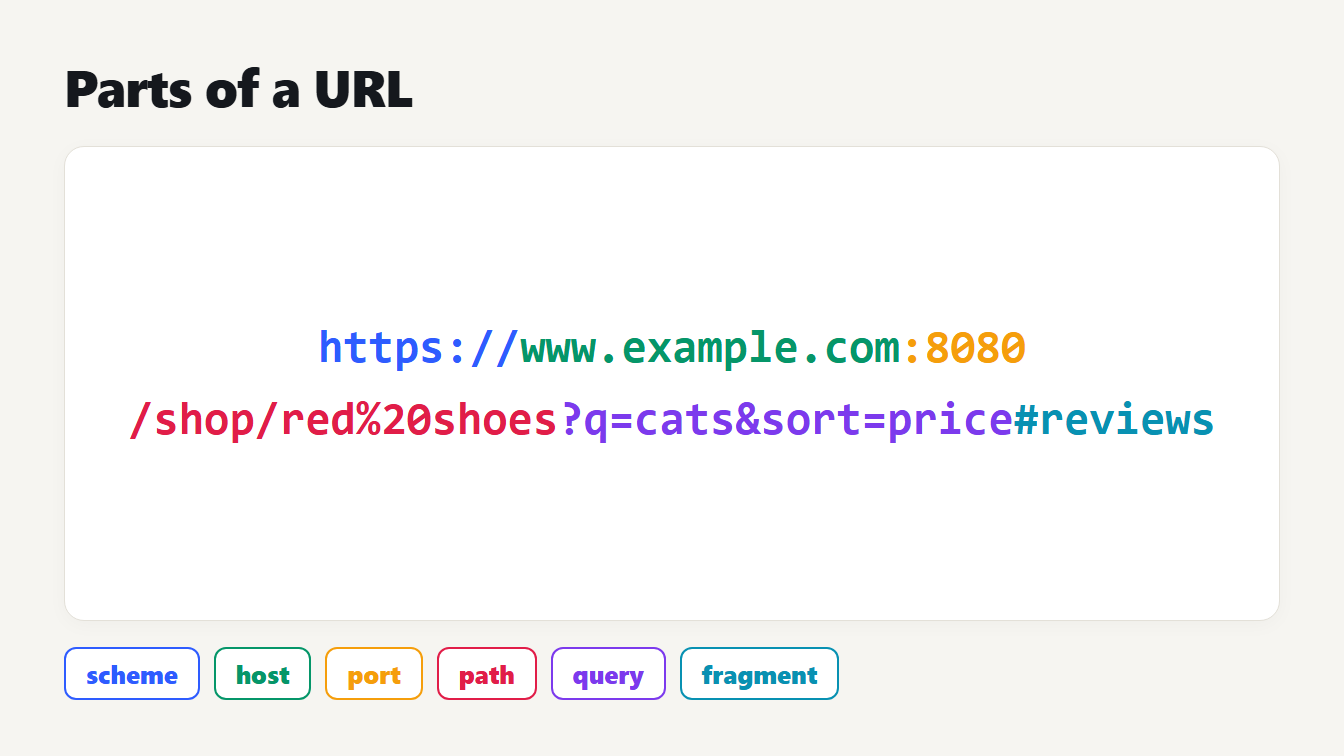
The parts of a URL explained with one example: scheme, host, port, path, query string and fragment, plus common traps and a free URL parser.
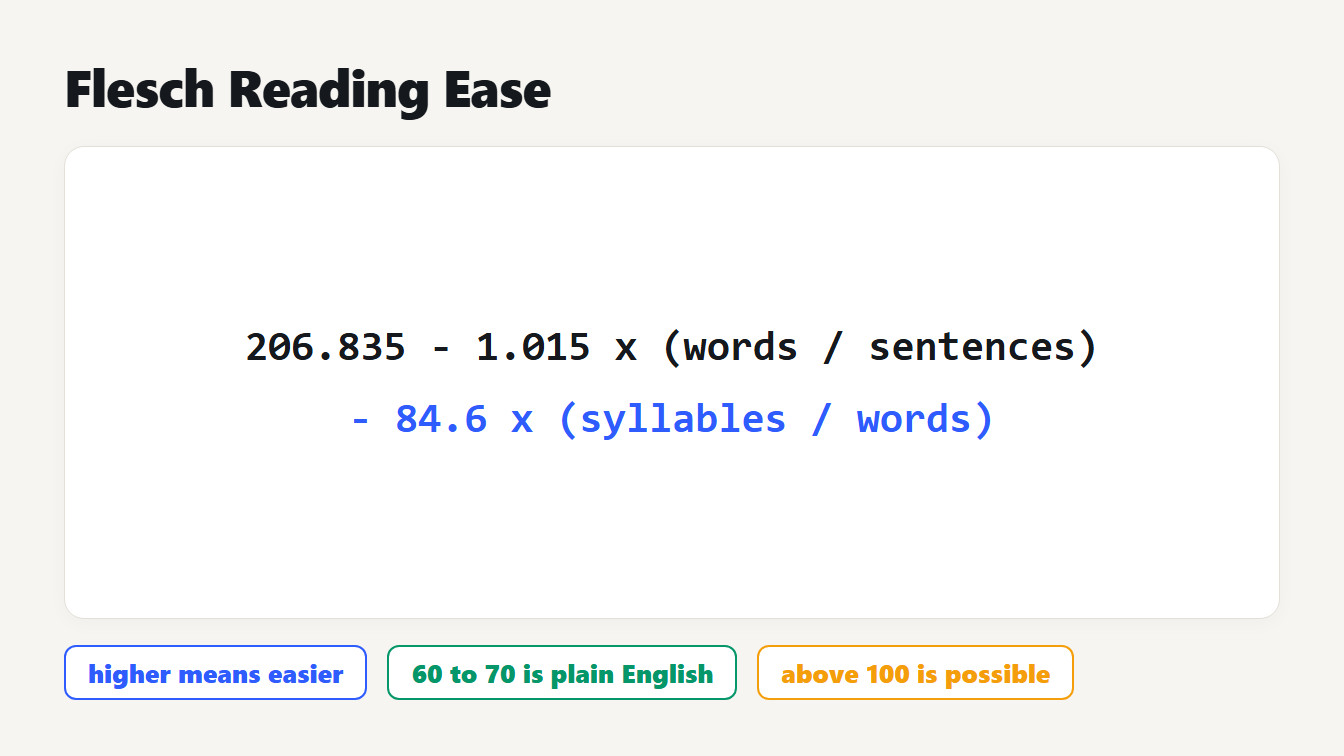
The Flesch reading ease score explained: the formula, the 0 to 100 scale, a worked example, how to raise your score and a free readability checker.
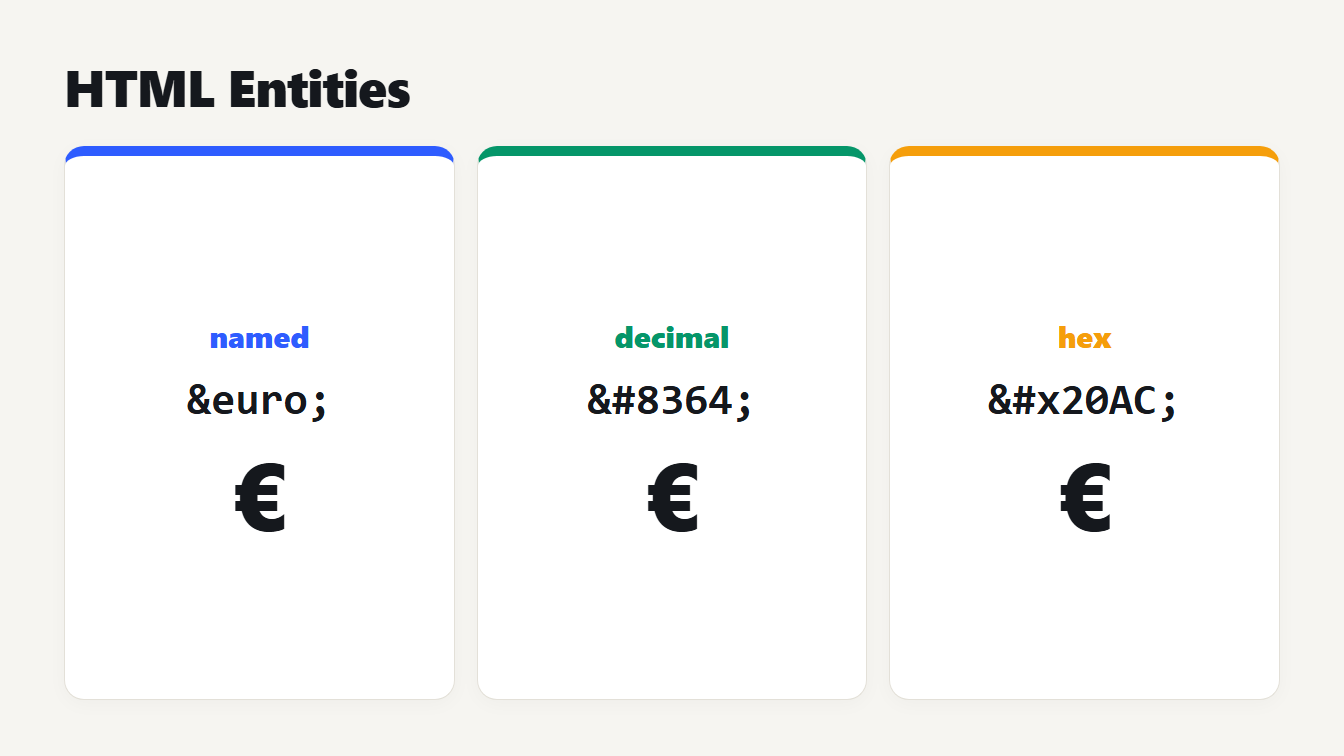
HTML entities explained: the three forms, the five characters you must escape, a list of common ones, the missing semicolon trap and a free encoder and decoder.
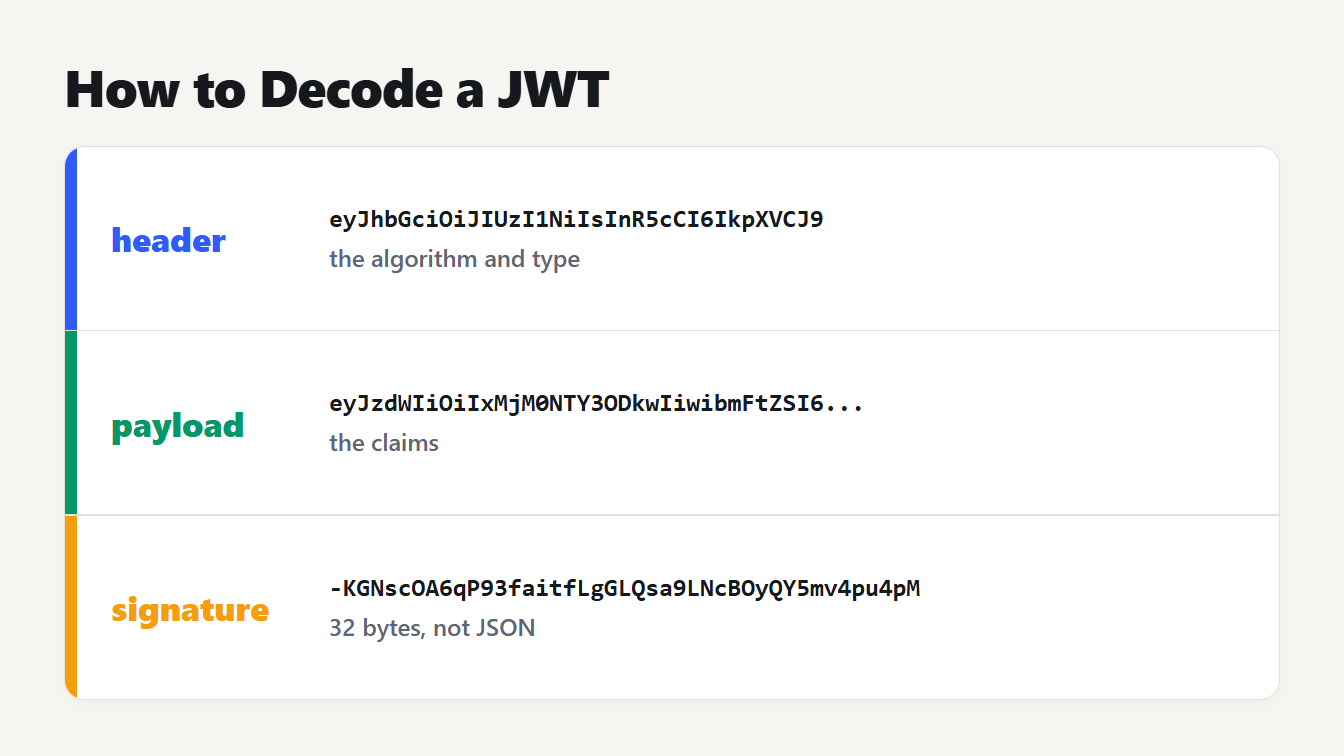
How to decode a JWT by hand and in code: the three parts, claims such as exp and iat, why decoding is not verifying, and a free private decoder.
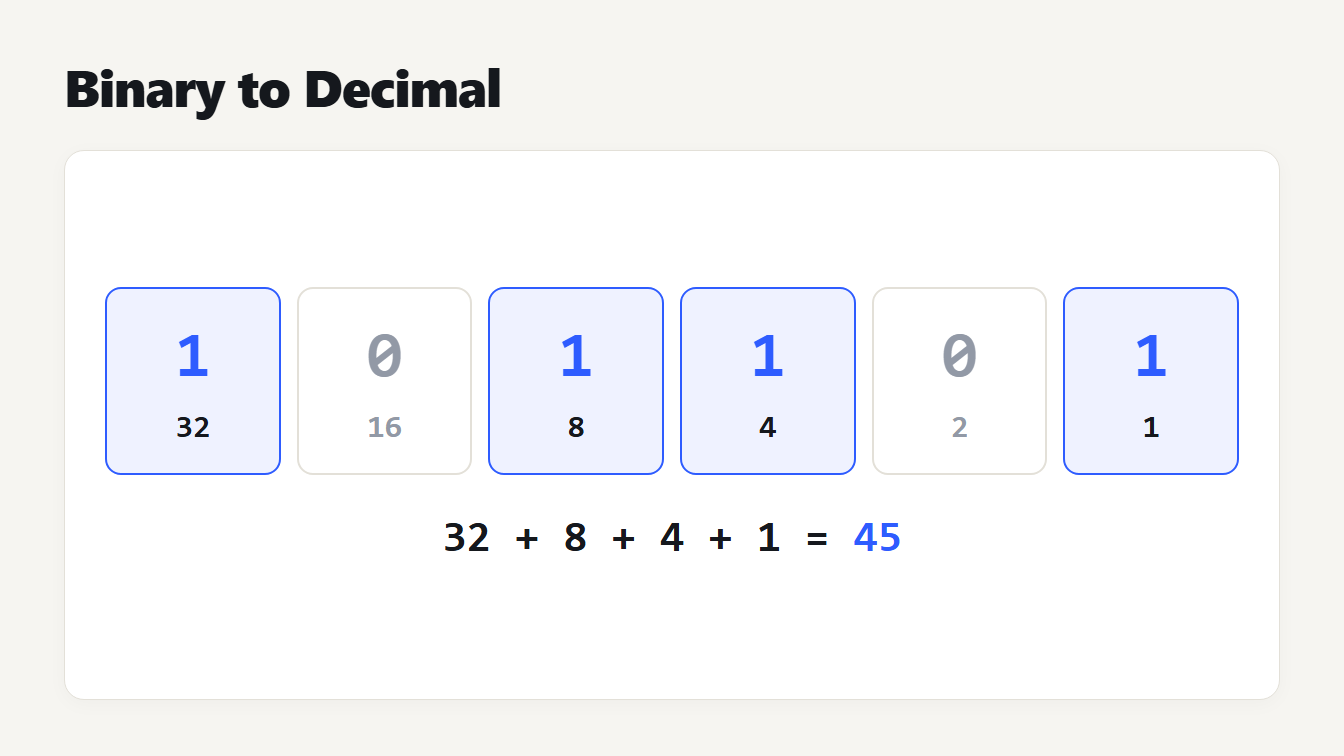
How to convert binary to decimal with two hand methods, worked examples, hex and octal shortcuts, negative numbers and code, plus a free converter.
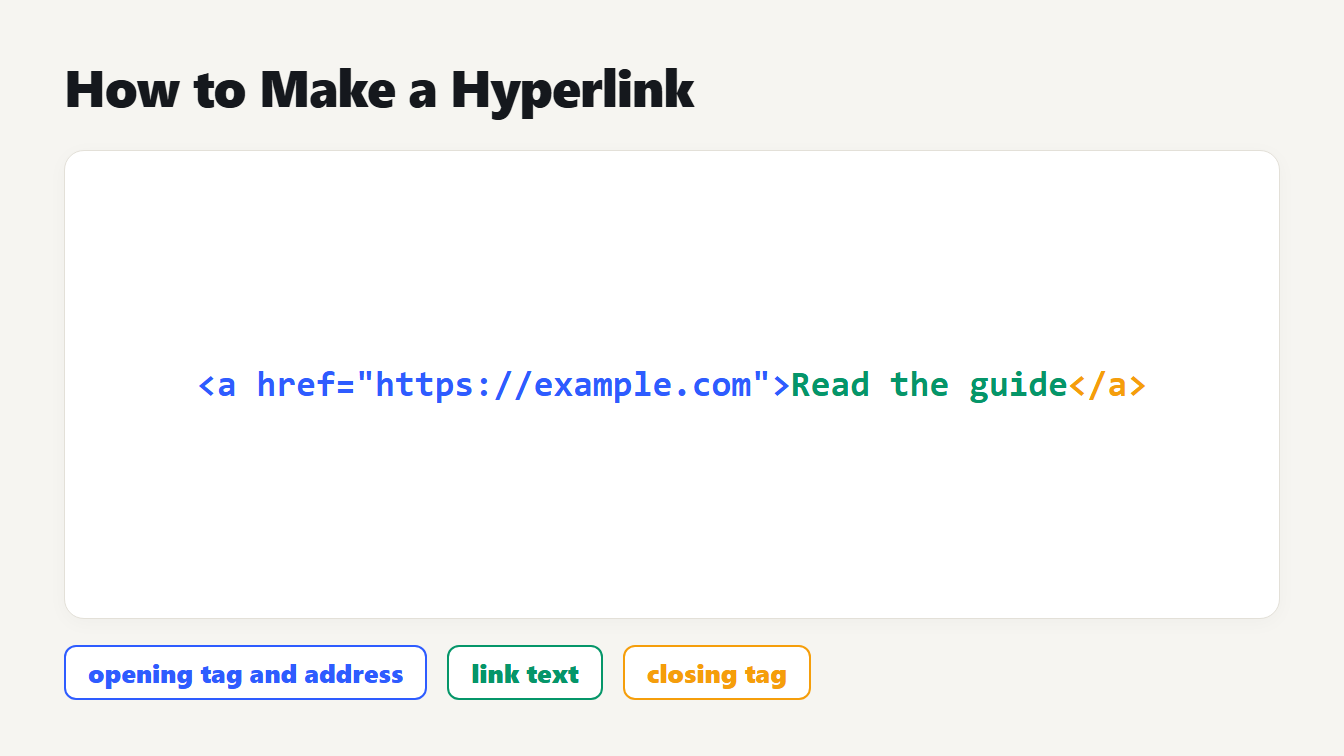
How to make a hyperlink in HTML, Markdown, Word, Google Docs and email, with copy-ready code, link text that works and the mistakes that break links.
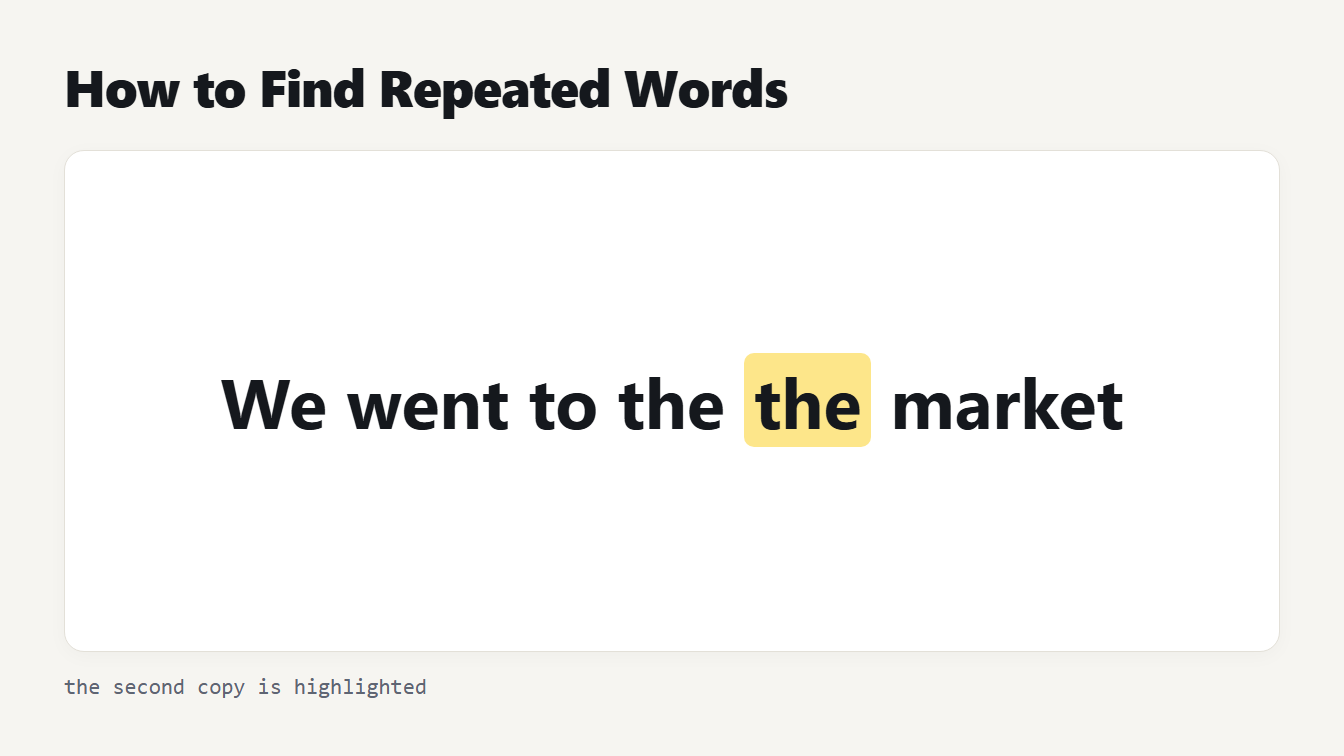
How to find repeated words like the the in any text: the spell checker flag, a free finder tool and a tested regex, plus when a repeat is not a mistake.
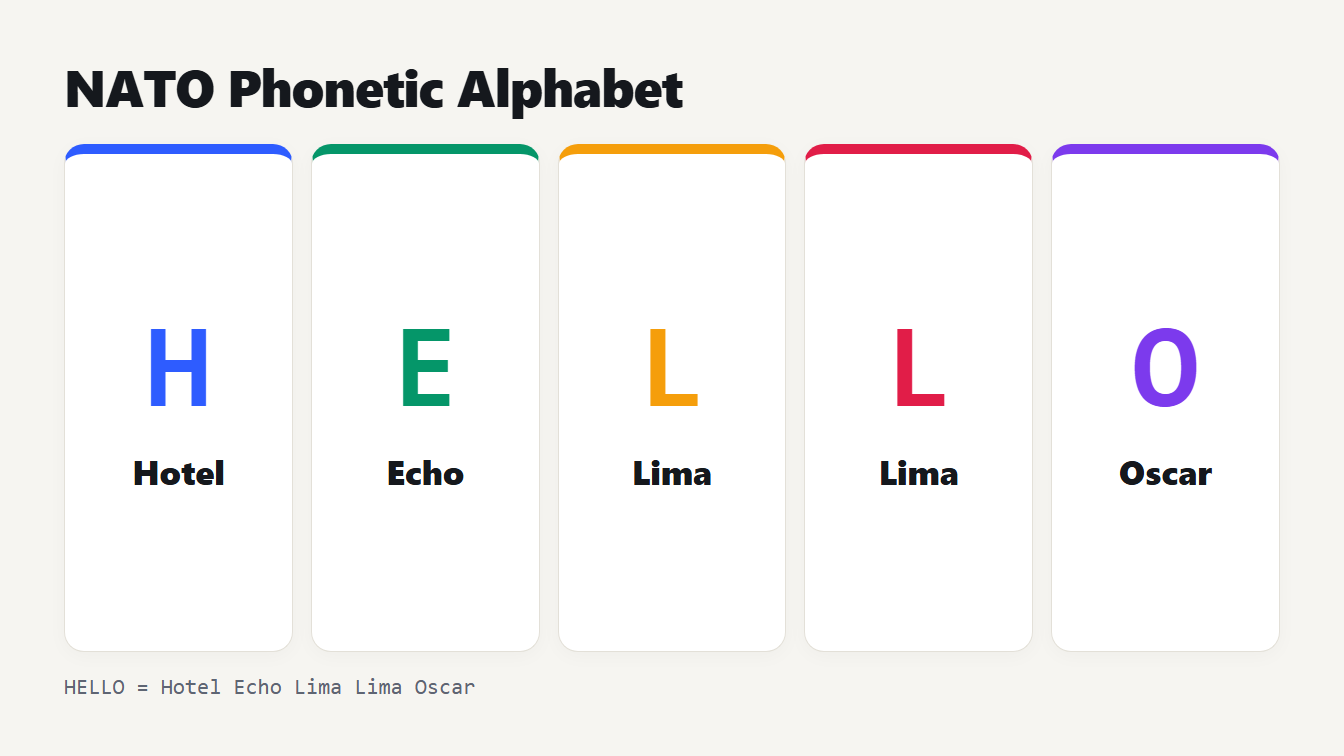
The NATO phonetic alphabet from Alfa to Zulu, with pronunciation, the number words Tree, Fower, Fife and Niner, how to spell names and codes, and its history.
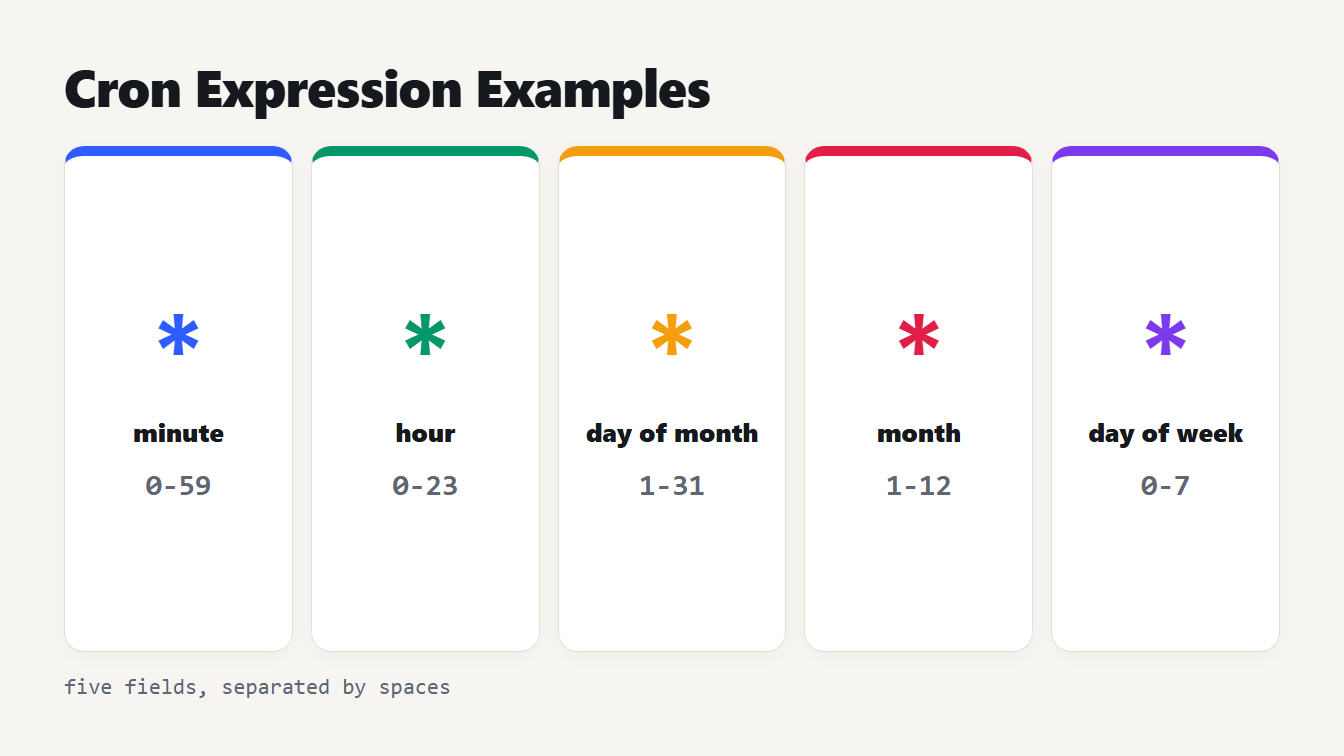
Cron expression examples you can copy, the five-field syntax, and the day-of-month and day-of-week trap that runs jobs on days you did not expect.
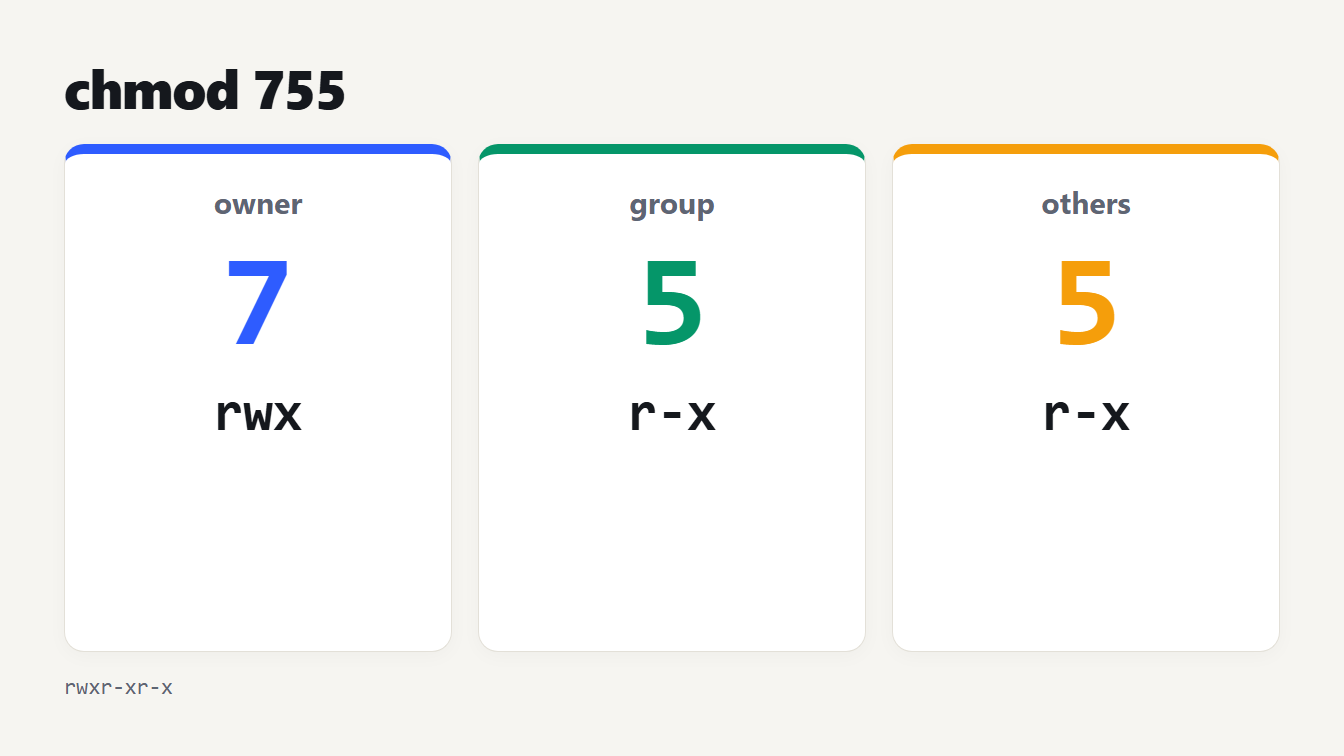
What does chmod 755 mean? The owner gets full access, others read and run. See octal digits, 755 vs 644, symbolic modes, setuid, sticky bits and umask.
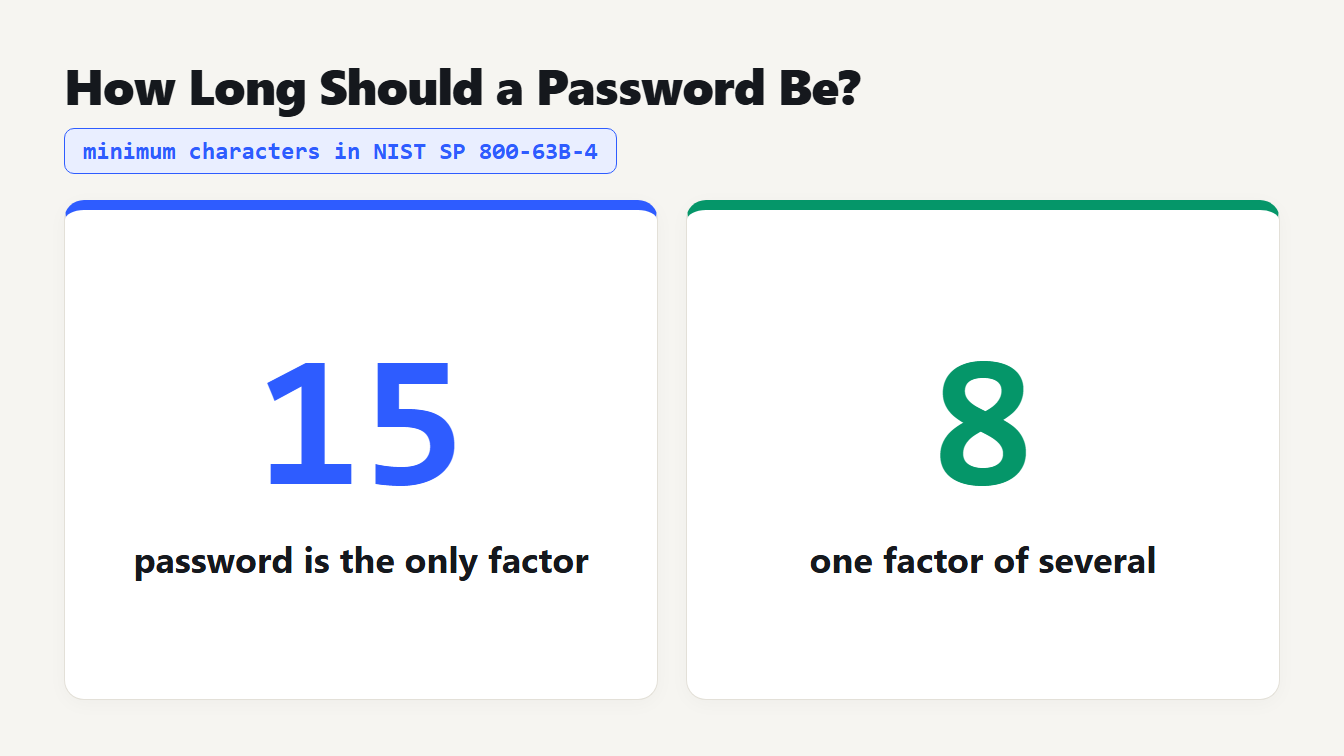
How long should a password be? NIST says 15 characters at least when it is the only factor. See the math, passphrase options and a tested generator.
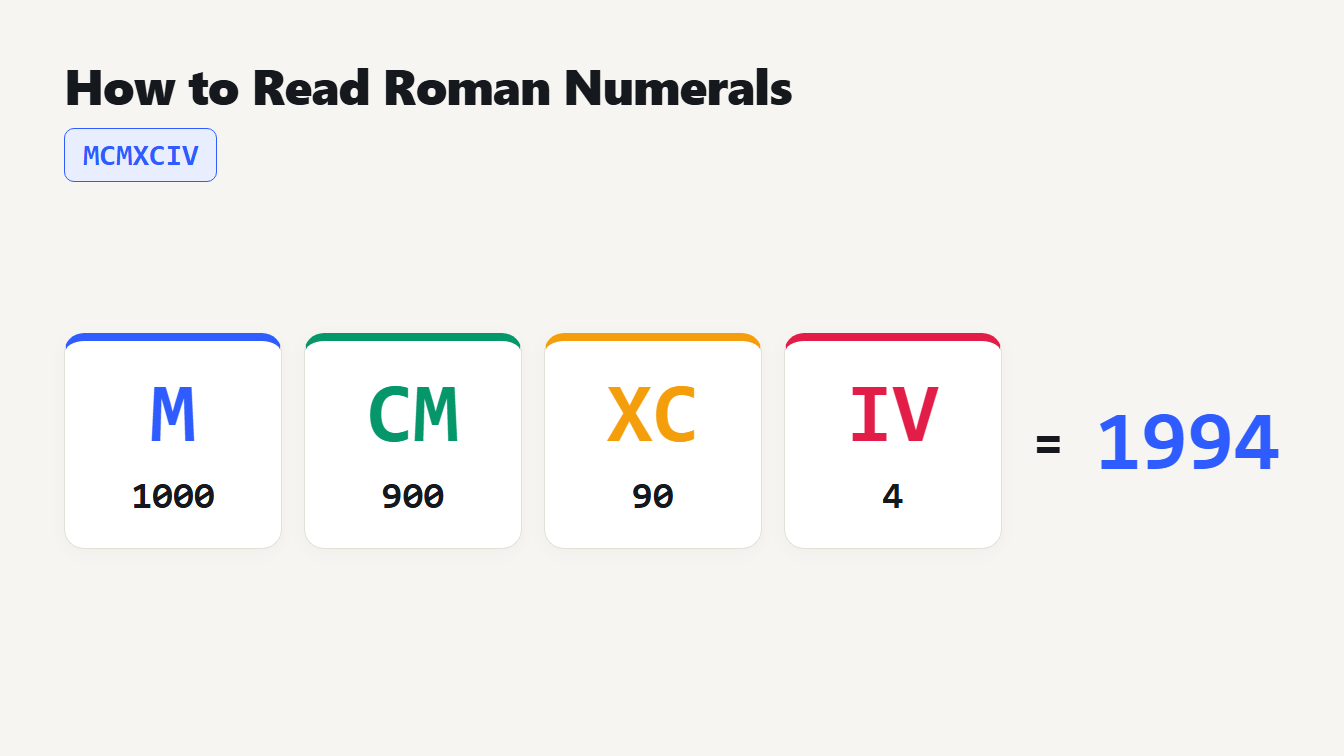
How to read Roman numerals in three steps, with the seven symbols, the subtraction rules, a chart from 1 to 100, years like MMXXVI and the IIII vs IV question.
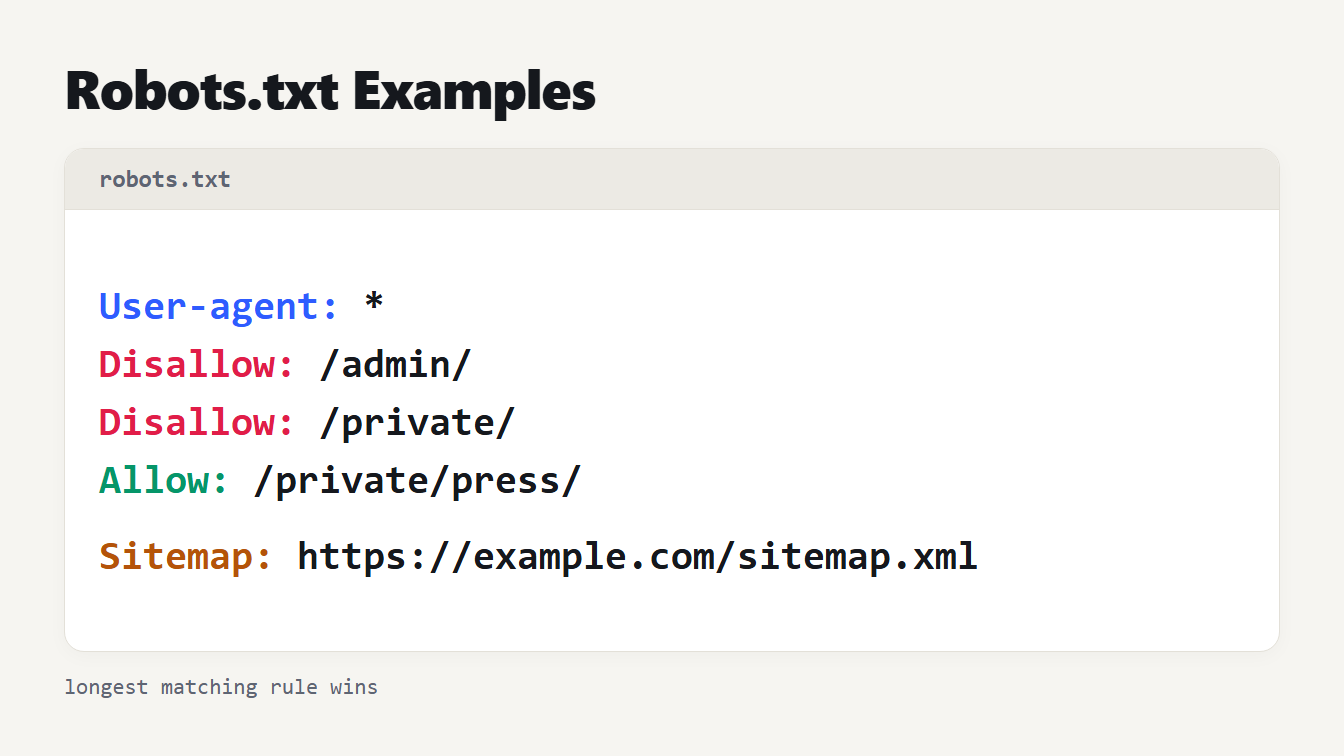
Copy-ready robots.txt examples for allowing, blocking and wildcard rules, plus how the longest rule wins, what robots.txt cannot do and the mistakes to avoid.
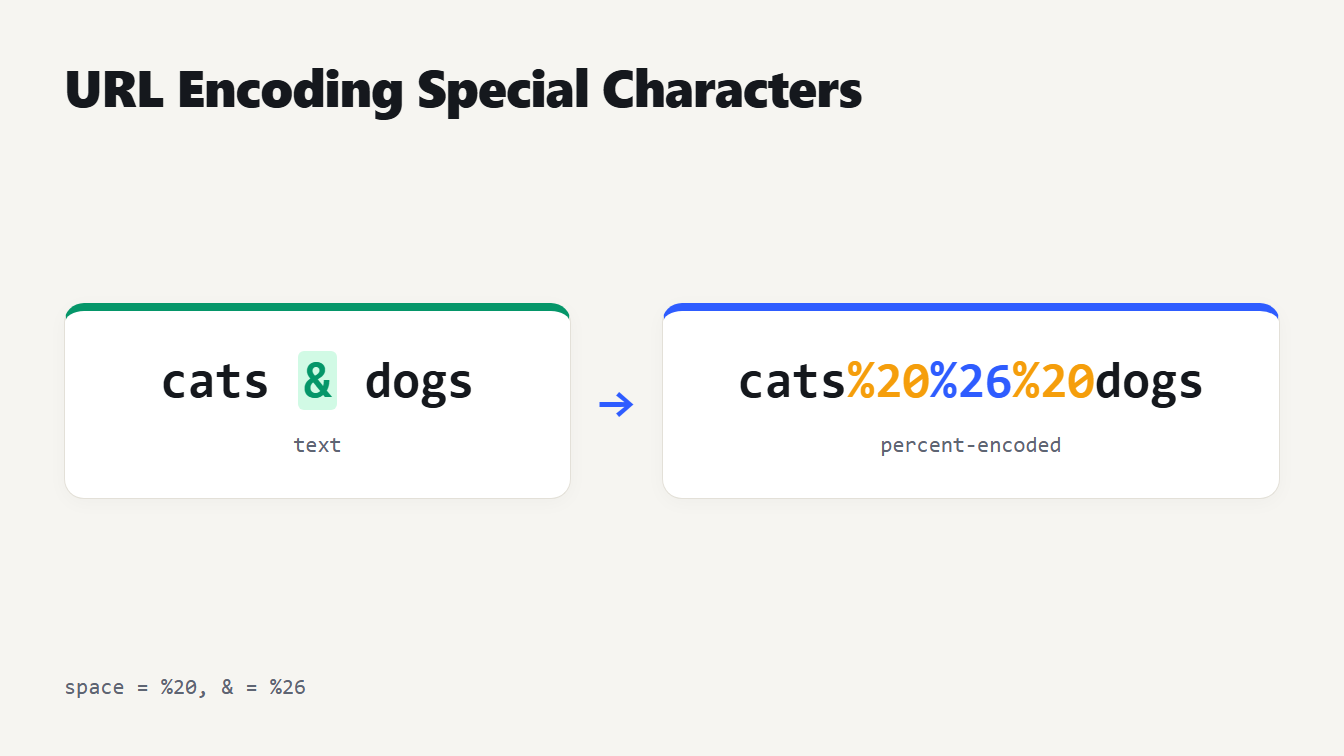
URL encoding special characters made clear: the full chart of reserved characters, %20 versus +, UTF-8 for accents and emoji, and how to avoid double encoding.
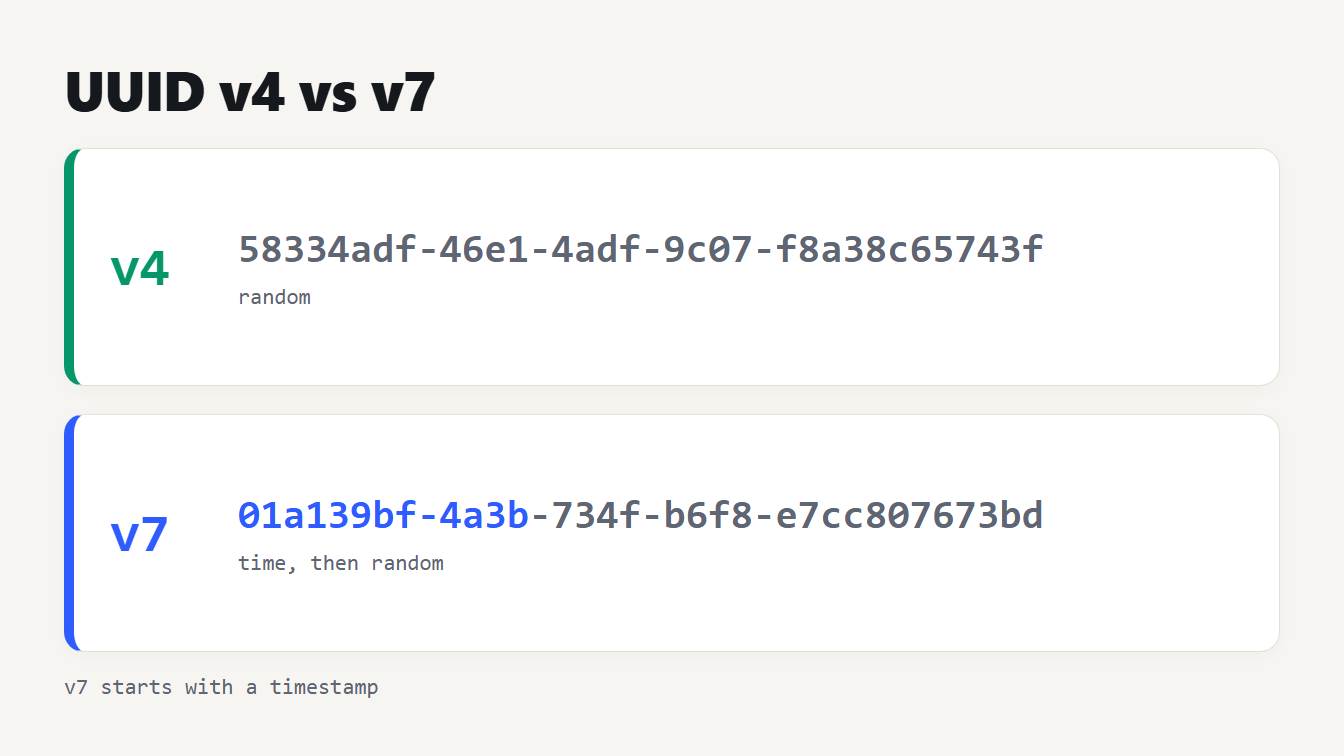
UUID v4 vs v7 explained: how each is built, how to read the timestamp in a v7, collision odds and which to pick for database keys and public IDs.
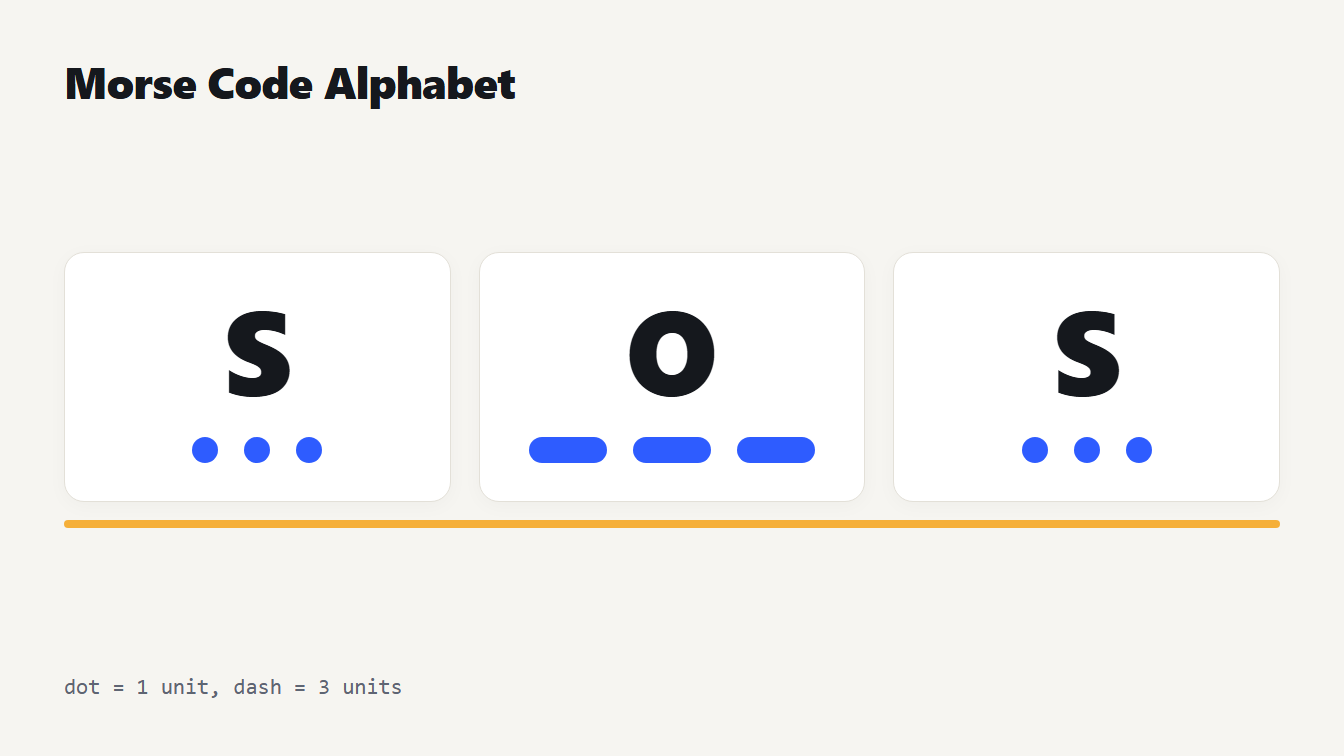
The Morse code alphabet and numbers in one chart, plus the ITU timing rules, the PARIS speed standard and how to write SOS correctly.
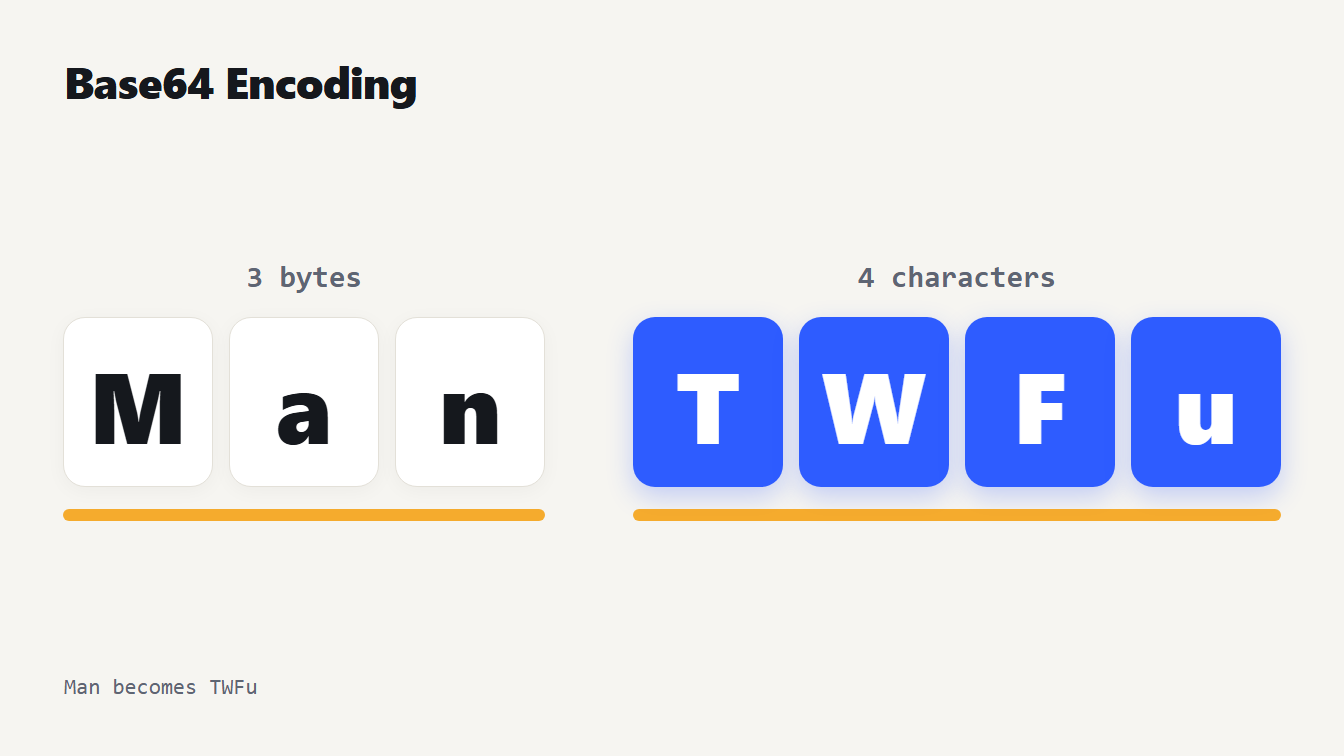
Base64 encoding turns bytes into text. See how it works step by step, why it adds 33%, URL-safe Base64 and why it is not encryption.
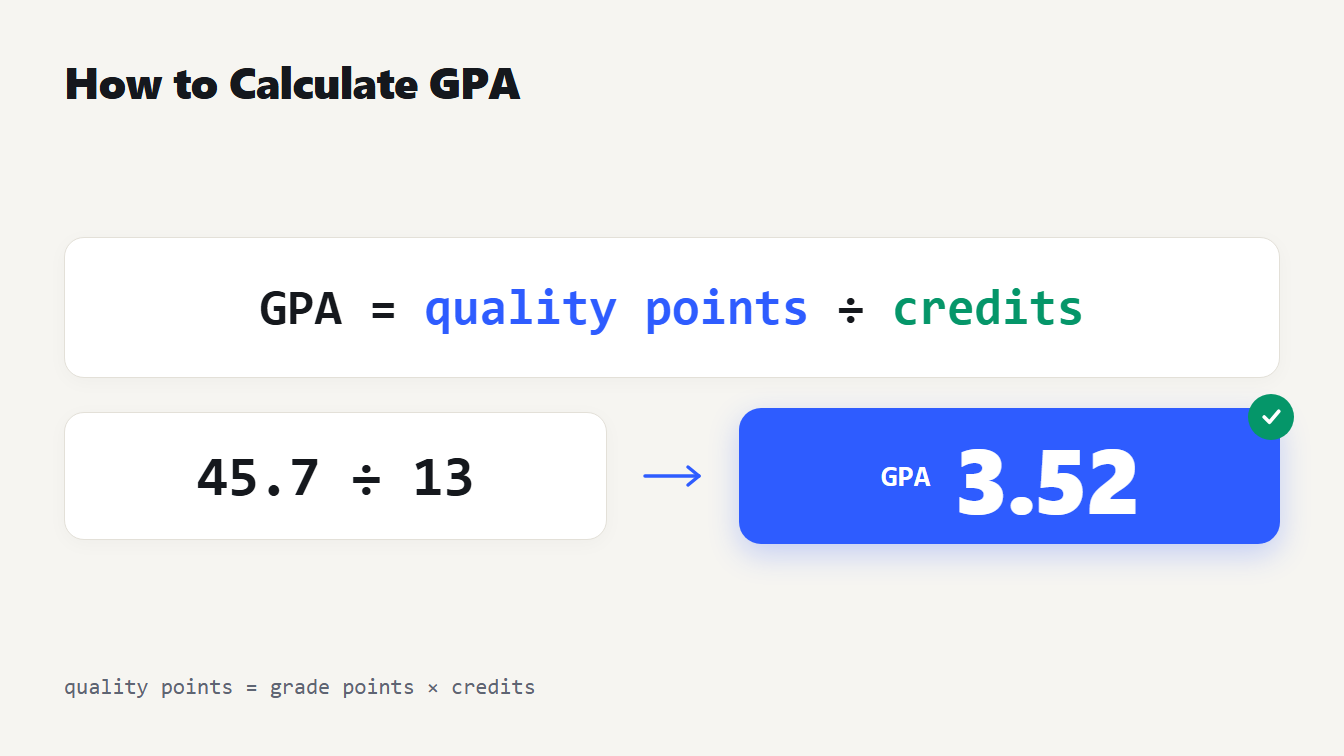
How to calculate GPA with one formula: quality points divided by credits. See real school scales, weighted GPA rules and how to reach a target GPA.
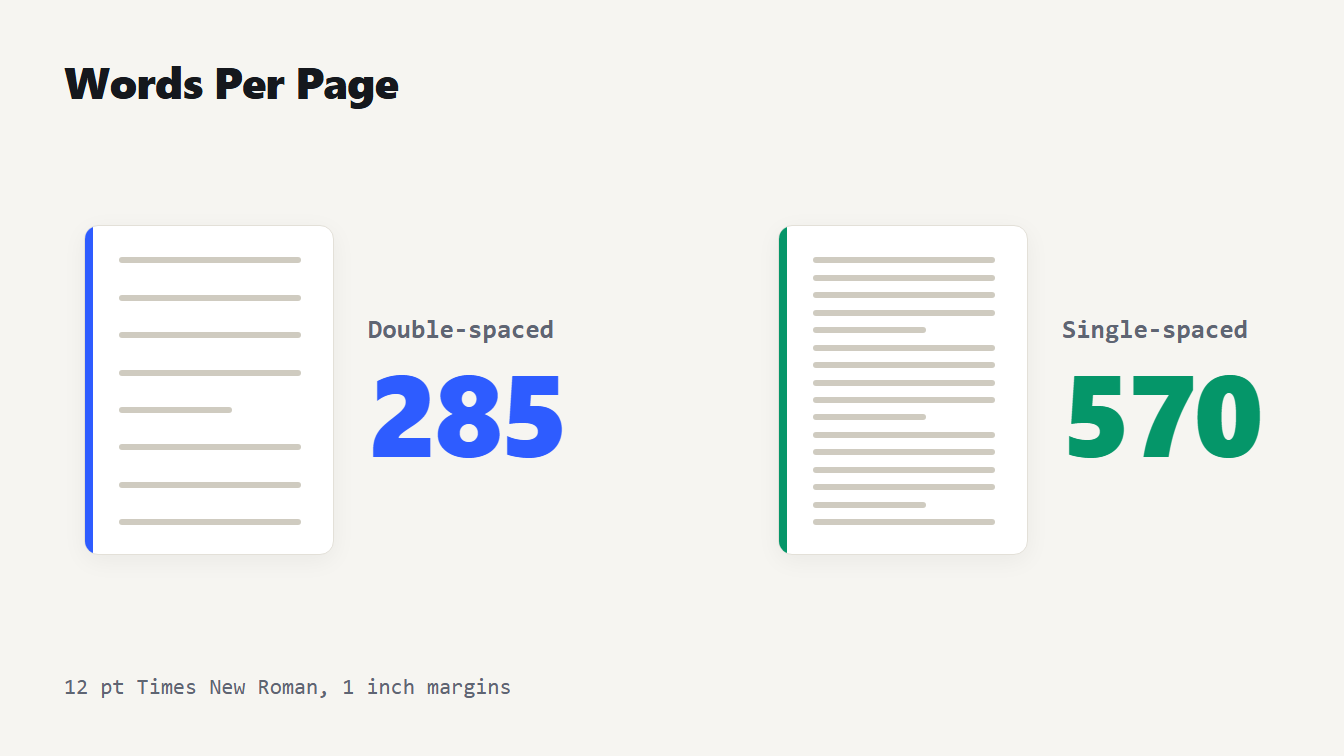
How many words per page? About 285 double-spaced and 570 single-spaced in 12 pt Times New Roman. See our measured table by font and a pages converter.
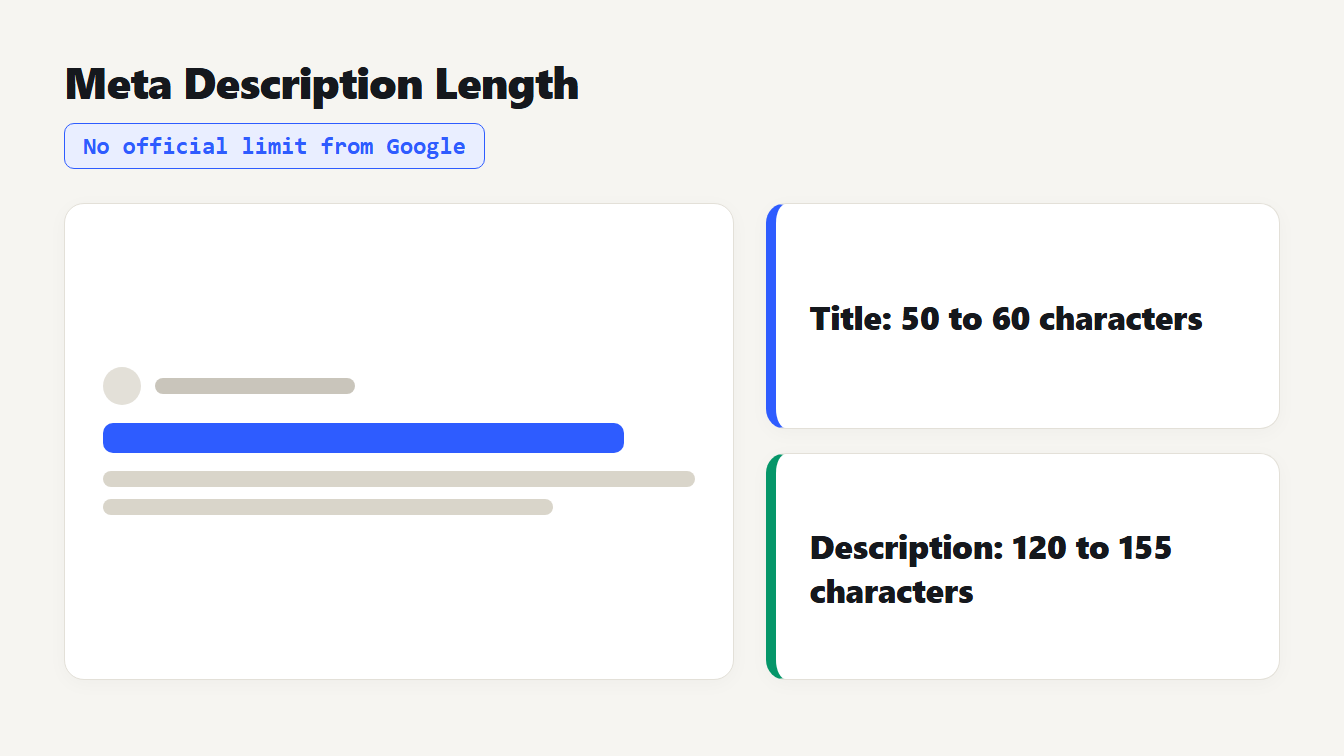
Meta description length has no official limit. See what Google says, why 155 characters is only a rule of thumb, and how to check pixel width.
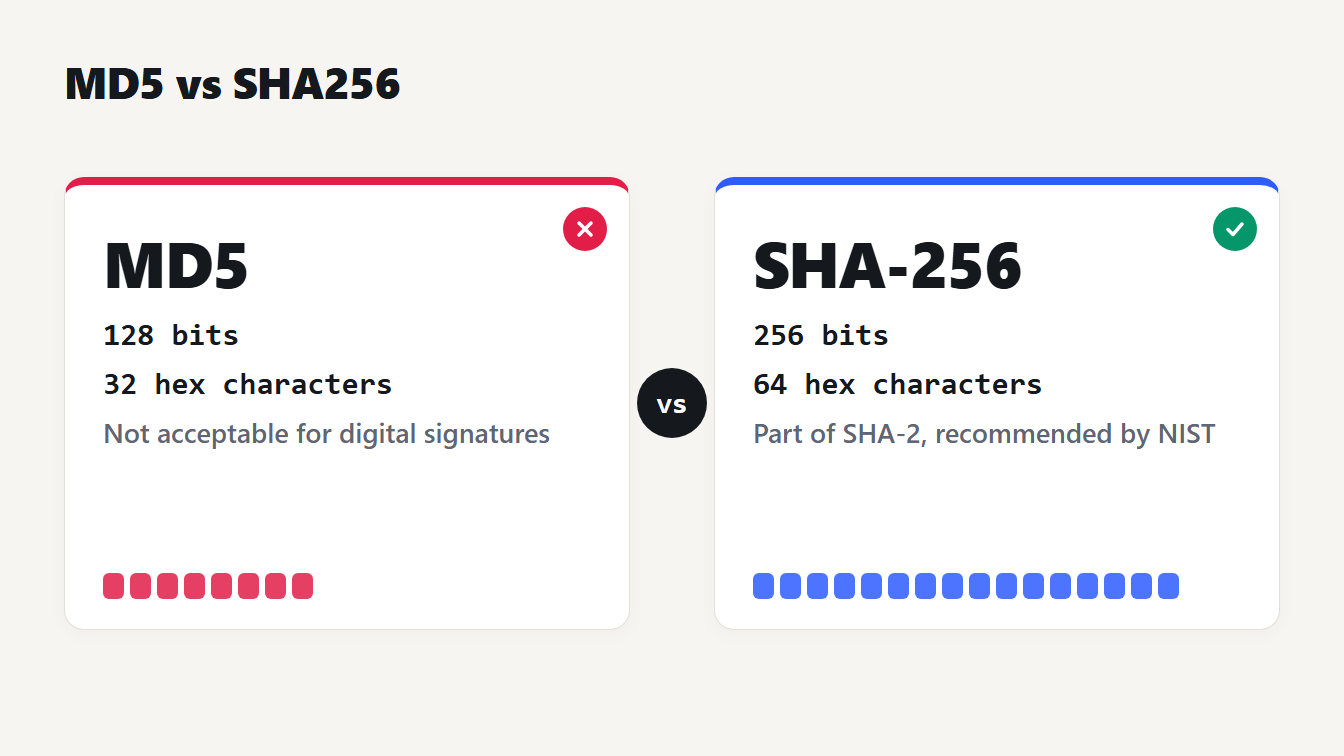
MD5 vs SHA256: which hash should you use? Get the short answer, the research behind it, a job-by-job guide and the commands to check a file hash.
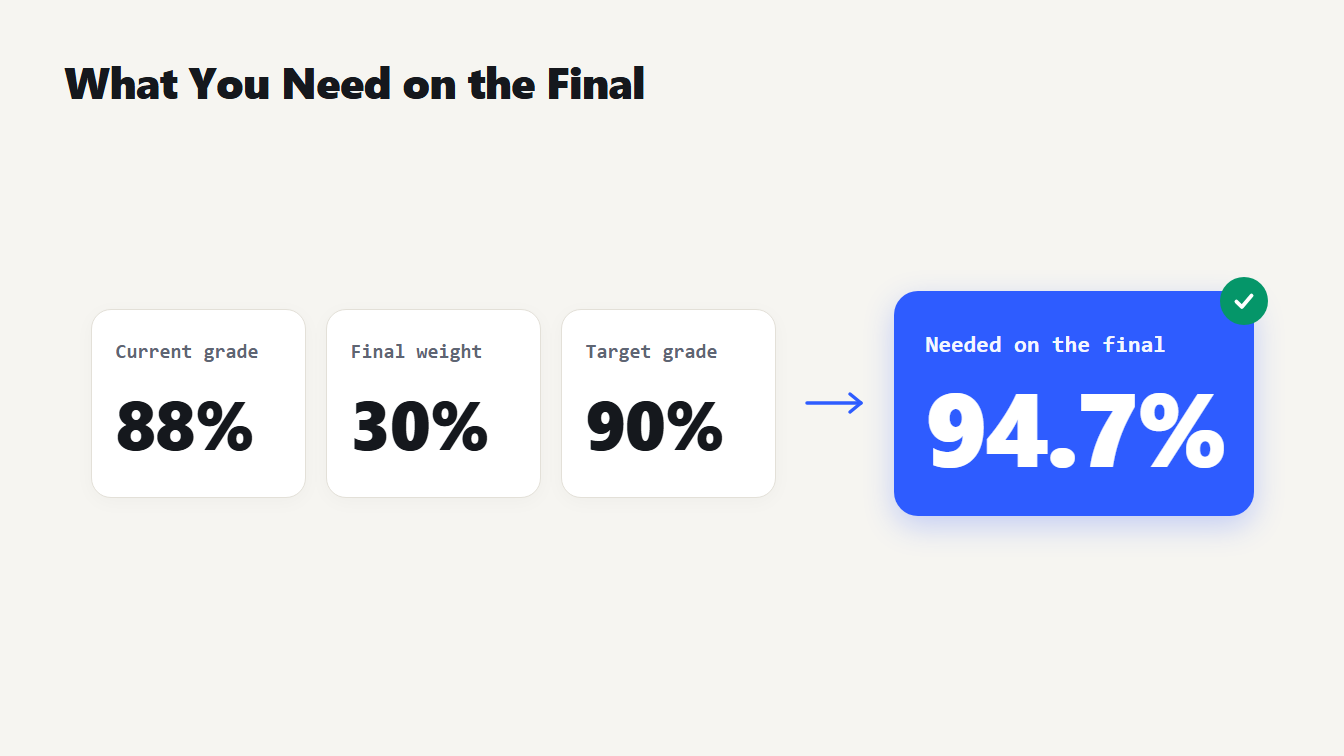
What grade do I need on my final? Use one formula, see worked examples and learn what to do when the answer tops 100%, with a free grade calculator.
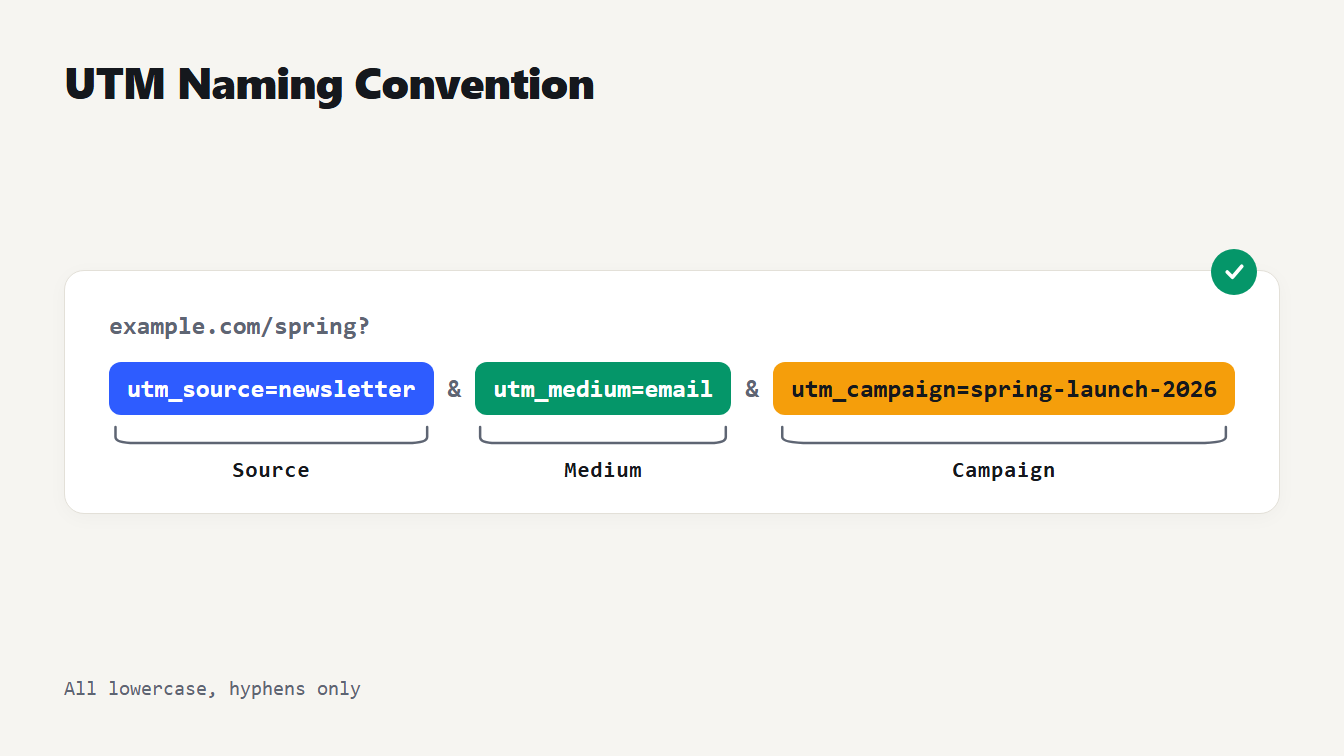
A UTM naming convention keeps GA4 data clean. See the lowercase rule, the utm_medium values GA4 recognizes, a copyable template and a free link builder.
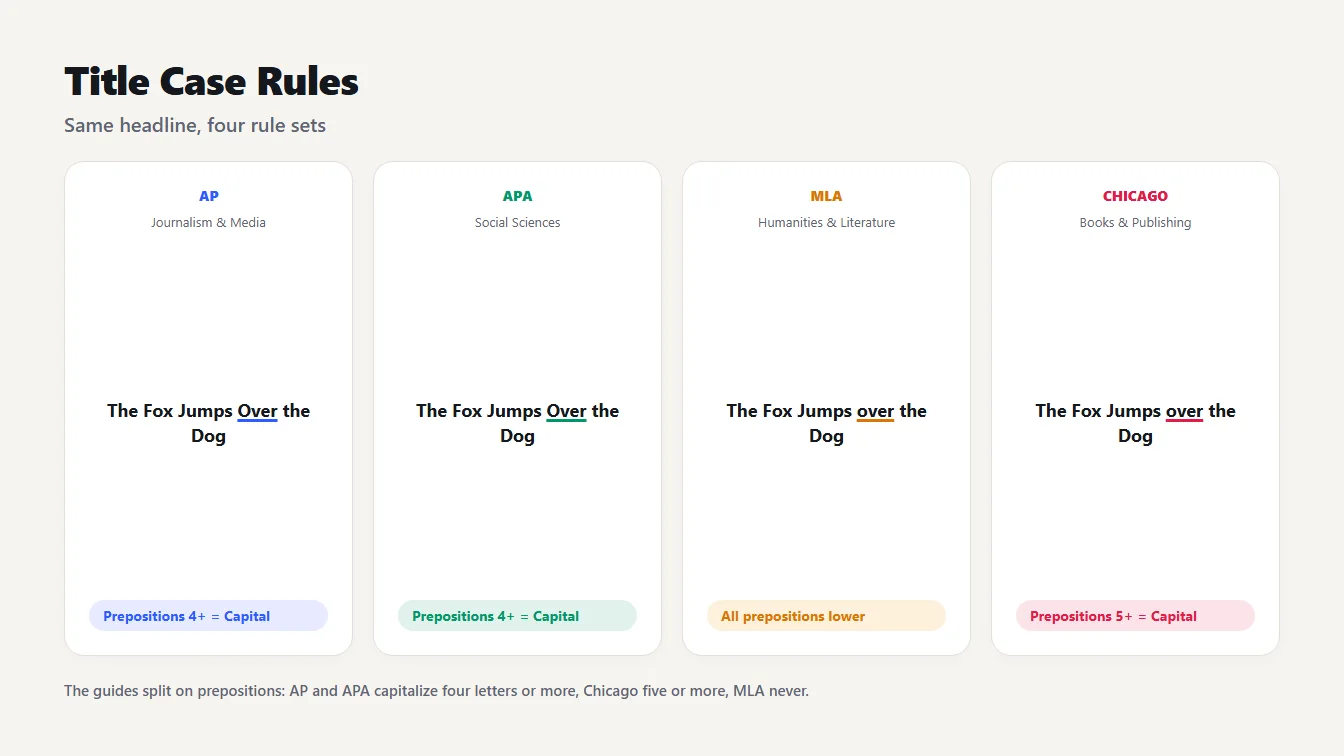
Title case rules compared for AP, APA, MLA and Chicago 18, with a table of which words to capitalize, common mistakes, and a free title case converter.
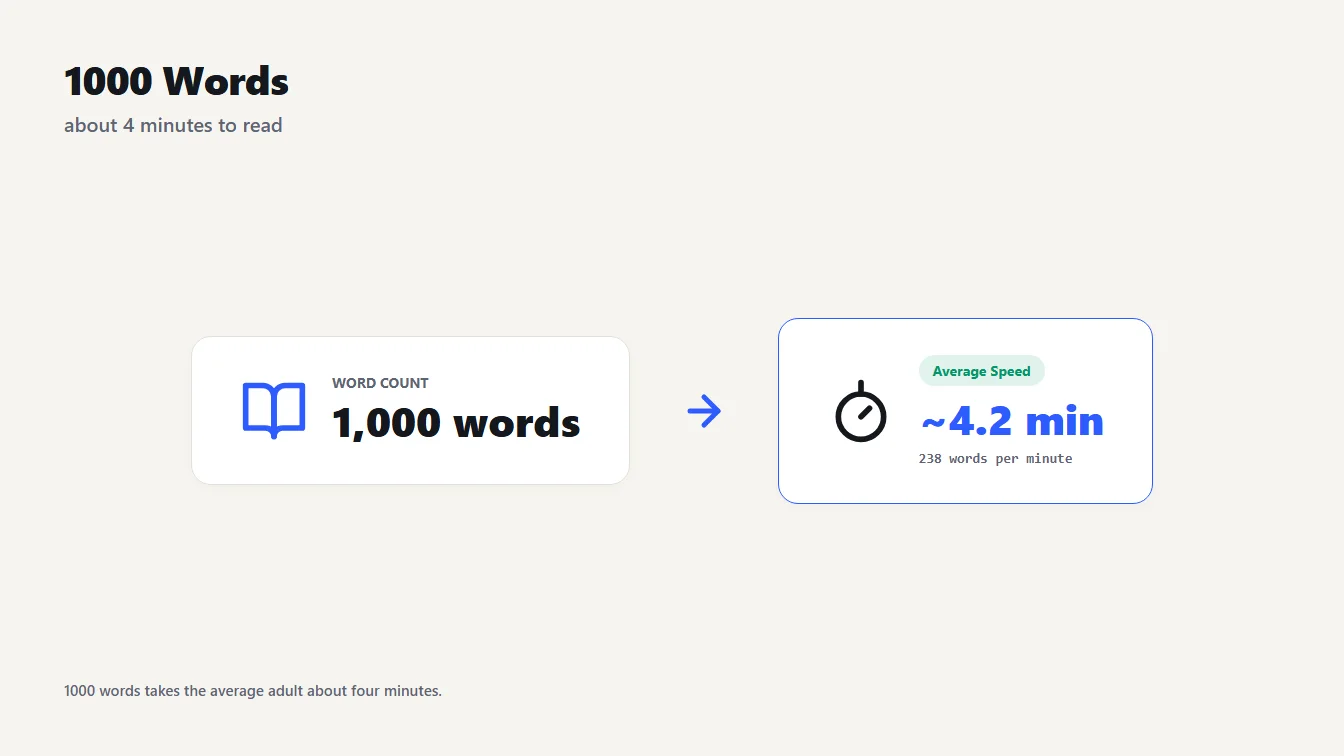
How long does it take to read 1000 words? About 4 minutes silently, per a 190-study review. See the full chart and calculate your own text for free.
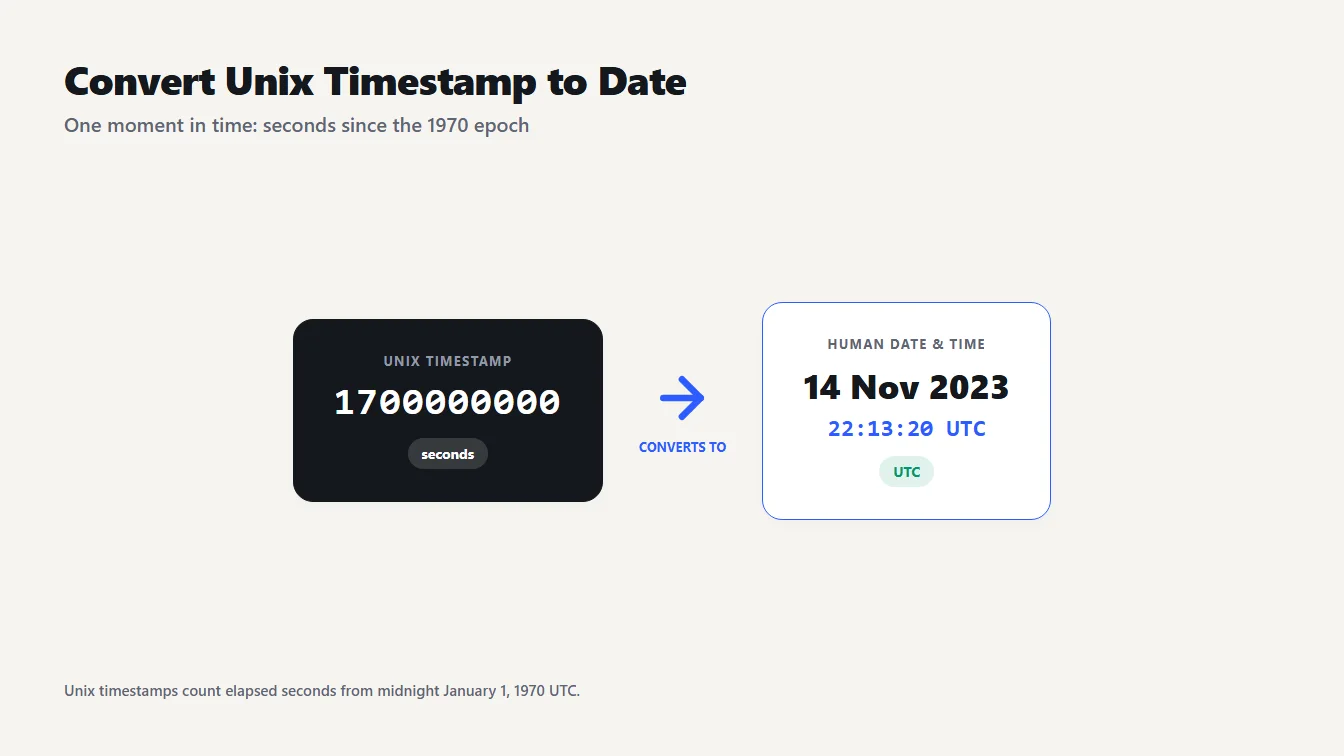
Convert Unix timestamp to date by hand, in code or with a free tool. Tell seconds from milliseconds, avoid the 1970 bug and learn what happens in 2038.
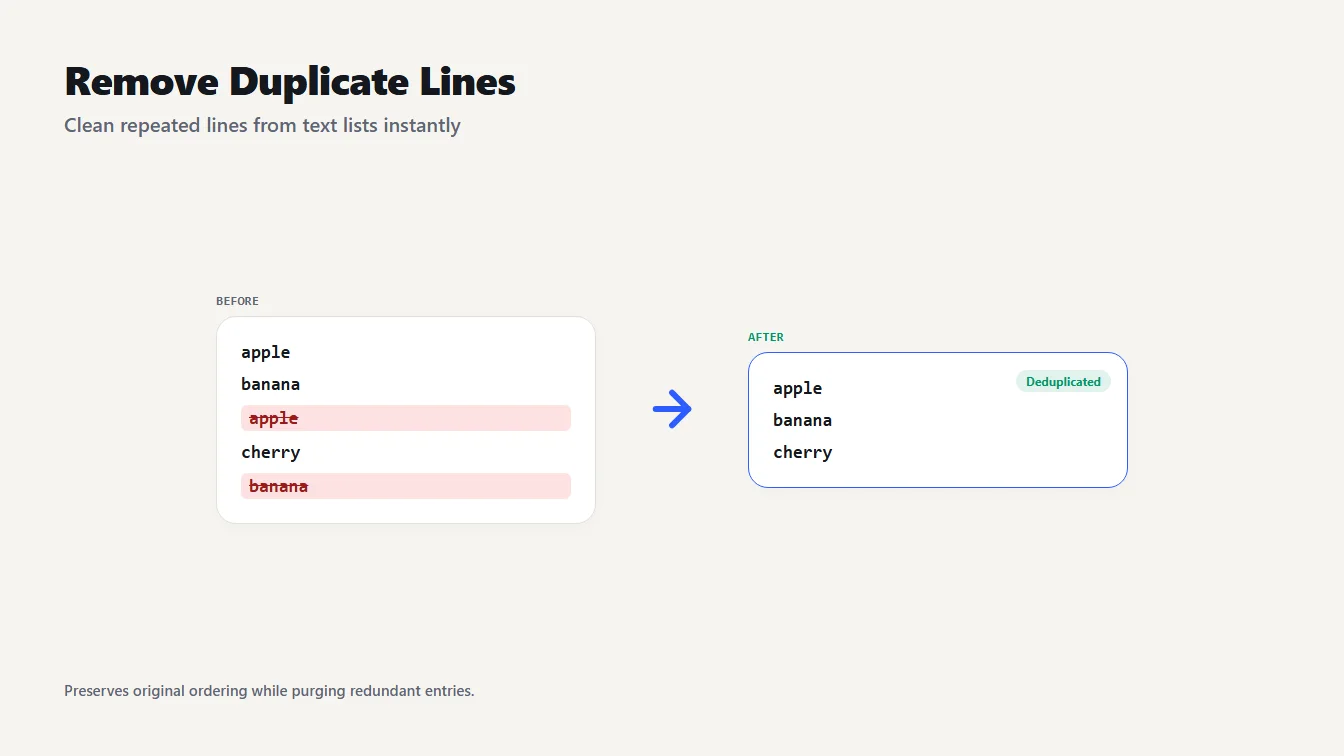
Remove duplicate lines from text with a free tool, Excel, PowerShell, sort or awk. See which methods keep your order, ignore case and miss trailing spaces.
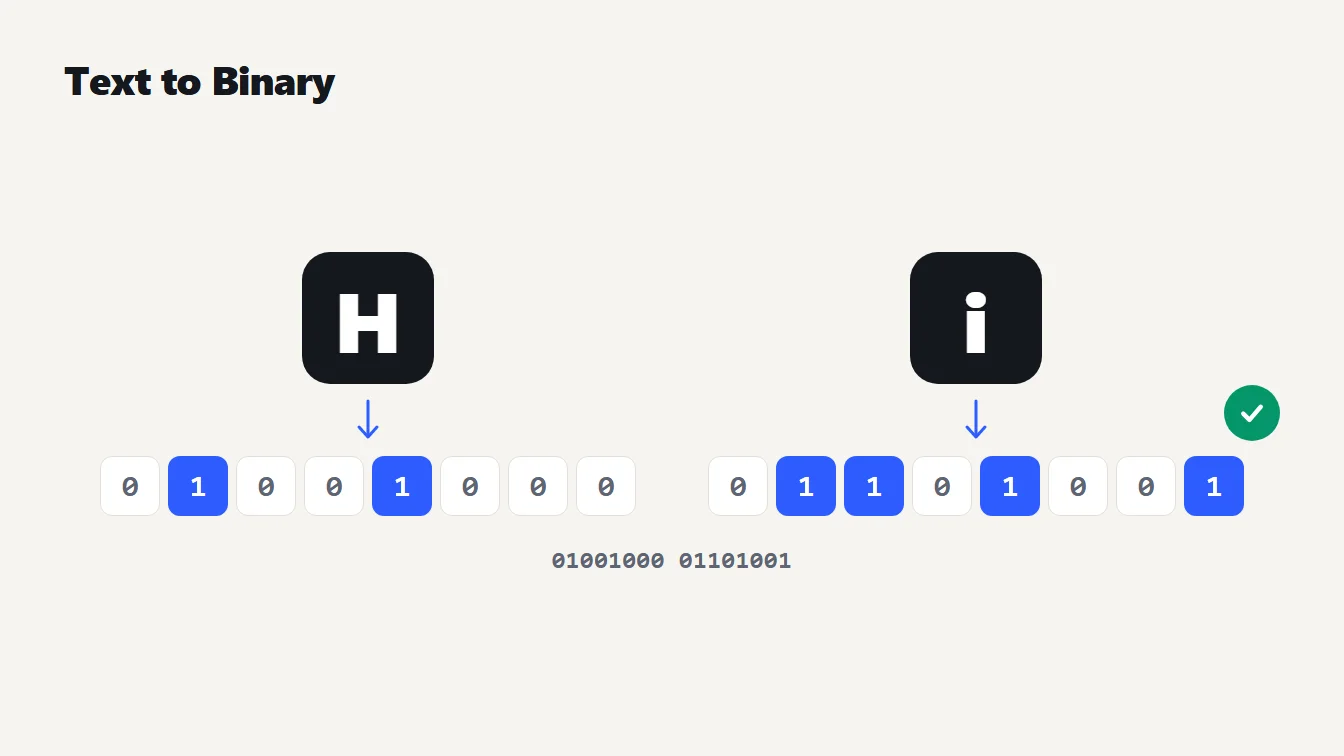
Learn how to convert text to binary by hand and with a free tool, why é takes two bytes, how emoji differ, and how to decode binary back into text.
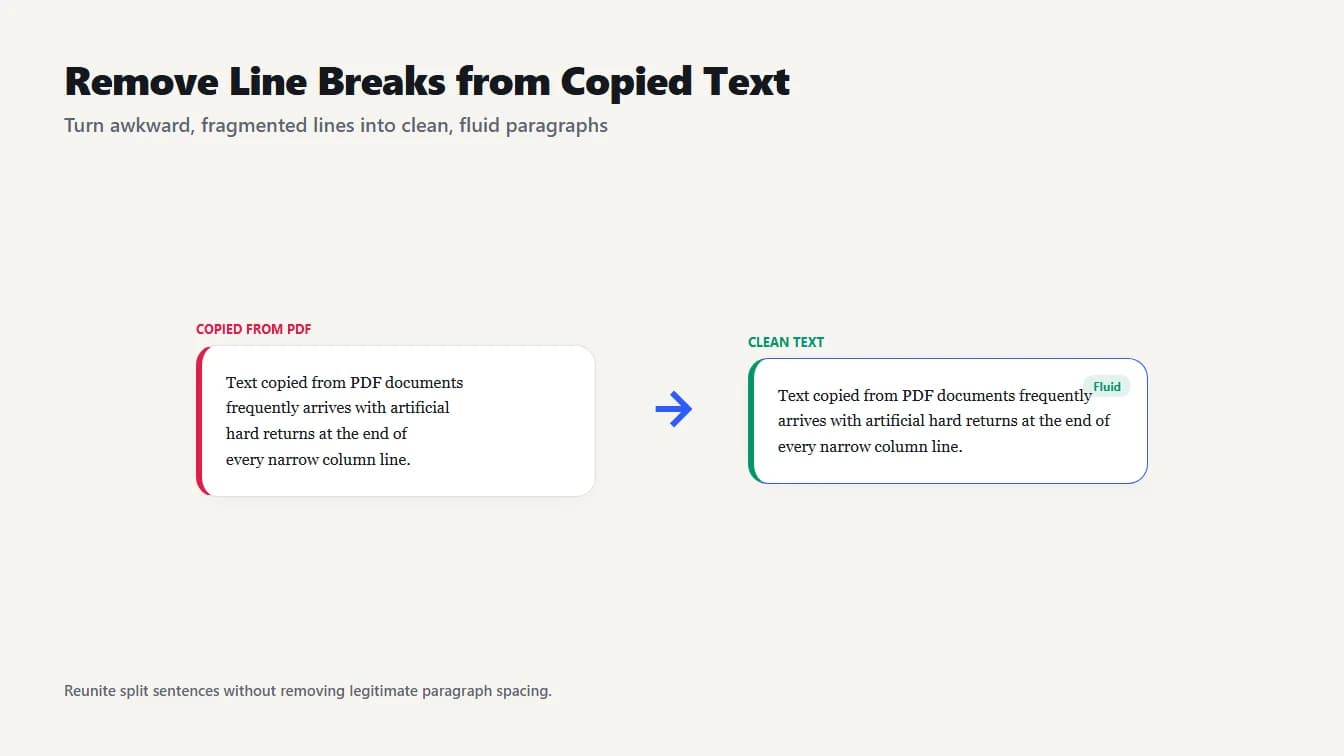
Remove line breaks from copied text in seconds. Fix PDF, Word, Google Docs and Excel pastes, keep your paragraphs, repair split hyphens, and use a free tool.